A good dust extractor does more than keep your workshop tidy. It captures fine particles at the tool, protects filters from clogging, and helps reduce airborne dust around your bench and machinery.
We compared 10 options for small-shop priorities such as suction, filtration, capacity, portability, noise, tool compatibility, and cleanup convenience. The lineup includes dedicated extractors, shop-vac-style systems, cyclone separators, and overhead air filtration for different budgets and workflows.
Best 10 Dust Extractors for Small Workshops Picks for 2026
Best All-Around Performance
Bosch VAC090AH 9-Gallon Dust Extractor

- Automatic filter cleaning every 15 seconds
- HEPA filtration and 150 CFM airflow
- Tool activation with adjustable suction
Best For: Small workshops needing versatile power-tool dust extraction
Best Compact Pre-Separator
Dustopper PRO Cyclone Dust Separator

- Separates dust before it reaches the vacuum filter
- Low-profile 5-gallon bucket-top design
- Includes two high-flow sweep elbows
Best For: Protecting shop-vac filters in compact workshops
Best Remote-Controlled Option
8-Gallon 150 CFM Dust Extractor
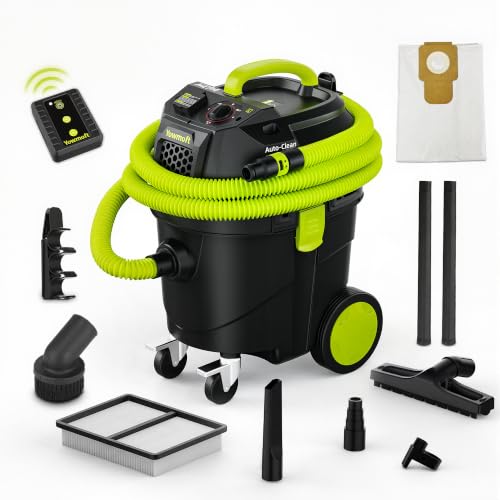
- 150 CFM airflow with 96-inch water lift
- Remote power and suction control
- Automatic HEPA cleaning and tool start
Best For: High-power extraction with convenient remote operation
Best Portable Premium Pick
Festool CT 15 HEPA Dust Extractor

- Compact 15-liter mobile design
- HEPA filtration with automatic tool start
- Built-in accessory storage and durable chassis
Best For: Mobile small workshops prioritizing portability and organization
Compact Workshop Collector
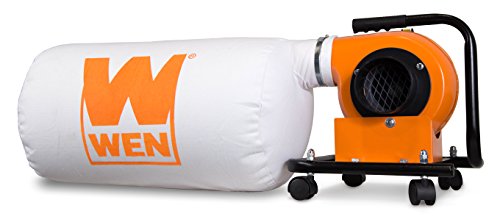
- 660 CFM airflow with a 5.7-amp motor
- 12-gallon bag and 4-inch dust port
- Mobile base plus optional wall mounting
Best For: Small woodworking shops needing portable dust collection
Quiet HEPA Extractor

- 151 CFM airflow with 98 PSI static lift
- HEPA filter and anti-static system
- Autostart outlet and 66 dB operation
Best For: Tool-connected workshops prioritizing quiet, fine-dust extraction
Auto-Start HEPA Collector

- 142 CFM from a 10-amp, 1.5 HP motor
- 12-gallon steel tank with 0.5-micron HEPA filter
- Includes hose, adapters, clamps, and replacement filters
Best For: Small shops needing capacity and tool-linked startup
Versatile Remote-Controlled Pick
8-Gallon Wet/Dry Dust Extractor

- Remote-controlled operation
- Wet, dry, and blowing modes
- 8-gallon tank with HEPA filtration
Best For: Flexible garage and woodworking cleanup
Workshop Air-Cleaning Specialist
1350 CFM Hanging Filtration System

- 1,050–1,350 CFM airflow
- 360-degree intake with MERV-11 filtration
- Ceiling, bench, or direct-mount installation
Best For: Supplemental airborne-dust control in woodworking rooms
Heavy-Duty Automated Choice

- 150 CFM airflow and 96-inch water lift
- Automatic HEPA filter cleaning
- Auto-start for connected power tools
Best For: Demanding woodworking and tool-connected extraction
Best All-Around Performance – Bosch VAC090AH 9-Gallon Dust Extractor
For small workshops handling power-tool dust, the Bosch VAC090AH combines automatic filter cleaning, HEPA filtration, and tool activation in a 9-gallon corded extractor. Its 150 CFM airflow and 97-inch static water lift provide strong performance, while the Power Broker dial helps match suction to the application.
Best For: Small workshops that need a versatile extractor for dry dust, debris, and power-tool use.
Pros:
- Automatic filter cleaning runs every 15 seconds to help maintain suction.
- HEPA filtration captures 99.97% of particles at 0.3 microns or larger.
- Power-tool activation and adjustable suction support efficient workflow.
- Designed as part of Bosch PRO+GUARD for OSHA silica-compliance support.
Cons:
- The unit is corded and weighs 28 pounds.
- Its 9-gallon canister may take more floor space than compact extractors.
The VAC090AH is a strong fit when filtration, automatic maintenance, and tool integration matter more than having the smallest possible footprint.
Best Compact Pre-Separator – Dustopper PRO Cyclone Dust Separator
The Dustopper PRO is a compact add-on for dust extractors for small workshops rather than a standalone vacuum. It separates dust and debris before they reach a shop-vac filter, helping preserve airflow and reduce filter maintenance when connected to a standard 5-gallon bucket.
Best For: Small workshops that want a low-profile pre-separator to protect a shop-vac filter.
Pros:
- Claims 99.9% separation efficiency for capturing debris before filtration.
- Low-profile design fits on a standard 5-gallon bucket.
- Included high-flow sweep elbows help reduce restriction from sharp turns.
- Made from anti-static resin and manufactured in the USA.
Cons:
- It is a separator kit, not a complete dust extractor.
- A compatible shop vacuum, bucket, hose, and connections are needed for a working setup.
Choose the Dustopper PRO when space and filter life are priorities and you already have a shop vacuum to provide the suction.
Best Remote-Controlled Option – 8-Gallon 150 CFM Dust Extractor
This 8-gallon extractor is built for small workshops that want high airflow with automatic cleaning and remote operation. Its 1200-watt motor delivers 150 CFM and up to 96 inches of water lift, while tool activation, delayed start, and overload prevention support convenient operation.
Best For: Workshops needing strong extraction, remote control, and automatic power-tool synchronization.
Pros:
- Automatic HEPA cleaning cycles every 20 seconds to help maintain suction.
- 150 CFM airflow and 96-inch maximum static water lift suit demanding applications.
- Remote control allows power and suction adjustments from a distance.
- Automatic tool start and overload prevention improve workflow and protection.
Cons:
- At 35.2 pounds, it is heavier than some compact workshop extractors.
- The listed 11.5-foot hose may require additional reach in larger work areas.
- The automatic tool-start connection is rated for a maximum of 5 amps.
This model offers a feature-rich balance for users who value powerful extraction and reduced movement around a busy or cluttered workspace.
Best Portable Premium Pick – Festool CT 15 HEPA Dust Extractor
The Festool CT 15 is a compact mobile choice among dust extractors for small workshops, with HEPA filtration, automatic tool start, and an adjustable high-performance turbine. Its 15-liter container, built-in accessory storage, and robust chassis make it practical for moving between tools or work areas.
Best For: Mobile workshop users who want a compact, durable extractor with integrated storage.
Pros:
- HEPA filtration supports fine-dust capture.
- Automatic tool start helps coordinate extraction with connected tools.
- Compact footprint, low weight, and steel-axle chassis support portability.
- Includes crevice and upholstery cleaning tools with onboard storage.
Cons:
- The 15-liter capacity is smaller than the 8- and 9-gallon models listed here.
- Only one power level is specified in the supplied details.
- Its corded design limits operation to locations with suitable power access.
The CT 15 is especially appealing when portability, organized storage, and a compact footprint are more important than maximum container capacity.
Compact Workshop Collector – WEN DC3401
The WEN DC3401 is a compact option among dust extractors for small workshops, combining a 660 CFM airflow rating with a mobile base and 12-gallon collection bag. Its 4-inch dust port connects to compatible woodworking tools, while the carrying handle and optional wall mount support flexible storage.
Best For: Small woodworking shops that need a portable collector for routine sawdust and debris collection.
Pros:
- 5.7-amp motor and 6-inch impeller provide up to 660 CFM of airflow.
- 12-gallon, 5-micron zippered bag reduces frequent emptying.
- Lockable swivel casters, carrying handle, and optional wall mount improve portability and storage.
- Includes a two-year warranty.
Cons:
- The brushed motor has only one speed and one power level.
- Its 4-inch port may require suitable adapters for some tools.
- It is intended for indoor use and has a foam filter specification.
With its relatively light 17-pound design and multiple storage options, the DC3401 is convenient where floor space is limited. It is a straightforward choice for small shops prioritizing mobility and capacity over advanced controls.
Quiet HEPA Extractor – Fein Turbo II HEPA
The Fein Turbo II HEPA Set is a wet/dry extractor for small workshops that need tool-triggered operation and fine-particle filtration. It delivers 151 CFM of airflow, includes a HEPA filter and accessory kit, and operates at a comparatively quiet 66 dB(A).
Best For: Workshops using corded power tools where HEPA filtration, automatic startup, and quieter operation are priorities.
Pros:
- 1,100-watt motor provides 151 CFM airflow and 98 PSI static water lift.
- HEPA filtration and an anti-static system support fine-dust collection.
- Autostart outlet synchronizes extractor operation with connected tools.
- 19-foot power cord and 13-foot hose provide a broad operating range.
Cons:
- Its 8.5-gallon capacity is smaller than the 12-gallon collectors in this roundup.
- The corded design requires access to a power outlet.
- The included warranty is one year.
The Turbo II stands out for convenience and filtration rather than maximum container size. Its automatic activation, long reach, and 66 dB operation make it a practical fit for enclosed or noise-sensitive workshop environments.
Auto-Start HEPA Collector – DYNAVEX 12-Gallon Extractor
The DYNAVEX 12-gallon extractor offers strong workshop-focused features in a portable format. Its 10-amp, 1.5 HP motor produces 142 CFM airflow, while the 0.5-micron HEPA filter and included hose fittings help support connections to multiple woodworking tools.
Best For: Small workshops that want a larger tank, HEPA filtration, and automatic tool-linked startup.
Pros:
- 10-amp, 1.5 HP motor delivers 142 CFM airflow.
- 12-gallon steel tank limits how often the collector needs emptying.
- 0.5-micron HEPA filter is designed to capture fine particles.
- Includes a 4-inch by 6.5-foot hose, adapters, clamps, and replacement paper filters.
Cons:
- The linked tool outlet is limited to tools up to 550 watts.
- Continuous use through the linked setup cannot exceed one hour.
- Wheels require optional installation.
The DYNAVEX combines a substantial tank with useful accessories and HEPA filtration, making it versatile for compact woodworking spaces. Buyers should pay particular attention to the 550-watt auto-start limit and one-hour continuous-use restriction.
Versatile Remote-Controlled Pick – 8-Gallon Wet/Dry Dust Extractor
For small workshops that need one machine for routine cleanup, this 8-gallon dust extractor for small workshops combines wet, dry, and blowing functions with remote operation. Its 1,000W motor, HEPA filter, paper bag, and included accessory kit make it suitable for woodworking dust, chips, and general garage debris.
Best For: Woodworkers and garage users who want a versatile wet/dry extractor with a large tank and remote control.
Pros:
- Remote control allows operation from across the workspace.
- Wet, dry, and blowing modes handle dust, chips, liquids, and leaves.
- Eight-gallon tank reduces how often it needs emptying.
- Includes a HEPA filter, paper bag, hose, tubes, brushes, and wheels.
Cons:
- Its 18.4-pound, canister-style design may take more floor space than a compact vacuum.
- The supplied notes do not specify a CFM rating or automatic tool-start feature.
This is a practical all-around option for small workshops where flexibility matters more than specialized dust-collection automation. The remote and roomy tank add convenience during longer cleanup sessions.
Workshop Air-Cleaning Specialist – 1350 CFM Hanging Filtration System
Unlike a floor vacuum, this 1350 CFM dust extractor for small workshops is an overhead air-filtration system designed to capture airborne workshop dust and odors. It offers 360-degree intake, a MERV-11 filter, two-speed operation, and ceiling, workbench, or direct-ceiling installation.
Best For: Small woodworking spaces that need supplemental airborne-dust filtration after cutting, carving, turning, or scroll-saw work.
Pros:
- Airflow is rated from 1,050 to 1,350 CFM for rooms up to 1,700 square feet.
- 360-degree intake and built-in ionizer target dust, particles, and odors.
- Can be hung, placed on a workbench, or screwed directly to the ceiling.
- Touch controls and remote operation add installation and daily-use flexibility.
Cons:
- It is an air-filtration unit, not a floor vacuum for collecting chips or liquids.
- Noise is listed at 60–69 dBA.
- It cannot be shipped to California according to the supplied notes.
This system makes the most sense as a supplementary layer of dust control, especially where airborne particles linger after work. Plan for MERV-11 filter replacement every two to four months as indicated in the product notes.
Heavy-Duty Automated Choice – 10-Gallon HEPA Dust Extractor
For demanding small workshops, this 10-gallon dust extractor for small workshops pairs 150 CFM airflow with 96 inches of maximum water lift, automatic HEPA filter cleaning, and tool-activated starting. It is designed for woodworking, construction, and industrial use, with wet/dry capability and a dust-full indicator.
Best For: Woodworkers who want strong suction and automated operation for connected power tools and heavier cleanup.
Pros:
- Automatic HEPA cleaning runs every 20 seconds to help maintain suction.
- 150 CFM airflow and 96-inch maximum water lift support heavy-duty extraction.
- Auto-start synchronizes the extractor with a connected power tool.
- Ten-gallon capacity, wet/dry operation, overload prevention, and a dust indicator add practical convenience.
Cons:
- The extractor weighs 35.2 pounds, making it less portable than lighter canister vacuums.
- Remote operation requires a separately sold remote control.
- The supplied specifications list maximum suction inconsistently, so buyers should verify the detailed rating before purchase.
This is the most feature-rich choice of the three for tool-connected woodworking. Its automatic filter cleaning and auto-start functions can reduce interruptions, while the larger tank suits longer, more demanding sessions.
How We Picked These Dust Extractors for Small Workshops
We focused on features that matter in compact woodworking and renovation spaces: effective dust capture, practical filtration, manageable size, and straightforward maintenance. The selection includes units with HEPA filtration, automatic tool start, filter-cleaning systems, anti-static protection, remote controls, and mobile bases where those features can improve daily use.
Because no single machine suits every shop, we also included complementary products. A cyclone separator can protect a shop vacuum from chips and debris, while an ambient air cleaner helps capture fine particles that escape source extraction. Always check the manufacturer’s specifications and tool requirements before connecting a unit.
Quick Comparison
| Type | Best for | What to check |
|---|---|---|
| HEPA dust extractor | Fine dust and power-tool connection | Filter rating, airflow, automatic cleaning |
| Shop-vac-style extractor | General workshop cleanup and portability | Hose size, suction, tank capacity |
| Cyclone separator | Reducing filter and bag loading | Container compatibility, seals, chip capacity |
| Ambient air cleaner | Capturing suspended airborne dust | Airflow, coverage, filter replacement |
Key Buying Factors for Dust Extractors for Small Workshops
Filtration and Dust Type
For sanding, routing, and cutting, fine-particle filtration is especially important. A HEPA-rated system can be a sensible choice when you work with materials that create substantial fine dust. For larger chips, capacity and pre-separation often matter more than maximum filter specification.
Airflow, Suction, and Tool Compatibility
CFM indicates airflow, while sealed suction reflects the extractor’s ability to pull through a hose and tool port. Look for a hose diameter and adapter that match your equipment. Automatic tool start is convenient, but verify the connected-tool wattage limit before use.
Capacity and Maintenance
Larger tanks or bags reduce interruptions, but they add bulk. Filter-cleaning systems, cyclone separators, and accessible replacement filters can lower running costs and preserve performance. Make sure bags and filters are readily available.
Portability, Noise, and Electrical Needs
A compact mobile base is valuable in a small shop, while a quieter unit is easier to use for longer sessions. Confirm outlet requirements, cord length, and whether the extractor can share a circuit with your tool.
Who Should Buy Which Dust Extractors for Small Workshops?
Choose a HEPA extractor if fine dust control and power-tool capture are your highest priorities. A compact shop-vac-style model is better for mixed cleanup, occasional woodworking, and users who need easy portability. Select a cyclone separator when you already own a capable vacuum and want to reduce filter clogging and emptying frequency.
If airborne dust remains a concern after source extraction, consider an overhead air filtration unit as a supplement—not a replacement for a tool-connected extractor. For the best results, capture dust at the tool, wear appropriate respiratory protection, and ventilate the workspace when practical.