Choosing among welding machines for automotive work depends on the metal you repair, the thickness you typically handle, and whether you need clean bodywork or general fabrication capability.
This roundup compares compact welders, multi-process systems, spot welders, and dent-repair machines so you can match the equipment to your garage, restoration, or professional workflow.
Best 10 Welding Machines for Automotive Work Picks for 2026
Best Portable Flux-Core Pick
YESWELDER 135A 3-in-1 MIG Welder

- Gasless MIG, stick, and lift TIG capability
- Synergic control helps with thin auto panels
- Lightweight 110V design with included wire
Best For: DIY automotive repairs and portable flux-core welding
Best Budget Stick Option

- Welds mild steel, stainless steel, and cast iron
- 110/220V input flexibility
- Portable design with hot-start and anti-stick features
Best For: General garage repairs using compatible stick electrodes
Best for Sheet-Metal Spot Welding
Stark USA Portable Spot Welder
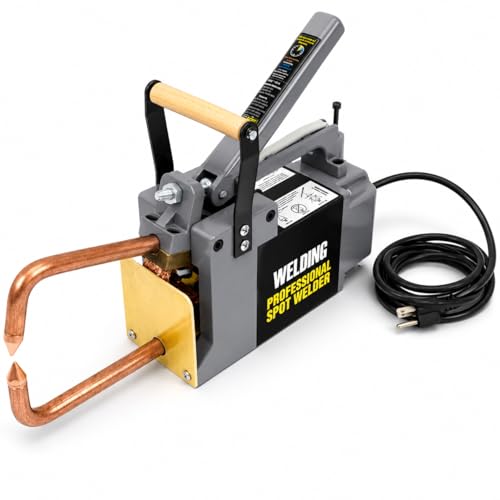
- Made for sheet metal and automotive bodywork
- 5,500A maximum output with 1/8-inch capacity
- Handheld lever operation and copper tips
Best For: Automotive panel repairs and dedicated spot-welding tasks
Best All-in-One Capability
200A 6-in-1 Plasma Cutter Welder

- MIG, HF TIG, stick, spot, and plasma cutting modes
- 110/220V dual-voltage operation
- Includes torches, regulator, hose, and consumables
Best For: Home garages needing welding and metal-cutting versatility
Best Compact Pick
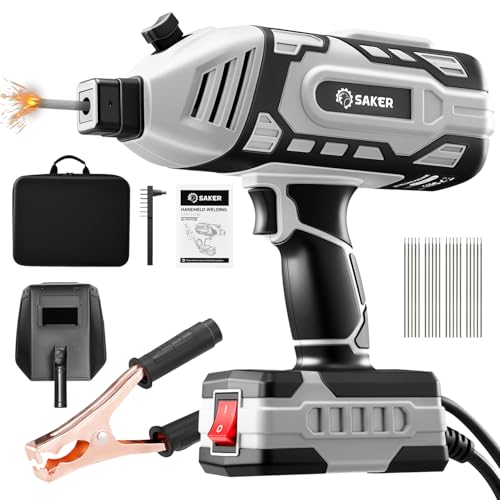
- Lightweight 3.3-pound handheld design
- 20-120 amp adjustable output
- Hot start and overheat protection
Best For: Portable DIY automotive repairs and light metalwork
Best for Dent Repair
VEVOR Stud Welder Dent Puller Kit

- Six automotive dent-repair modes
- Automatic contact welding and timing
- Includes 16 accessory types
Best For: Car, truck, and motorcycle body-panel dent repair
Best Output Range

- Adjustable 20-200 amp output
- Supports multiple common rod types
- Includes rods, gloves, and chip hammers
Best For: Portable DIY repairs requiring broader amperage adjustment
Best with Extra Features

- Automatic and manual dent-welding modes
- Seven settings and five stud types
- Accessory kit included
Best For: Steel car and truck body-panel dent repair
Best Multi-Process Option
BILT HARD Aluminum 250A MIG Welder

- Six welding processes in one unit
- 110V/220V dual-voltage operation
- Up to 250A with synergic controls
Best For: Versatile garage automotive repair and fabrication
Best Portable Flux-Core Pick – YESWELDER 135A 3-in-1 MIG Welder
For shoppers comparing welding machines for automotive work, the YESWELDER 135A is a compact option focused on flux-core welding and thin mild-steel repairs. Its synergic control and voltage micro-adjustment can help beginners manage settings for auto body panels, while the 110V design is convenient for home garages and outdoor work.
Best For: DIY automotive repairs, thin mild-steel panels, and portable flux-core welding without a shielding-gas cylinder.
Pros:
- Supports gasless flux-core MIG, stick, and lift TIG with an additional TIG torch.
- Synergic control and ±3V adjustment help fine-tune the arc and reduce burn-through risk on thin panels.
- Lightweight 11.4-pound design with a carrying handle and included .030-inch and .035-inch flux-core wire.
Cons:
- Its 135A, 110V output is aimed at mild steel up to 3/32 inch rather than heavier fabrication.
- Lift TIG requires a separate torch.
- Flux-core welding produces more cleanup than a gas-shielded MIG setup.
This is a practical starter choice when portability, simple controls, and gasless operation matter more than maximum thickness capacity. The built-in protection features and clear display add convenience for occasional automotive work.
Best Budget Stick Option – DEKOPRO 160A MMA ARC Welder
The DEKOPRO 160A is a straightforward MMA stick welder for buyers who need welding machines for automotive work involving mild steel, stainless steel, or cast iron. Its 110/220V input flexibility, digital display, and compact carrying design make it suitable for general repairs where stick welding is appropriate.
Best For: Garage repairs, outdoor maintenance, and users who prefer a portable stick-welding setup for compatible automotive metals.
Pros:
- Supports welding mild steel, stainless steel, and cast iron.
- 110/220V input capability offers flexibility across different electrical setups.
- Includes anti-stick, hot-start, arc-stability, and digital-display features.
Cons:
- It is an MMA/ARC stick welder, not a MIG machine for easier thin sheet-metal work.
- The supplied notes do not specify a duty cycle or detailed material-thickness range.
- Stick welding may require more cleanup and technique than wire-feed welding for automotive panels.
Choose this model when versatility across input voltages and metal types is more important than specialized body-panel control. Its compact form and hot-start and anti-stick functions make it a reasonable general-purpose repair welder.
Best for Sheet-Metal Spot Welding – Stark USA Portable Spot Welder
For automotive bodywork that calls for joining overlapping sheet metal, the Stark USA spot welder is a specialized alternative to conventional welding machines for automotive work. Its handheld lever operation, 110V input, copper tips, and stated 1/8-inch capacity are suited to spot-welding tasks in a garage or fabrication setting.
Best For: Automotive sheet-metal repairs, bodywork, and repeated spot welds where a compact handheld tool is preferable.
Pros:
- Designed specifically for sheet-metal and auto body spot welding.
- Provides a stated 5,500A maximum output and 1.5KVA rated input capacity.
- Simple lever-style operation with durable copper welding tips.
Cons:
- Spot welding is specialized and does not replace a MIG, stick, or TIG welder for general repairs.
- The unit is limited to a stated 1/8-inch material capacity.
- The supplied notes do not identify adjustable timing or force controls.
This model makes the most sense for users focused on automotive sheet-metal joining rather than all-purpose welding. Its dedicated format can be efficient for spot-weld work, but a second welder may still be needed for seams, brackets, and thicker components.
Best All-in-One Capability – 200A 6-in-1 Plasma Cutter Welder
The 200A multi-process unit is the most versatile choice here for shoppers seeking welding machines for automotive work plus cutting capability. It combines gas and gasless MIG, HF TIG, stick, spot welding, and plasma cutting, with 110/220V operation and a package that includes torches, regulator, hose, and consumables.
Best For: Well-equipped home garages and fabricators who need one machine for welding, sheet-metal cutting, and multiple process types.
Pros:
- Combines flux MIG, gas MIG, HF TIG, stick, spot welding, and plasma cutting.
- Dual-voltage 110/220V operation and synergic or manual MIG control support different users.
- Under 220V, it lists a 10mm ideal clean cut and 16mm maximum severance cut at a 60% duty cycle.
Cons:
- At 42 pounds, it is substantially less portable than compact single-process machines.
- Plasma cutting requires a compressed-air supply.
- The broad feature set may add setup complexity for beginners.
This is the strongest fit when automotive projects extend beyond welding into cutting and varied process work. Its included accessories reduce the need to assemble a system piece by piece, while the larger footprint and equipment requirements make it better suited to a dedicated workspace.
Best Compact Pick – Saker Portable ARC Welder
For shoppers comparing welding machines for automotive work, the Saker is a lightweight 110V stick welder designed for easy transport and straightforward metal repairs. Its 20-120 amp range, IGBT inverter, and hot-start function make it suitable for smaller automotive, home, and general repair tasks.
Best For: Portable DIY automotive repairs, light ironwork, and users who need a compact welder for storage in a workshop or vehicle.
Pros:
- Lightweight 3.3-pound handheld design fits easily in a car trunk or storage area.
- Adjustable 20-120 amp output offers five current settings for different projects.
- IGBT inverter, hot start, and thermal protection support steadier operation and easier arc starting.
- Works with 3/32-inch rods and is intended for carbon steel, iron, automotive repair, and general metal work.
Cons:
- Its 120-amp maximum is more limited than higher-output stick welders.
- The supplied notes specify support for 3/32-inch rods, so rod-size flexibility may be limited.
- Only the portable welding machine is listed among the included components.
The Saker stands out when portability and simple controls matter more than heavy-duty output. It is a practical choice for light automotive repairs, but users handling thicker material should verify that its amperage and rod compatibility meet the project requirements.
Best for Dent Repair – VEVOR Stud Welder Dent Puller Kit
Among welding machines for automotive work, the VEVOR Stud Welder is purpose-built for body repair rather than general stick welding. Its six welding modes, automatic contact welding, and included accessories are aimed at pulling dents from car, truck, and motorcycle panels.
Best For: Automotive body shops, restoration projects, and DIY users repairing dents in compatible sheet metal.
Pros:
- Designed specifically for automotive dent repair and single-side welding.
- Six modes accommodate pointed shapes, deep dents, curves, and flat areas.
- Automatic timing and contact welding help reduce guesswork during repairs.
- Includes 16 types of accessories in a portable toolbox with a carrying handle.
Cons:
- At 50.6 pounds, it is considerably heavier than the compact stick welders in this roundup.
- Maximum single-side welding thickness is listed as 1.2 mm.
- Its specialized dent-repair design may be less suitable for general-purpose welding.
The VEVOR is the most specialized option here for automotive panels. Its heavier build and focused accessories make sense for repeated dent work, while its 1.2 mm material limit should be considered before attempting repairs on thicker sections.
Best Output Range – Hpoouo 200A Mini Stick Welder
The Hpoouo offers a broader current range than many compact welders, making it a flexible option for welding machines for automotive work and general repairs. This 110V stick welder provides adjustable 20-200 amp output, accepts several common rod types, and includes basic accessories for getting started.
Best For: DIY users and hobbyists who want a highly portable stick welder with wider amperage adjustment for light and medium repair projects.
Pros:
- 20-200 amp adjustment supports materials listed from 0.06 to 0.2 inch thick.
- Compact 3.7-pound design fits in a backpack or toolbox for mobile work.
- Supports several rod types, including E6013, E6011, E6010, E7018, and E308 in 1/16- to 1/8-inch sizes.
- Includes hot start, anti-stick, arc force, thermal protection, 20 rods, gloves, and chip hammers.
Cons:
- It uses a 110V power source, which may limit performance for demanding applications.
- Stainless steel use is specified with E308L-16 rods only.
- Users must match electrode and ground-clamp polarity to the rod type.
The Hpoouo balances portability with the widest stated amperage range of these three options. Its included accessories and rod compatibility are useful for home repairs, though users should follow the polarity guidance and stay within the listed material thickness range.
Best with Extra Features – VEVOR Stud Welder Dent Puller
For automotive bodywork, the VEVOR Stud Welder Dent Repair Kit is a specialized option among welding machines for automotive work. Its automatic and manual modes, seven welding settings, and included dent-pulling accessories are designed for repairing steel body panels rather than general fabrication.
Best For: Pulling dents from steel car and truck body panels, including flat or curved surfaces.
Pros:
- Offers automatic and manual welding modes for efficiency or precision.
- Includes seven default welding modes and five stud types for varied dent repairs.
- Comes with a comprehensive accessory set stored in a toolbox.
- Compact design and a handle make it easier to transport.
Cons:
- It is purpose-built for stud welding and dent pulling, not a general-purpose welder.
- The listed specifications show 220-volt voltage, despite the title referencing 110V, so verify electrical requirements before purchase.
- At 43.2 pounds, it is heavier than highly portable hobby welders.
This is the most focused choice for automotive panel repair in the group. Choose it when controlled dent removal is the priority, rather than welding brackets, frames, or general metal projects.
Best Portable Stick Welder – HONE MMA205 Mini Welder
The HONE MMA205 is a compact stick welder for light automotive repairs and workshop tasks. With adjustable 20–205A output, support for common electrode types, and a 110V power source, it fits buyers seeking portable welding machines for automotive work and small metal projects.
Best For: DIYers handling small repairs, brackets, trailers, and other compatible steel or stainless-steel work.
Pros:
- Lightweight 4.4-pound mini design is easy to carry.
- Supports stick and lift-TIG modes, although a TIG torch is not included.
- Includes 25 welding rods, a wire brush, chipping hammer, gloves, and a face shield.
- Provides hot start, arc force, anti-stick, and built-in protective functions.
Cons:
- It is a stick welder, so it is less suited to clean, thin automotive body-panel work than a dedicated body-repair machine.
- A TIG torch must be purchased separately for lift-TIG use.
- The supplied notes position it for small DIY and home repairs rather than high-volume professional work.
This model is attractive when portability and a low-voltage outlet matter most. Its included starter accessories add convenience, but buyers doing frequent body-panel repairs may want a more specialized process.
Best Multi-Process Option – BILT HARD Aluminum 250A MIG Welder
The BILT HARD Aluminum 250A MIG Welder is the most versatile option here for buyers comparing welding machines for automotive work. It combines gas MIG, flux-core MIG, spool-gun MIG compatibility, lift TIG, stick, and spot welding, while supporting both 110V and 220V input.
Best For: Automotive DIYers and workshops needing one machine for steel, aluminum-compatible MIG work, repairs, fabrication, and spot welding.
Pros:
- Provides six welding functions in one machine.
- Dual-voltage operation and output up to 250A support a broad range of jobs.
- Synergic controls automatically adjust voltage and wire speed based on amperage.
- Supports multiple solid and flux-core wire sizes and includes MIG customization features.
Cons:
- The TIG gun and spool gun are not included.
- Its 21.5-pound size is less portable than the mini stick welder.
- Greater process flexibility may require more setup and consumable choices.
This is the strongest all-around pick for a garage that handles varied automotive and fabrication tasks. It offers the broadest process selection, but confirm which optional guns and consumables you need before budgeting.
How We Picked the Best Welding Machines for Automotive Work
We focused on the features that matter most in automotive repair: process versatility, usable amperage range, voltage compatibility, portability, body-panel suitability, and practical controls. The list includes MIG and flux-core machines for general fabrication, TIG-capable models for cleaner work, stick welders for heavier repairs, and dedicated spot or stud welders for sheet metal and dent pulling.
We also considered whether each machine is better suited to occasional garage use, restoration projects, mobile repairs, or more demanding shop work. Accessories, spool-gun compatibility, included leads, and the availability of gasless operation can significantly affect the real-world value of a welder.
Quick Comparison
| Welder type | Best for | Main advantage | Important limitation |
|---|---|---|---|
| MIG and flux-core | General automotive fabrication | Fast, relatively easy welding | Requires shielding gas for the cleanest results |
| TIG-capable multi-process | Thin metal and finish-sensitive work | Precise heat control | Slower learning curve and operation |
| Stick | Thicker steel and outdoor work | Simple, rugged, and portable | Less suitable for thin body panels |
| Spot or stud welder | Panel joining and dent repair | Purpose-built for auto-body work | Limited compared with a general welder |
Key Buying Factors for Automotive Welding Machines
Choose the Right Process
MIG is usually the most practical starting point for automotive fabrication because it is fast and easier to learn. Flux-core operation is useful outdoors or where gas is inconvenient, but it generally produces more spatter. TIG is valuable for thin stainless steel, aluminum, and visible precision work. Stick welding is better reserved for brackets, frames, and thicker steel rather than delicate body panels.
Check Power and Duty Cycle
A 110V model is convenient for a home garage, while dual-voltage machines provide more headroom when a 220V circuit is available. Do not judge capacity by peak amperage alone. Duty cycle indicates how long the machine can weld before cooling, which matters during repeated repairs or production work.
Match the Machine to the Metal
Automotive panels are often thin and vulnerable to warping, so adjustable voltage, wire speed, inductance, and low-amperage control are important. For aluminum, look for a spool-gun connection or a TIG function designed for aluminum work. Spot and stud welders can be more appropriate than a conventional arc welder for factory-style panel repairs and dent pulling.
Consider Portability and Setup
Compact inverter welders are easier to move around a vehicle, but inspect the included ground clamp, electrode holder, torch, cables, and consumables before buying. For gas MIG, you will also need a regulator, cylinder, and suitable wire. Confirm that your circuit, extension cords, and ventilation setup can safely support the machine.
Who Should Buy Which Welding Machines for Automotive Work?
Home mechanics and beginners: Choose a straightforward 110V MIG, flux-core, or compact inverter model with clear controls and a manageable learning curve.
Restorers and bodywork specialists: Consider a dedicated spot or stud welder for panel repairs, dent pulling, and work that benefits from minimal visible distortion.
Fabricators: A dual-voltage multi-process welder offers the broadest capability for brackets, exhaust components, frames, and mixed-material projects.
Heavy-duty users: Favor higher duty cycle, 220V input, stronger thermal management, and dependable consumable support over the smallest or cheapest design. Always follow the manufacturer’s safety instructions, use proper eye and respiratory protection, and remove paint, fuel, oil, and other combustible contaminants before welding.