Cold garages and workshops are easier to use when the heater matches the space, fuel supply, and ventilation setup. This roundup compares 10 natural gas garage heaters across forced-air, radiant, ventless, and direct-vent designs.
Use the buying guide below to narrow your options by heating capacity, installation requirements, efficiency, comfort, and day-to-day controls.
Best 10 Natural Gas Garage Heaters Picks for 2026
Best High-Capacity Forced-Air Pick

- Heats up to 1,667 sq. ft.
- Ceiling-mounted forced-air design
- Requires 10-ft minimum ceiling
Best For: Large garages and workshops needing broad, circulated heat
Best Quiet Power-Outage Pick

- Covers about 500–600 sq. ft.
- Needs no electricity to operate
- Designed for 7–8 ft. ceilings
Best For: Small garages needing quiet radiant heat
Best Flexible Fuel Pick
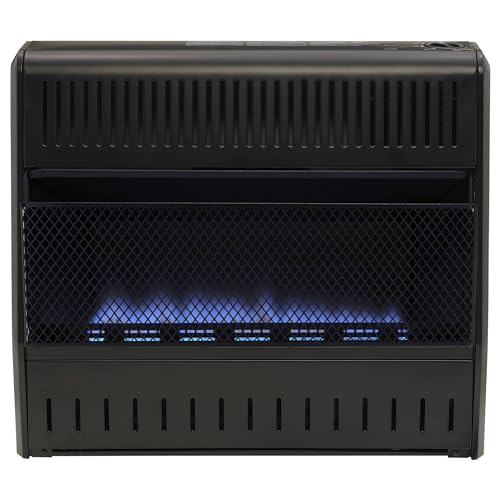
- Runs on natural gas or propane
- Thermostatic variable control
- Wall-mounted with safety shutoffs
Best For: Garages needing dual-fuel flexibility
Best for Extra-Large Garages
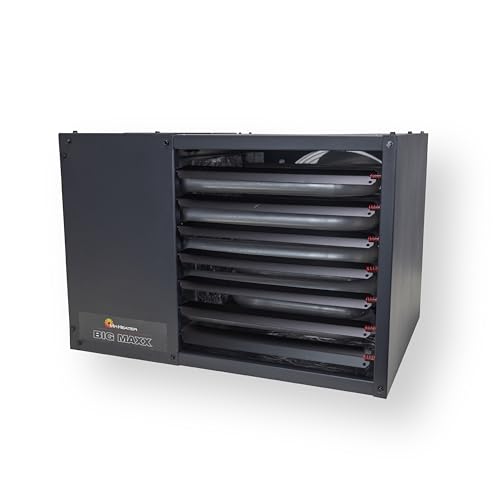
- Heats up to 2,667 sq. ft.
- High-output forced-air heating
- Includes ceiling brackets and conversion kit
Best For: Very large garages and commercial-style workspaces
Best Low-Profile Pick
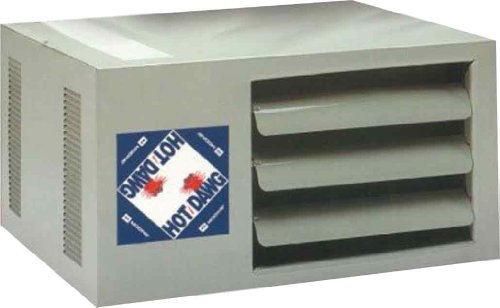
- 45,000 BTU output
- Listed coverage up to 700 sq. ft.
- Power exhaust and ceiling mounting
Best For: Compact garages needing quiet overhead heat
Best High-Capacity Pick
Mr. Heater 125,000 BTU Unit Heater
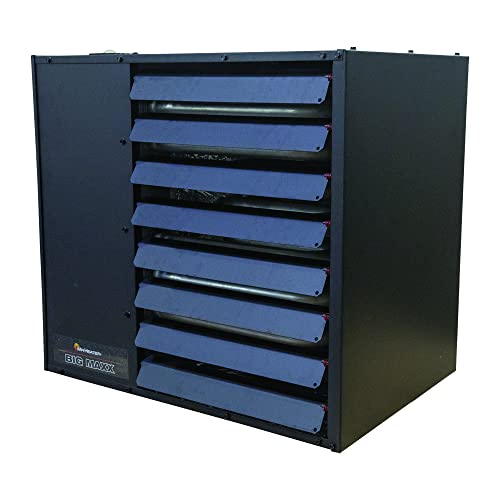
- 125,000 BTU forced-air output
- Listed coverage up to 2,000 sq. ft.
- Includes propane conversion kit
Best For: Large garages and work areas
Best No-Vent Option
Mr. Heater 30,000 BTU Blue Flame

- 30,000 BTU output
- Listed coverage up to 1,000 sq. ft.
- No electricity or outdoor venting required
Best For: Smaller indoor spaces needing simple installation
Best with Extra Features
Reznor 60K BTU Natural Gas Garage Heater

- 60,000 BTU forced-air output
- 83% thermal efficiency rating
- Ceiling- or wall-mount compatible
Best For: Large garages, workshops, and commercial spaces
Best No-Electricity Option
ProCom 30K BTU Ventless Infrared Heater

- 30,000 BTU radiant heating
- Works without electricity
- Wall hardware and base feet included
Best For: Smaller indoor areas and backup heating
Best Compact Vented Pick
Comfort Glow 17K BTU Wall Heater

- 17,000 BTU output for smaller spaces
- Direct vent and no electricity required
- Professional vent kit included
Best For: Small garages and compact indoor rooms
Best High-Capacity Forced-Air Pick – 50,000 BTU Unit Heater
For larger garages, barns, and workshops, this 50,000 BTU forced-air heater is a practical natural gas garage heaters option. Its ceiling-mounted design delivers heat across spaces up to 1,667 square feet and works with standard 24-volt or Wi-Fi-enabled thermostats sold separately.
Best For: Heating a roughly three-car garage or other large workspace with a ceiling-mounted unit.
Pros:
- 50,000 BTU output covers up to 1,667 square feet.
- Forced-air heating helps distribute warmth throughout the workspace.
- Includes ceiling-mount angle brackets and an NG-to-LP conversion kit.
- Safety shut-off switch and gas flame sensor provide important protective features.
Cons:
- Requires at least a 10-foot ceiling and 8 feet of clearance from the heater base to the floor.
- Thermostat is sold separately.
- Color may vary between gray and tan.
This is a strong choice when coverage and active air circulation matter more than low-profile installation. Confirm ceiling height, clearances, and thermostat compatibility before buying.
Best Quiet Power-Outage Pick – 25,000 BTU Radiant Heater
This 25,000 BTU radiant natural gas garage heater directly warms people and objects instead of relying on moving air. It covers approximately 500 to 600 square feet, requires no electricity, and is designed for low-profile buildings with 7- to 8-foot ceilings.
Best For: Smaller garages, workshops, and spaces where quiet, electricity-free heat is useful.
Pros:
- Radiant heat directly warms people and nearby objects.
- Operates without electricity, including during power outages.
- Quiet operation with no moving parts to service.
- Includes a thermostat and uses non-corrosive construction materials.
Cons:
- Coverage is limited to about 500 to 600 square feet.
- Thermostat wiring is not included.
- Not intended for sleeping quarters, mobile homes, or recreational vehicles.
Its compact coverage and no-electricity operation make it especially appealing for a modest garage or backup heating setup. Follow the installation and elevation guidance, and verify suitability for the intended space.
Best Flexible Fuel Pick – 30,000 BTU Blue Flame Heater
ProCom Dual Fuel Ventless Blue Flame Garage Heater - 30,000 BTU, T-Stat Control - Model# MNSD300TGA
Check Price On AmazonThe ProCom MNSD300TGA offers flexible heating for shoppers comparing natural gas garage heaters with dual-fuel models. This 30,000 BTU wall-mounted blue flame heater runs on either natural gas or liquid propane and includes thermostatic control with variable settings.
Best For: Garages or utility spaces where fuel flexibility and thermostat control are priorities.
Pros:
- Supports both natural gas and liquid propane.
- 30,000 BTU output with variable thermostatic settings.
- Blue flame design heats the air before circulating warmth through the room.
- Includes low-oxygen shutoff, overheat protection, and push-button piezo ignition.
Cons:
- Wall mounting is required.
- Its listed room applications extend beyond garages, so installation suitability should be confirmed for the specific space.
- Coverage area is not specified in the supplied product details.
This model is a practical option when the ability to switch between natural gas and propane is valuable. Its cabinet-style wall mount and thermostat offer convenient control, while built-in safety features add reassurance.
Best for Extra-Large Garages – 80,000 BTU Unit Heater
For very large garages and work areas, this 80,000 BTU forced-air unit is one of the higher-output natural gas garage heaters in this selection. The ceiling-mounted heater is rated to cover up to 2,667 square feet and supports standard 24-volt or Wi-Fi-enabled thermostats sold separately.
Best For: Large garages, barns, and workshops requiring coverage beyond what a 50,000 BTU unit provides.
Pros:
- 80,000 BTU output covers up to 2,667 square feet.
- Forced-air operation distributes heat through the workspace.
- Includes ceiling-mount brackets and an NG-to-LP conversion kit.
- High-temperature shutoff and gas safety flame sensor are included.
Cons:
- Requires a minimum 10-foot ceiling and 8 feet of floor clearance.
- Thermostat is sold separately.
- At 78.2 pounds, it is heavier than the 50,000 BTU model.
This heater is best suited to spacious, properly cleared buildings where maximum listed coverage is the priority. Check the installation dimensions, ceiling requirements, and available thermostat before committing.
Best Low-Profile Pick – Modine Hot Dawg 45,000 BTU
Modine HD45AS0111Natural Gas Hot Dawg Garage Heater 45,000 BTU with 80-Percent Efficiency Grey
Check Price On AmazonIf you want a purpose-built option among natural gas garage heaters, the Modine Hot Dawg combines 45,000 BTUs with 80-percent efficiency and coverage listed at up to 700 square feet. Its low-profile cabinet, neutral gray finish, and ceiling-bracket mounting suit garages where floor space matters.
Best For: Garages up to 700 square feet needing a compact, ceiling-mounted natural gas heater.
Pros:
- Quiet operation
- Low-profile design with a neutral color
- Power exhaust supports side-wall or roof venting
- Field wiring connections and knockouts simplify installation access
Cons:
- Coverage is limited to a listed 700 square feet
- Requires venting and a 115-volt electrical connection
- At 60 pounds, installation may require assistance
The Modine is a focused garage-heating solution rather than a high-capacity shop heater. Its compact form and standard power exhaust make it a practical choice when quiet, overhead installation is more important than maximum coverage.
Best High-Capacity Pick – Mr. Heater 125,000 BTU Unit Heater
For large spaces, this Mr. Heater unit stands out among natural gas garage heaters with 125,000 BTUs and listed coverage of up to 2,000 square feet. It uses forced air, includes electronic ignition and powered exhaust, and can be converted from natural gas to liquid propane with the included kit.
Best For: Large garages or work areas requiring high-output, ceiling-mounted heating.
Pros:
- 125,000 BTU output for large spaces
- Listed heating coverage of up to 2,000 square feet
- Electronic ignition and powered exhaust
- Liquid propane conversion kit included
Cons:
- Large and heavy at about 109 pounds
- More substantial than needed for smaller garages
- Listed electrical requirement is 61 amps
This is the strongest capacity choice in the group, but its large cabinet and electrical specification call for careful planning. It makes the most sense when the garage’s size justifies a commercial-style forced-air heater.
Best No-Vent Option – Mr. Heater 30,000 BTU Blue Flame
This vent-free blue flame model offers a simpler approach to natural gas garage heaters, producing 30,000 BTUs and listing coverage up to 1,000 square feet. It requires no electricity or outdoor venting, includes battery-powered electronic ignition, and provides an adjustable thermostat.
Best For: Indoor spaces up to 1,000 square feet where no outdoor venting or electrical connection is preferred.
Pros:
- No electricity or outdoor venting required
- Heats up to a listed 1,000 square feet
- Battery-operated electronic ignition with battery included
- Adjustable thermostat and low-oxygen safety shut-off
Cons:
- Blower fan kit is sold separately
- Wall mounting is required
- Designed for indoor use and natural gas only
With its vent-free design and modest 30,000-BTU output, this heater is convenient where installation simplicity matters. Buyers wanting fan-assisted circulation will need to purchase the optional blower kit separately.
Best with Extra Features – Reznor 60K BTU Natural Gas Garage Heater
For large garages, workshops, and commercial spaces, the Reznor UDXC-60 is a powerful option among natural gas garage heaters. Its 60,000-BTU forced-air design provides efficient heating, while ceiling- or wall-mount compatibility helps preserve usable floor space.
Best For: Large garages, workshops, warehouses, and other indoor spaces requiring high-capacity heating.
Pros:
- 60,000 BTU output with an 83% thermal efficiency rating.
- Ceiling or wall mounting options, with four suspension points.
- TCORE2 heat exchanger, single-burner combustion, built-in disconnect, and status LED.
- Low-noise operation and a 9-year heat-exchanger, burner, and flue-collection-box warranty.
Cons:
- Mounting hardware or brackets are sold separately.
- Vent pipe compatibility and installation requirements need to be planned in advance.
- At 71 pounds, installation may require additional assistance.
The Reznor is the strongest fit when broad coverage and permanent installation matter more than portability. Buyers should account for mounting and venting components because the listing includes the main unit only.
Best No-Electricity Option – ProCom 30K BTU Ventless Infrared Heater
The ProCom MN300TPA-B is a compact radiant option for shoppers comparing natural gas garage heaters for smaller indoor areas. It delivers up to 30,000 BTU, includes thermostat control, and can operate without electricity during outages or emergencies.
Best For: Smaller indoor spaces and users who want flexible floor- or wall-mount placement with no electrical connection.
Pros:
- Produces up to 30,000 BTU and is rated to heat up to 1,400 square feet.
- High, medium, and low thermostat control supports adjustable comfort.
- Includes wall-mount hardware and base feet for placement flexibility.
- Push-button ignition and an oxygen depletion sensor provide built-in safety features.
Cons:
- It is an indoor ventless heater, so installation and room-use requirements should be reviewed carefully.
- Radiant heating is better suited to targeted warmth than forced-air circulation.
- The listing describes it primarily for residential rooms rather than large commercial spaces.
This ProCom model stands out for simple placement and operation during power interruptions. Its ventless infrared format makes it a different choice from a ceiling-mounted forced-air garage furnace, so it is best matched to the intended room and installation conditions.
Best Compact Vented Pick – Comfort Glow 17K BTU Wall Heater
The Comfort Glow DVN17 is a space-saving choice among natural gas garage heaters for smaller rooms and garages. This 17,000-BTU direct-vent model mounts to the wall, includes a professional vent kit, and uses thermostat control for straightforward, permanent heating.
Best For: Smaller garages, offices, bedrooms, and other indoor spaces needing compact direct-vent heating.
Pros:
- Heats up to approximately 500 square feet with 17,000 BTU output.
- Direct-vent design requires no chimney and operates without electricity.
- Includes vent pipe, air-intake pipe, vent cap, flashing, heat shield, and connection rod.
- Electronic ignition, safety pilot, pressure regulator, and thermostat control are included.
Cons:
- Its rated coverage is much lower than high-output garage unit heaters.
- Wall installation requires a compatible wall thickness of 4.5 to 10 inches.
- The included venting setup still requires careful installation planning.
The Comfort Glow is a practical fit when compact dimensions and direct venting are priorities. With 17,000 BTU output and approximately 500-square-foot coverage, it is better suited to smaller spaces than large workshops.
How We Picked These Natural Gas Garage Heaters
We selected models representing the main heating formats used in garages and workshops: forced-air unit heaters, overhead radiant heaters, ventless blue-flame and infrared heaters, and direct-vent wall heaters. The lineup covers approximately 17,000 to 125,000 BTU, giving buyers options for compact work areas, insulated garages, and larger shops.
We also considered fuel flexibility, thermostat availability, installation style, stated efficiency, heat distribution, and whether a model is better suited to occasional use or regular heating. Always verify local code requirements and have gas connections, venting, and combustion-related work completed by a qualified professional.
Quick Comparison
| Heater type | Best suited to | Main advantage | Important consideration |
|---|---|---|---|
| Forced-air unit | Large or frequently used garages | Fast, broad heat distribution | Fan noise and required venting |
| Radiant overhead | Work zones and occupied areas | Direct, comfortable heat | Less suitable for evenly heating every corner |
| Ventless blue flame | Smaller, well-maintained spaces | Simple installation and quiet operation | Adds combustion byproducts and moisture indoors |
| Ventless infrared | Spot heating near people or benches | Warmth directed at objects and occupants | Requires careful placement and ventilation |
| Direct vent | Enclosed rooms needing controlled exhaust | Sealed combustion path | Requires suitable exterior wall installation |
Key Buying Factors for Natural Gas Garage Heaters
Heat Output and Garage Size
BTU output is only a starting point. Ceiling height, insulation, door openings, climate, and desired temperature all affect sizing. Oversizing can cause short cycling, while undersizing may leave the space uncomfortable. A heating professional can calculate the load more accurately than a simple square-foot estimate.
Venting and Combustion Air
Forced-air and direct-vent systems generally require specific venting arrangements. Ventless heaters do not use a flue, but they still need adequate room ventilation and must comply with local regulations. Never install a fuel-burning heater in a way that blocks required clearances or compromises carbon-monoxide safety.
Heat Distribution and Comfort
Forced-air units move warmth through the room quickly, making them useful for larger open garages. Radiant heaters work well when you mainly need warmth at a workbench, vehicle bay, or other occupied zone. Wall-mounted blue-flame models provide quieter, more gradual convection heat.
Controls, Efficiency, and Installation
A thermostat can reduce temperature swings and unnecessary fuel use. Check whether the heater includes built-in controls, requires a separate thermostat, supports natural gas only or dual fuel, and needs ceiling or wall mounting. Confirm gas pressure, electrical requirements, clearances, and installation hardware before purchasing.
Who Should Buy Which Natural Gas Garage Heaters?
For Large or Drafty Workshops
Choose a higher-output forced-air model, such as the 80,000, 125,000, or 60,000 BTU options, when rapid recovery and broad circulation matter most. Match output to a professional heat-load calculation.
For a Typical Insulated Garage
A 30,000- to 50,000-BTU unit or wall heater is often a more practical starting point. Look for thermostat control and a design that fits your available wall, ceiling, and venting locations.
For Quiet Zone Heating
Consider an overhead radiant heater or infrared model if you spend most of your time at one bench or bay. These designs can feel warm without heating every cubic foot equally.
For Compact Rooms with Simpler Installation Needs
Ventless or direct-vent wall heaters may fit smaller spaces, but installation and ventilation rules are critical. If safety requirements, clearances, or venting are uncertain, consult a licensed installer before buying.