Choosing among hot air plastic welders can be difficult when many models share similar 1,500W or 1,600W ratings. The meaningful differences are usually temperature control, included nozzles, welding accessories, ergonomics, and whether the tool suits occasional repairs or frequent roofing work.
This roundup compares 10 handheld welders for PVC, TPO, vinyl, and other thermoplastics, helping you match power, control, and kit contents to the jobs you actually plan to tackle.
Best 10 Hot Air Plastic Welders Picks for 2026
Lightweight Workshop Pick
1600W Adjustable Plastic Welder
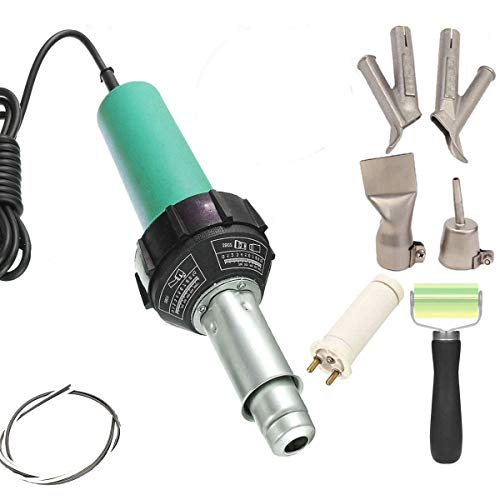
- Adjustable temperature and power
- Includes spare heating element and four nozzles
- Compact design with PE/PVC rods and roller
Best For: DIY plastic repairs and general panel-welding tasks
Precision Control Pick

- Nine-speed adjustment
- 30°C–680°C temperature range
- Includes multiple nozzles and spare heating core
Best For: Multi-material repairs requiring precise heat control
Heavy-Duty Kit Pick

- 260L/min airflow with 1600W power
- 0–650°C temperature range
- Large accessory set and carrying case
Best For: PVC roofing, flooring, and demanding plastic-sealing work
Best for Easy Maintenance
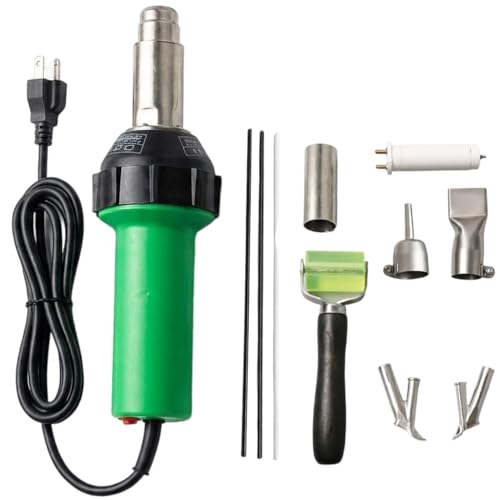
- Includes a spare heating element
- Under-3-pound handheld design
- Multiple nozzles, roller, and PE/PVC rods included
Best For: Portable DIY repairs on kayaks, bumpers, liners, and roofing membranes
Adjustable All-Rounder
1600W Hot Air Plastic Welder Kit

- Nine-level heat adjustment from 86°F to 1112°F
- Includes nozzles, speed tips, roller, groover, rods, and spare element
- Designed for PVC, TPO, PE, PP, vinyl, and other repairs
Best For: Versatile DIY plastic repairs and seam work
Long-Reach Pro Pick
1600W Roofing and Flooring Welder

- 16.4-foot power cord reduces the need for extension cords
- Includes 20mm and 40mm nozzles, roller, and spare element
- 104°F–1100°F adjustment with thermal cutoff
Best For: Long roofing and vinyl flooring seams
Portable Repair Set
Beyondlife 1600W Plastic Welder
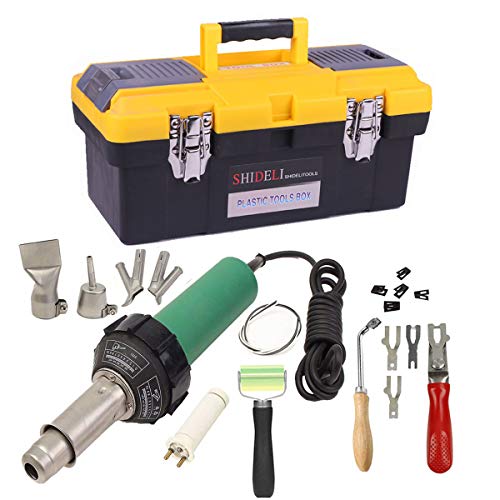
- Adjustable temperature and performance for varied plastics
- Includes butterfly flooring welding kit and carry case
- Suited to flooring, membranes, tanks, kayaks, and bumpers
Best For: Portable general-purpose plastic and flooring repairs
Heavy-Duty Roofing Kit

- 1600W output and 0–650°C adjustment
- Extensive roofing and flooring accessories
- Protection features for extended operation
Best For: Roofing seams, flooring, tanks, and larger thermoplastic repairs
Lightweight Repair Pick
1600W Adjustable Hot Air Welder

- Compact 4.53-pound listed weight
- 40–600°C adjustable temperature
- Lower-vibration balanced fan design
Best For: Portable residential plastic and membrane repairs
Complete Accessory Set

- 40–650°C range with nine-level control
- Includes welding, trimming, and grooving tools
- Hard case and automatic cooling system
Best For: Versatile roofing, flooring, liner, and thermoplastic repairs
Lightweight Workshop Pick – 1600W Adjustable Plastic Welder
1600W Plastic Hot Air Welder Heating Gun PVC Vinyl Rod Welding Hot Gas Pistol Tool
Check Price On AmazonIf you need hot air plastic welders for routine repairs, this 1600W model offers adjustable temperature and power for working with different melting points. Its compact design and included nozzles make it suitable for both basic repairs and more specialized plastic welding tasks.
Best For: DIYers and panel welders repairing bumpers, kayaks, tarpaulins, pool liners, tanks, and vinyl flooring.
Pros:
- Adjustable temperature and power support multiple plastic materials.
- Includes a spare heating element and four welding nozzles.
- Lightweight, compact design weighs under 4 pounds.
- Includes a silicone pressure roller and PE/PVC rods.
Cons:
- The kit is designed for 110V AC power.
- The listed flow rate is lower than some higher-airflow models in this roundup.
This is a practical all-around choice when you want adjustable controls and a useful starter accessory set without moving to a larger roofing-focused kit.
Precision Control Pick – 1500W 9-Speed Plastic Welder
Among hot air plastic welders, this 1500W kit stands out for its nine-speed control and adjustable 30°C–680°C temperature range. The low-noise design, heat-resistant handle, and included accessories make it a flexible option for varied repair work.
Best For: Users who want fine temperature control for different plastics, including bumpers, kayaks, water tanks, vinyl flooring, and pool membranes.
Pros:
- Nine-speed control and adjustable temperature provide broad operating flexibility.
- Produces an 180L/min hot-air flow for softening plastic and filler rods.
- Includes several nozzles, a silicone pressure roller, spare heating core, and PE/PVC rods.
- Heat-resistant handle and electronic heating protection support safer operation.
Cons:
- Its 180L/min airflow is lower than the 1600W, 260L/min model in this roundup.
- It is intended for 110V operation.
Choose this model when control is more important than maximum airflow. Its temperature range and nine-speed adjustment are useful for switching between plastic types and repair conditions.
Heavy-Duty Kit Pick – 1600W PVC Roofing Welder
This 1600W unit is one of the more equipment-focused hot air plastic welders, pairing 260L/min airflow with a 0–650°C temperature range. It is supplied with an unusually broad collection of rollers, testing tools, blades, and storage equipment for roofing and larger plastic-sealing projects.
Best For: PVC roofing, sports-flooring, tank, pipeline, boat, bumper, and other demanding thermoforming repairs.
Pros:
- High 260L/min airflow and 1600W output support powerful heating.
- Temperature range spans 0–650°C.
- Includes replacement heating element, multiple nozzles, silicone and brass rollers, seam tester, and cutting tools.
- Comes with a heavy-duty plastic carrying case.
Cons:
- The complete package weighs 8.83 pounds, making it less convenient to transport than the handheld tool alone.
- No warranty is listed in the supplied details.
- Noise is specified below 67dB rather than described as especially quiet.
This is the strongest fit for users who value airflow and a comprehensive field kit. Its accessories and carrying case make it particularly suited to roofing, flooring, and repeated repair work.
Best for Easy Maintenance – 1600W Variable-Temp Welder
For buyers comparing hot air plastic welders for home and outdoor repairs, this 1600W variable-temperature model combines a lightweight handheld design with a spare heating element. Its included speed nozzles, pressure roller, and PE/PVC rods cover common plastic joining and seam-sealing jobs.
Best For: Home users repairing cracked kayaks, car bumpers, tarps, pool or pond liners, and TPO roofing membranes.
Pros:
- Includes a spare heating element that can help reduce repair downtime.
- Under-3-pound handheld design is intended to reduce fatigue during longer jobs.
- Low-noise dynamic-balance fan and ergonomic design support more comfortable use.
- Includes flat, pencil-tip, triangle, and round speed nozzles plus a silicone roller.
Cons:
- The supplied details do not specify the temperature range or airflow rate.
- It is designed for 110V AC power.
- The included warranty and support terms are limited to a 30-day money-back guarantee, one-year replacement, and three-year technical support.
This model makes sense when portability and serviceability matter. The spare core and lightweight body are useful advantages for DIY users handling repeated outdoor or vinyl-seam repairs.
Adjustable All-Rounder – 1600W Hot Air Plastic Welder Kit
For shoppers comparing hot air plastic welders, this 1600W corded kit stands out for its broad temperature range and included accessories. The nine-level dial runs from 86°F to 1112°F, helping you adjust heat for materials such as PVC, TPO, PE, PP, and vinyl.
Best For: DIYers and repair users handling flooring, roofing membranes, pool liners, tanks, tarps, RV materials, or bumper repairs.
Pros:
- Adjustable 30°C–600°C heat range for different thermoplastics.
- Includes flat and round nozzles, speed tips, silicone roller, groover, rods, brush, and spare heating element.
- Automatic cooling system, heat-resistant handle, and double-layer air tube support controlled use.
- Suitable for a wide range of repair and seam-welding applications.
Cons:
- The corded design requires access to a suitable power source.
- The kit includes only three plastic welding rods, so additional rod types may be needed for specific materials.
This is a flexible choice if you want one hot air welder for varied materials and tasks. Test the selected heat and rod on scrap material before starting the finished repair.
Long-Reach Pro Pick – 1600W Roofing and Flooring Welder
This 1600W option is one of the more practical hot air plastic welders for long seams because it includes a 16.4-foot power cord. Its adjustable 104°F–1100°F temperature range, flat nozzles, and bearing-equipped silicone roller are geared toward roofing and flooring work.
Best For: Roofing, vinyl flooring, tarp, tank, pool-liner, RV-cover, and other extended seam or membrane repairs.
Pros:
- 16.4-foot heavy-duty cord provides extra reach for larger work areas.
- Includes 20mm and 40mm stainless steel flat nozzles, a silicone seam roller, and spare heating element.
- Adjustable temperature range accommodates thinner PVC films and thicker TPO or HDPE materials.
- Thermal cutoff helps limit overheating during continuous use.
Cons:
- The package is more focused on flat-nozzle seam work than on a broad selection of specialty tips.
- At 4.33 pounds, it may feel less convenient for prolonged handheld repairs than a lighter tool.
The long cord and seam roller make this a strong fit for users who regularly weld long roofing or flooring runs. Its included spare heating element is also useful for minimizing interruptions during projects.
Portable Repair Set – Beyondlife 1600W Plastic Welder
For buyers seeking hot air plastic welders with a transport-friendly setup, this Beyondlife 1600W kit includes a butterfly flooring welding kit and carry case. Adjustable temperature and performance settings let the hot air stream and filler rod work across plastics with different melting points.
Best For: Portable plastic repairs involving vinyl flooring, truck curtains, pool membranes, water tanks, kayaks, and car bumpers.
Pros:
- Adjustable temperature and performance support work with different plastics.
- Includes a butterfly flooring welding kit for flooring-related repairs.
- Carry case supports transport and storage.
- Designed for varied repairs including tarps, membranes, tanks, kayaks, and bumpers.
Cons:
- The supplied notes do not specify the exact temperature range.
- The listed package weight is 6.47 pounds, despite the product description emphasizing a lightweight tool.
- The notes do not detail the included nozzle or welding-rod selection.
This set makes sense when portability and flooring accessories matter more than a highly itemized accessory package. Its adjustable operation gives it useful versatility for general plastic repair work.
Heavy-Duty Roofing Kit – 1600W PVC Hot Air Welder
For demanding roofing and plastic-repair work, these hot air plastic welders stand out with a 1600W motor, temperatures up to 650°C, and a generous accessory set. This model is especially practical when you need seam-testing, trimming, rolling, and multiple nozzle options in one case.
Best For: Roofing seams, PVC sports flooring, tanks, pipelines, plastic boats, bumpers, and other thermoplastic repairs.
Pros:
- 1600W power with adjustable 0–650°C temperature range.
- Includes multiple flat, angled, and round nozzles plus rollers, blades, scissors, and a seam tester.
- Designed with heating-sleeve and electronic heating protection for extended operation.
- Three-meter power cord and carrying case support job-site use.
Cons:
- The complete kit is relatively bulky and listed at 10 pounds.
- Its 110V power requirement may limit use where compatible power is unavailable.
This is the most equipment-rich option of the group for users who want a dedicated roofing and flooring setup rather than a bare welding gun. Its broad accessory selection adds versatility, while the high output suits frequent, larger repair jobs.
Lightweight Repair Pick – 1600W Adjustable Hot Air Welder
If portability matters, this 1600W hot air plastic welder offers a compact alternative with a 40–600°C adjustable range and a listed weight of 4.53 pounds. Its balanced fan design is intended to reduce vibration and noise during handheld welding tasks.
Best For: Residential repairs involving chemical tanks, plumbing fittings, waterproof membranes, and impermeable liners.
Pros:
- Compact design with heat-resistant handle and stainless-steel nozzle components.
- Adjustable 40–600°C temperature range supports different thermoplastics.
- Dynamic-balance fan is designed for lower vibration and noise.
- Includes several nozzles, a pressing wheel, welding rods, brush, and replacement heating core.
Cons:
- The supplied configuration is listed as having no carrying case.
- The accessory selection is more limited than the larger roofing kits.
- Its 110V specification requires a compatible power source.
This model makes sense for users who want strong output without the size of a full roofing package. It balances adjustable heat and basic accessories with a lighter, lower-vibration design suited to occasional or residential repair work.
Complete Accessory Set – 1600W Roofing Plastic Welder
This 1600W hot air plastic welder is built for users who want a broad set of welding, trimming, grooving, and seam-rolling tools in a hard case. Its 40–650°C range, nine-level temperature knob, and automatic cooling system make it adaptable for roofing, flooring, liners, and general thermoplastic repairs.
Best For: TPO roofs, vinyl floors, tarps, pool liners, water tanks, boats, bumpers, RV repairs, and PVC, PE, PP, or PVDF welding.
Pros:
- Includes flat, angled, wide, round, and speed-welding nozzles.
- Hard carrying case also holds rollers, knives, groover, skiving tool, and spare blades.
- Temperature adjusts from 40°C to 650°C with a nine-level control.
- Stainless-steel nozzles, bearing-equipped silicone roller, and automatic cooling add practical durability features.
Cons:
- The full package is listed at 9.24 pounds, despite the handheld welder itself being described as about 2.2 pounds.
- It requires practice to select heat settings without damaging plastic.
- The manufacturer instructs users to cool the unit for five minutes before shutdown.
Among these hot air plastic welders, this kit offers one of the broadest combinations of welding and floor-or-roof preparation tools. It is a strong choice for varied projects, provided you are willing to learn the correct temperature settings and follow the cooling procedure.
How We Picked the Best Hot Air Plastic Welders
We focused on the features that have the greatest effect on weld quality and day-to-day usability: heater output, temperature adjustment, airflow control, nozzle selection, included rollers and probes, power requirements, and the types of plastic identified by each kit. We also considered whether a package is better suited to roofing seams, flooring, vinyl repairs, fabrication, or general workshop use.
Because advertised wattage alone does not determine performance, treat the 1,600W rating as an indication of heating capacity rather than a guarantee of faster or stronger welds. Proper surface preparation, compatible filler rod, consistent movement, and correct temperature remain essential.
Quick Comparison
| Best For | What to Prioritize | Useful Accessories |
|---|---|---|
| Occasional repairs | Simple controls and dependable heating | Basic round and speed nozzles |
| PVC or TPO roofing | Stable adjustable temperature and suitable airflow | Seam roller, probe, and roofing nozzle |
| Vinyl and flooring | Fine heat control and maneuverability | Speed nozzle, pressure roller, and filler rod |
| Frequent workshop use | Durable construction, cooling procedure, and replaceable accessories | Multiple nozzles and organized carrying case |
Key Buying Factors for Hot Air Plastic Welders
Temperature and Airflow Control
Variable temperature is more useful than maximum heat alone. PVC, TPO, vinyl, and other plastics soften at different temperatures, and excessive heat can cause discoloration, distortion, or weak joints. Multi-speed airflow settings help you control how quickly heat reaches the workpiece. A broad adjustment range, such as roughly 40–600°C, can be useful, but the dial should also be easy to read and adjust while wearing protective gloves.
Nozzles and Welding Accessories
Check the kit contents before paying for a higher-priced package. A tack nozzle, overlap nozzle, speed nozzle, welding rod, seam roller, and temperature probe each support different techniques. Roofing-focused kits with seam rollers and testers may offer better value for membrane work, while a basic nozzle set may be sufficient for small plastic repairs.
Power, Voltage, and Handling
Confirm that the tool matches your outlet. Several models in this selection are 110V units intended for North American power. A 1,500W or 1,600W tool can draw substantial current, so use an appropriate circuit and avoid undersized extension cords. Also consider balance, grip comfort, cable length, and whether the gun can be safely rested while hot.
Safety and Technique
Use eye protection, heat-resistant gloves, ventilation, and a clean, stable work surface. Test the temperature on scrap material before starting the finished seam. Keep the nozzle moving, apply even pressure with the roller, and allow the tool to complete its cooling procedure before storage. Never weld unknown plastics or materials that may release hazardous fumes without proper controls.
Who Should Buy Which Hot Air Plastic Welders?
Choose a straightforward adjustable-temperature kit if you need a versatile tool for occasional household, automotive, or workshop repairs. A package with multiple nozzles is the better choice for users working across different plastic profiles and joint styles.
For roof membranes, prioritize kits that include a seam roller, probe, and purpose-built roofing nozzle rather than choosing solely by wattage. Flooring and vinyl users should favor precise temperature control, a speed nozzle, and a comfortable design that supports long, steady passes.
If you expect frequent professional use, look beyond the accessory count. Favor robust construction, stable heat output, clearly marked controls, accessible replacement nozzles, and a supplier that provides usable specifications and support. Whichever model you select, practice on offcuts first and match the filler rod to the base plastic for the strongest result.