Choosing an EV charger with solar integration can make home charging smarter, cleaner, and more cost-effective. The right model should work smoothly with your electrical setup, your vehicle, and any solar or energy management tools you already use.
In this roundup, we focus on practical features that matter most: charging speed, smart controls, installation type, and compatibility with current and future EV platforms.
Best 10 Ev Charger with Solar Integration Picks for 2026
Solar Smart Home Charger

- 50A Level 2 hardwired charger
- Three solar charging modes
- Active load management support
Best For: Homeowners wanting solar-aware charging and home load balancing
Plug-In Tesla Solar Charger

- NACS plug for Tesla and NACS EVs
- Up to 40A from a 14-50 outlet
- App scheduling and energy tracking
Best For: Tesla owners who want a simple plug-in Level 2 charger
Commercial EMS Charger

- 80A commercial Level 2 charging
- Built-in cellular plus Wi-Fi
- OCPP and EMS integration ready
Best For: Commercial sites, fleets, and workplaces with managed charging needs
Home Plug-In EV Charger

- J1772 plug-in charger for most EVs
- Up to 40A on a NEMA 14-50 outlet
- App scheduling and energy tracking
Best For: Non-Tesla drivers wanting an easy home Level 2 charger
Solar-Integrated Fast Charger
Enphase IQ 80 NACS Hardwired 64A

- Works with Enphase Energy System for solar charging
- Up to 15.4 kW and 61 miles per hour of charging
- Wi‑Fi app scheduling and off-peak reminders
Best For: Tesla and NACS EV owners who want solar integration and high-speed home charging
Solar-Compatible Value Pick

- Listed as solar energy compatible
- Wi‑Fi and Bluetooth app control
- Up to 25–35 miles of range per hour
Best For: Homeowners seeking a compact, app-controlled charger that fits a solar-friendly setup
Plug-In Solar Smart Charger
- Connects with your home solar system
- Revenue-grade meter for utility rebate programs
- Plug-in NEMA 14-50 design with app control
Best For: Solar homeowners who want a plug-in charger with smart controls and metering
Solar-Ready Smart Charging Pick
Emporia 48A WiFi Level 2 EV Charger

- 48A hardwired Level 2 charging
- WiFi app control with energy data
- UL listed and ENERGY STAR certified
Best For: Homeowners who want a fast smart charger with energy monitoring
Plug-In Smart Charging Option
EVDANCE 40A NEMA 14-50 Level 2 Charger

- 40A Level 2 charging at 240V
- Wi-Fi and Bluetooth scheduling control
- IP65 enclosure with ETL and FCC certification
Best For: Drivers who want a plug-in charger with app scheduling
AI-Driven Charging Management
CleverCharge 40A J1772 Level 2 Charger

- 40A Level 2 charging up to 38 miles per hour
- CleverKey AI app scheduling and notifications
- Multi-home and multi-vehicle management
Best For: Multi-EV households that want app-based charging control
Solar Smart Home Charger – ELECQ 50A Hardwired EVSE
If you want an ev charger with solar integration that also helps manage whole-home power, this ELECQ model is built for that kind of setup. It combines 50A Level 2 charging with active load management, plus three solar charging modes so you can better align charging with available clean energy and household demand.
Best For: Homeowners who want a hardwired Level 2 charger with solar-aware charging and load balancing.
Pros:
- Up to 50A output and about 48 miles of range per hour, depending on vehicle and breaker capacity
- Three flexible solar charging modes for using clean energy and reducing charging costs
- Active load management with the Elecq Power Monitor helps avoid a costly panel upgrade
- NEMA 4 and IK10 ratings with 10kV/5kA surge protection for indoor or outdoor use
Cons:
- Hardwired installation is less flexible than a plug-in unit
- Solar charging modes appear to require the Elecq Power Monitor for full load-balancing functionality
- J1772 connector needs an adapter for Tesla NACS vehicles
This is a strong fit if your priority is smart energy coordination rather than just raw charging speed. The app control, solar modes, and future-proof OCPP support make it a practical choice for a home setup that may grow with your energy system.
Plug-In Tesla Solar Charger – EVIQO NACS 40A Plug-In
This ev charger with solar integration is a good fit if you want a simple plug-in setup and app-based control for timed charging. It delivers up to 40A from a NEMA 14-50 outlet and includes remote scheduling and energy tracking, which can help you pair overnight charging with lower-rate or solar-friendly timing.
Best For: Tesla drivers or NACS vehicles that want a plug-in Level 2 charger with easy app control.
Pros:
- Built-in NACS plug works directly with Tesla vehicles and other EVs with a NACS port
- Plug-in 240V installation avoids hardwiring and supports up to 40A charging
- 25 ft cable gives generous reach in a garage or driveway
- App supports start/stop, current adjustment, scheduling, and energy tracking
Cons:
- Non-Tesla J1772 vehicles need a separate NACS-to-J1772 adapter
- Requires a 240V NEMA 14-50 outlet on a dedicated 50A circuit
- Uses 2.4 GHz WiFi only
Overall, this charger stands out for convenience: plug it in, control it from the app, and set charging around your preferred energy window. It does not offer dedicated solar modes, but it can still fit a solar-conscious household that times charging strategically.
Commercial EMS Charger – Enphase IQ EV Charger 2
For commercial sites looking at an ev charger with solar integration and broader energy-system compatibility, this Enphase unit is geared toward fleet, workplace, and managed charging environments. It offers OCPP support, API and local EMS readiness, and built-in cellular connectivity so it can stay connected without relying on site Wi-Fi.
Best For: Commercial properties, fleets, and workplaces that need managed charging with EMS integration.
Pros:
- Up to 80A output and as much as 22.1 kW for fast commercial charging
- Built-in 4G LTE cellular connectivity keeps chargers online without on-site Wi-Fi
- OCPP 1.6J and 2.0.1 support for CSMS integration
- API plus local EMS readiness for load management and demand response use cases
Cons:
- Commercial-grade unit is likely more than most home users need
- Hardwired installation means less portability
- No dedicated solar charging modes are listed in the supplied notes
This charger makes the most sense where centralized control matters more than simple home convenience. If your solar setup is part of a larger energy management strategy, the EMS and open-platform features are the most relevant advantages here.
Home Plug-In EV Charger – EVIQO J1772 40A Plug-In
If you want an ev charger with solar integration mainly through scheduling and lower-cost charging windows, this EVIQO plug-in model keeps things straightforward. It provides up to 40A from a NEMA 14-50 outlet, app-based control, and charging schedules that can help you line up sessions with off-peak or solar-friendly times.
Best For: Non-Tesla EV owners who want a reliable plug-in Level 2 charger for home use.
Pros:
- J1772 connector works with most non-Tesla EVs and plug-in hybrids without an adapter
- Plug-in 240V setup delivers up to 40A on a dedicated 50A circuit
- 25 ft cable provides flexible reach across a garage or driveway
- App features include start/stop control, current adjustment, reminders, and energy tracking
Cons:
- Tesla drivers need the car’s J1772 adapter
- Requires a 240V NEMA 14-50 outlet and 2.4 GHz WiFi
- No dedicated solar charging modes are mentioned
This is a practical home charger if you value compatibility and convenience over advanced energy features. Its scheduling and usage tracking are useful for households that want to manage charging around lower-cost power periods or solar production windows.
Solar-Integrated Fast Charger – Enphase IQ 80 NACS Hardwired 64A
If you want an ev charger with solar integration, the Enphase IQ 80 is built for Tesla and other NACS-compatible EVs while also working with an Enphase Energy System for solar charging. It’s a hardwired Level 2 charger with Wi‑Fi, app-based scheduling, and a rugged outdoor-ready design, making it a strong fit for homeowners who want fast charging and energy coordination.
Best For: Tesla owners and NACS EV drivers who want a solar-compatible home charger with smart scheduling.
Pros:
- Supports Enphase solar integration when paired with an Enphase Energy System
- Up to 15.4 kW charging and up to 61 miles of range per hour
- Wi‑Fi and Enphase app support for schedules and off-peak reminders
- UL 2594 certified, ENERGY STAR certified, and NEMA 4-rated for indoor/outdoor use
Cons:
- Requires hardwiring and an 80 Amp circuit
- Designed for NACS-compatible vehicles, so it’s not the most universal option
For buyers focused on solar-aware charging and high-output performance, the IQ 80 stands out as a premium home solution. Its value depends on already using or planning to use Enphase gear, but the smart controls and durable build make it easy to recommend for that setup.
Solar-Compatible Value Pick – Wallbox Pulsar Plus 40A J1772
The Wallbox Pulsar Plus is a practical ev charger with solar integration support for homeowners who want a compact, connected Level 2 charger. It delivers up to 25–35 miles of range per hour, includes Wi‑Fi and Bluetooth, and is designed for indoor or outdoor use with weather-resistant components.
Best For: Drivers who want a compact, solar-compatible Level 2 charger with app-based controls.
Pros:
- Solar energy compatible according to the product listing
- Wi‑Fi and Bluetooth let you monitor, control, and schedule charging
- 40A Level 2 charging can add up to 25–35 miles per hour
- UL and ENERGY STAR certified for indoor/outdoor use
Cons:
- Tesla owners need an adapter for use with the J1772 connector
- The 40A model is not the fastest version in the lineup
This charger makes sense if you want a clean, easy-to-place unit that can fit into a solar-conscious home setup. It balances smart features, safety certifications, and solid charging speed without getting overly complex.
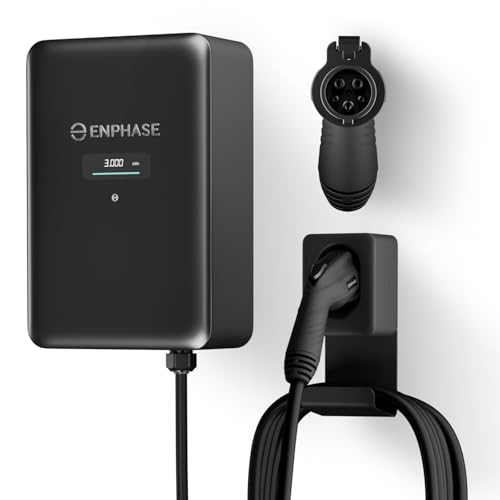
Plug-In Solar Smart Charger – Enphase IQ EV Charger 2 40A
If you’re shopping for an ev charger with solar integration, the Enphase IQ EV Charger 2 is designed to connect with your home solar system so you can use more of your own clean energy. It combines 40A Level 2 charging, a NEMA 14-50 plug, smart app controls, and revenue-grade metering in a compact indoor/outdoor package.
Best For: Solar owners who want a plug-in smart charger with utility-grade monitoring and flexible controls.
Pros:
- Seamlessly connects with a home solar system
- Revenue-grade meter may help qualify for utility rebate programs
- Smart app modes include goal-based charging, green charging, and Storm Guard
- UL and ENERGY STAR certified with overcurrent, surge, short-circuit, and ground-fault protection
Cons:
- 40A output is solid, but not as fast as higher-amperage chargers
- J1772 connector means Tesla drivers may need an adapter
For households that want solar-aware charging without a hardwired install, this Enphase model is especially appealing. Its app controls, metering, and protection features add real convenience, while the plug-in design keeps installation simpler.
Solar-Ready Smart Charging Pick – Emporia 48A WiFi Level 2 EV Charger
If you want an ev charger with solar integration potential through smart home energy management, the Emporia Level 2 charger is a strong utility-focused pick. It offers hardwired 48A charging, WiFi connectivity, and real-time energy data, making it easier to schedule charging around lower-rate windows or a solar-heavy usage pattern.
Best For: Homeowners who want a high-power Level 2 charger with app-based scheduling and energy monitoring.
Pros:
- Up to 48A hardwired charging for fast Level 2 performance.
- WiFi app control with real-time energy data and charging schedules.
- UL listed and ENERGY STAR certified for added peace of mind.
- 25 ft cable and J1772 connector for broad North American EV compatibility.
Cons:
- Hardwired installation is recommended, so setup is less plug-and-play.
- Designed for J1772 vehicles; Tesla/NACS drivers need the separate Emporia Tesla charger.
Overall, this Emporia model is best if you want a smart, high-amperage charger that can fit into a broader energy-management setup. Its scheduling and usage data are the most relevant features for buyers comparing charging hardware with solar-aware home energy plans.
Plug-In Smart Charging Option – EVDANCE 40A NEMA 14-50 Level 2 Charger
For shoppers looking for an ev charger with solar integration-friendly scheduling behavior, the EVDANCE 40A Level 2 charger focuses on convenient app control and flexible installation. Its Wi-Fi and Bluetooth controls let you schedule charging and monitor status, which can be useful when you’re trying to line charging up with available home power or lower-cost energy periods.
Best For: Drivers who want a plug-in Level 2 charger with smart controls and flexible placement.
Pros:
- 40A, 240V Level 2 charging for up to 9.6 kW output.
- NEMA 14-50 plug-in design with a 25 ft cable.
- Wi-Fi and Bluetooth control with scheduling and OTA updates.
- IP65 enclosure plus ETL and FCC certifications.
Cons:
- Requires a 240V, 50A dedicated circuit and verified installation.
- Tesla and other NACS vehicles need a separate J1772-to-NACS adapter.
This is a practical choice if you want a straightforward home charger with connected features and easy installation. It does not advertise direct solar control, but its scheduling tools can still support a more coordinated home energy routine.
AI-Driven Charging Management – CleverCharge 40A J1772 Level 2 Charger
If you’re comparing an ev charger with solar integration features, the CleverCharge Level 2 charger stands out for its smart scheduling and energy-tracking approach. Its CleverKey AI vehicle interface, smartphone control, and multi-home management make it a flexible option for households that want charging to fit around changing energy routines.
Best For: Multi-EV families and homeowners who want app-driven charging management.
Pros:
- 40A, 240V Level 2 charging with up to 38 miles of range per hour.
- Smart app control with CleverKey AI scheduling and notifications.
- Multi-home and multi-vehicle management from a single account.
- UL, Energy Star, and FCC listed for confidence in daily use.
Cons:
- CleverKey AI features are subject to vehicle compatibility.
- NEMA 14-50 installation requires an available outlet.
For buyers who value software-driven charging management, this CleverCharge model offers a strong mix of convenience and oversight. Its app and account tools make it especially appealing if you manage more than one EV or charging location.
How We Picked the Best Ev Charger with Solar Integration
We prioritized chargers that support solar-aware charging, active load management, and smart connectivity where available. We also looked at charging output, connector type, installation flexibility, safety certifications, and platform support such as app control or OCPP compatibility. For an Ev Charger with Solar Integration, the goal is not just raw power, but the ability to coordinate charging with your home energy system.
Quick Comparison
At a high level, 40A plug-in chargers are the easiest fit for many homes, while 48A and 50A hardwired units offer more headroom. Higher-output models such as 64A and 80A are best suited to larger electrical panels, more demanding daily mileage, or commercial and fleet use. If you drive a Tesla, NACS-equipped units reduce the need for adapters; if you need broader compatibility, J1772 remains the most versatile standard.
Key Buying Factors for an Ev Charger with Solar Integration
Solar and Load Management
Look for solar charging modes, excess-solar charging, or dynamic load balancing. These features help the charger respond to changing home energy demand and can reduce grid use during daylight hours.
Installation Type
Plug-in models are simpler to install and easier to relocate, while hardwired units are usually preferred for higher amperage, cleaner installations, and long-term reliability.
Connector and Vehicle Compatibility
Choose NACS if your vehicle uses Tesla-style charging, or J1772 if you want broad compatibility with most non-Tesla EVs and plug-in hybrids. If your household has multiple EVs, connector flexibility matters even more.
Smart Features and Future Readiness
Wi-Fi, Bluetooth, app scheduling, and OCPP support can make a big difference if you want to integrate with home energy management or prepare for future utility programs. For buyers comparing an Ev Charger with Solar Integration, future-proof software can be just as important as amperage.
Who Should Buy Which Ev Charger with Solar Integration?
Choose a 40A plug-in charger if you want an affordable, straightforward home setup. Pick a 48A or 50A hardwired model if you want faster charging and better long-term performance. Go with a 64A or 80A charger if you need heavy-duty capacity, commercial features, or multiple-driver flexibility. If solar coordination is your top priority, focus on chargers with explicit solar modes, active load management, or strong energy-platform compatibility.
In short, the best choice depends on your vehicle, panel capacity, and how closely you want charging to follow your solar production. The right match will charge reliably today and stay useful as your energy system evolves.