Finding the best drill press for model making means balancing precision, control, footprint, and compatibility with delicate materials. The right machine can produce cleaner holes and more consistent results than a handheld drill.
We compared 10 compact options, including micro drill presses, adjustable benchtop models, and machines with useful accessories for scale models, jewelry, crafts, and DIY work.
Best 10 Drill Presses for Model Making Picks for 2026
Precision Micro-Drilling Pick

- Drills holes down to 0.5 mm
- Includes six precision collets
- Three speeds with adjustable depth features
Best For: Miniature parts and detailed hobby projects
Versatile Compact Pick

- Compact design for home workshops
- Variable speed up to 7,000 RPM
- Includes flex shaft, slide table, and bits
Best For: Small models and multifunction DIY work
Stable Benchtop Upgrade
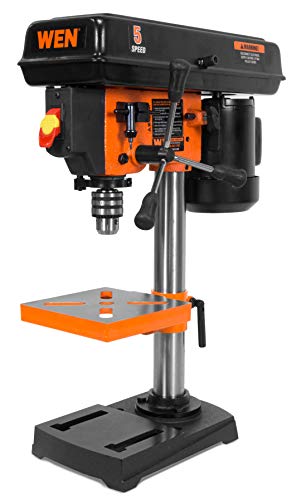
- Five speeds from 750 to 3,200 RPM
- Cast-iron construction and adjustable table
- Includes a 1/2-inch keyed chuck
Best For: Larger model-shop work and general benchtop drilling
Accessory-Ready Mini Pick
Precision B10 Mini Drill Press

- Accepts 0.6–6 mm drill bits
- Includes mini vise and HSS bits
- Compact variable-speed design with 40 mm stroke
Best For: Small models and soft-material hobby projects
Power-Packed Workshop Pick
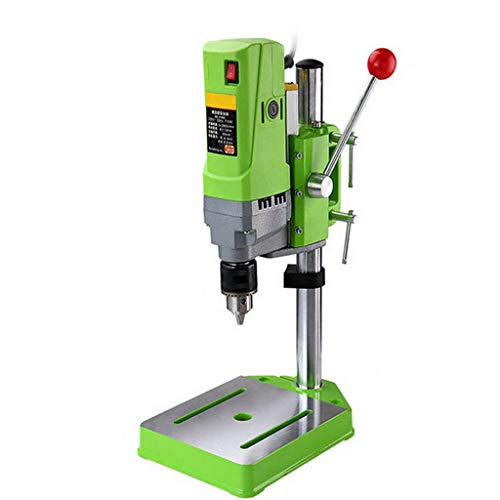
- 710W motor with six speeds up to 2,800 RPM
- 1.5–13 mm chuck for broad bit compatibility
- Stable cast-iron-style base for workshop use
Best For: Versatile DIY, woodworking, jewelry, and model-making projects
Precision Micro-Work Pick
Variable-Speed Mini Drill Press

- 400–4,500 RPM continuously variable speed
- Compact aluminum-alloy body with solid base
- Designed for small holes in wood, plastic, and resin
Best For: Miniatures, jewelry, crafts, and delicate non-hard-material drilling
High-Speed Detail Pick
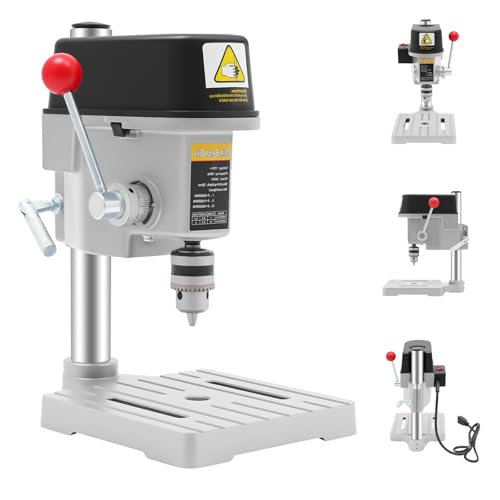
- Three settings reach up to 16,000 RPM
- Depth dial adjusts travel up to 0.98 inches
- Stable steel and cast-iron benchtop design
Best For: Fast, repeatable drilling in small craft and model-making projects
Compact Craft Press

- Seven-speed, 12–24V operation with a 1–6 mm chuck
- Locking depth ring, adjustable height, and work light
- Includes a 1–55 mm vise for small craft work
Best For: Light-duty model making, crafts, PCBs, and soft materials
Precision Layout Press
X-Y Positioning Mini Drill Press
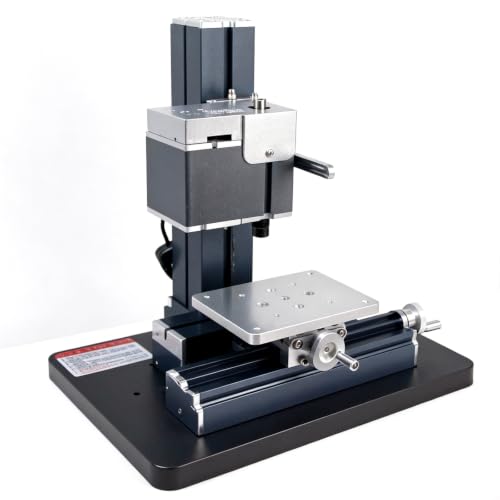
- X-Y-Z table supports repeatable hole layouts
- 0.02 mm handwheel graduations and dual feed control
- 20,000 RPM motor with a 1–6 mm chuck
Best For: Precision micro drilling in models, PCBs, acrylic, and small parts
Portable Detail Press
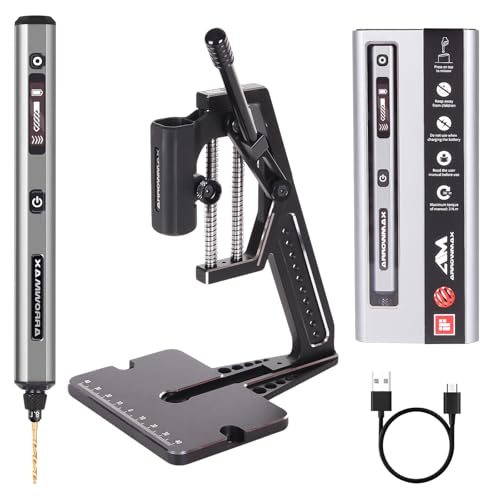
- Rechargeable five-speed drill pen with 400–900 RPM range
- Four LEDs and a compact benchtop press improve control
- Includes 10 bits, USB-C cable, and storage box
Best For: Portable jewelry, resin, plastic, wood, and model-making work
Precision Micro-Drilling Pick – PROXXON TBM 115
For model makers who need controlled, repeatable holes, the PROXXON TBM 115 is one of the most purpose-built drill presses for model making. It supports micro holes down to 1/64 inch, includes six precision collets, and offers three spindle speeds for different materials and torque needs.
Best For: Detailed hobby projects, miniature parts, and precision drilling in wood or metal.
Pros:
- Drills micro holes as small as 0.5 mm.
- Includes an adjustable fence, scale, and depth gauge.
- Three spindle speeds and a durable die-cast aluminum table support varied work.
- Includes a MICROMOT steel collet set.
Cons:
- Its 0.5 mm listed drilling capacity makes it specialized for small-scale work.
- At 85 watts, it is designed for hobby precision rather than heavy-duty drilling.
The TBM 115 stands out when accuracy and tiny holes matter more than maximum capacity. Its stable construction and included collets make it a strong fit for intricate model-making tasks.
Versatile Compact Pick – Mini Benchtop Drill Press
This compact mini drill press is a flexible option for drill presses for model making, especially when your projects also involve polishing or grinding. Its metal frame, three-axis stability, variable 24V power supply, and included accessories suit small DIY work in a limited workspace.
Best For: Toy models, jewelry, watch repair, and mixed drilling, grinding, or polishing tasks.
Pros:
- Compact footprint measures about 5.9 by 4.7 by 8.7 inches.
- Variable power supports speeds up to 7,000 RPM.
- Includes a flex shaft, slide table, and 11 HSS drill bits.
- Base slots allow expansion with a mini vise or CNC sliding table.
Cons:
- The 6 mm maximum chuck size limits it to small bits and workpieces.
- Only one listed speed setting may offer less preset flexibility than multi-speed presses.
Choose this model when bench space and versatility are priorities. It is especially useful for makers who want one compact setup for model creation and other fine DIY jobs.
Stable Benchtop Upgrade – WEN 4206T 8-Inch Drill Press
The WEN 4206T brings a larger, cast-iron benchtop format to drill presses for model making. Its 2.3-amp induction motor, five speed settings, adjustable table, and keyed chuck provide a more substantial setup for model makers who also work with larger or tougher materials.
Best For: Model shops needing a stable press with broader benchtop capacity and multiple speed options.
Pros:
- Five speeds range from 750 to 3,200 RPM.
- Cast-iron construction and a 7-by-11-inch base provide a substantial platform.
- Height-adjustable worktable bevels up to 45 degrees in either direction.
- Includes a 1/2-inch keyed chuck and onboard key storage.
Cons:
- At 32 pounds and nearly 23 inches tall, it requires more bench space.
- Its 2-inch spindle travel is less specialized for ultra-deep work.
- The larger format may be more machine than needed for tiny model parts.
The WEN is a practical choice when stability and range matter more than a miniature footprint. Its five speeds make it adaptable, while the cast-iron build supports a more substantial workshop setup.
Accessory-Ready Mini Pick – Precision B10 Mini Drill Press
The upgraded B10 is designed around compact, controlled work, making it a useful choice among drill presses for model making. It accepts 0.6–6 mm bits, includes a small vise and HSS bits, and uses a variable 24V supply to regulate its 7,000 RPM motor.
Best For: Small wood, plastic, resin, aluminum, jewelry, and toy-model projects.
Pros:
- Compact 5.9-by-4.7-by-8.7-inch design with a 40 mm maximum stroke.
- Accepts 0.6–6 mm HSS drill bits.
- Includes a mini flat vise with up to 2 inches of clamping width.
- Expansion slots support a mini vise or CNC sliding table.
Cons:
- Its stated material range is focused on wood, plastic, resin, aluminum, and other soft materials.
- The 6 mm chuck limits the size of compatible bits.
- At 120 watts, it is intended for compact hobby work rather than heavy-duty drilling.
The B10 offers a useful balance of small size, included accessories, and adjustable speed. It is a particularly practical fit for model makers working with small parts and softer materials at home.
Power-Packed Workshop Pick – 710W Mini Bench Drill Press
For makers who want a compact but capable option among drill presses for model making, this 710W bench drill stand offers adjustable speed, a broad chuck range, and a sturdy metal base. Its capacity also makes it suitable for varied home-workshop materials, including wood, plastic, and light metal work.
Best For: DIYers and model makers needing versatile drilling for wood, plastic, metal, or jewelry projects.
Pros:
- Six adjustable speeds from 0 to 2,800 RPM.
- 1.5–13 mm chuck accommodates many standard drill bits.
- Heavy-duty base supports steadier, more accurate drilling.
- 710W motor provides substantial power for a compact machine.
Cons:
- Heavier and less miniature than ultra-compact precision presses.
- Metal drilling capacity is listed at 8 mm, so it is not intended for heavy-duty metalwork.
This is the most broadly capable choice of the three, especially if your model-making projects sometimes extend into woodworking or metal components. Its larger chuck and stronger motor add flexibility, while the compact footprint remains practical for a home bench.
Precision Micro-Work Pick – Variable-Speed Mini Drill Press
This precision benchtop drill press is aimed at small-scale work, making it a natural fit for delicate drill presses for model making applications. Its compact aluminum-alloy construction, continuously variable 400–4,500 RPM control, and small-hole capacity suit wood, plastic, resin, composite panels, and limited soft-metal drilling.
Best For: Fine craft, jewelry, miniature, and model-making work involving small holes in non-hard materials.
Pros:
- Continuously variable speed from 400 to 4,500 RPM.
- Compact CNC-processed aluminum-alloy body.
- Solid, thickened base is designed to reduce vibration and slipping.
- Supports very small holes, including 0.3–4 mm in wood and plastic.
Cons:
- Limited drilling capacity makes it unsuitable for larger bits or demanding materials.
- Requires a 3–12V power supply, with 12V/5A recommended.
- Soft-metal drilling is limited to holes from 1 to 3 mm.
Choose this model when precision and a small footprint matter more than raw power. Its 30W motor and narrow clamping range are restrictive for general workshop tasks, but those same compact proportions can be advantageous for careful miniature work.
High-Speed Detail Pick – 340W Three-Speed Mini Press
With three high-speed settings and a marked depth-control dial, this 340W mini benchtop drill press offers a focused setup for drill presses for model making. Its compact steel-and-cast-iron construction, push-handle operation, and 0–0.98-inch depth adjustment are useful for repeatable craft and detail work.
Best For: Makers who want a compact press for fast drilling in small wood, plastic, and light-metal projects.
Pros:
- Three speed ranges reach up to 16,000 RPM.
- Marked dial allows drilling-depth adjustment up to 0.98 inches.
- Thickened base and support column help improve stability.
- 0.04–0.39-inch clamping range supports 1–10 mm drill bits.
Cons:
- Very high maximum speed may be excessive for some delicate materials.
- Drill bits are not included.
- Listed capacity is limited to 0.63 inches in wood and 0.24 inches in metal.
This press stands out for speed and controlled depth rather than broad material capacity. It can be a practical choice for repetitive model-making holes, provided you select an appropriate speed and use compatible bits for the small chuck range.
Compact Craft Press – Mini Benchtop Drill Press
For shoppers comparing drill presses for model making, this compact benchtop machine focuses on straightforward height and depth adjustment in a small footprint. Its 1–6 mm chuck, seven-speed control, work light, and included vise suit light-duty work in wood, resin, plastic, PCBs, and thin soft metals.
Best For: Model makers and crafters drilling small holes in basswood, balsa, resin, plastic, PCBs, and thin aluminum or copper.
Pros:
- Tool-free height adjustment and a locking depth ring support repeatable drilling.
- Rear-mounted 795 motor and belt guard help keep the working area clear.
- Built-in work light makes the depth scale and cutting area easier to monitor.
- Included vise clamps regularly and irregularly shaped pieces from 1–55 mm.
Cons:
- The 3.5 cm drilling stroke and 6 mm chuck limit it to small-scale work.
- It is intended for non-rigid materials and soft metals rather than heavy-duty drilling.
- Metal drilling may require repeated passes and cooling with oil or water.
This is a practical choice when compact size, basic repeatability, and integrated workholding matter more than extensive travel or high-capacity drilling.
Precision Layout Press – X-Y Positioning Mini Drill Press
This precision-focused option stands out among drill presses for model making because its X-Y-Z positioning table lets you move a workpiece without repeatedly re-clamping it. The all-metal construction, dual feed controls, and 0.02 mm handwheel graduations are aimed at detailed layouts and repeatable micro drilling.
Best For: Model makers, PCB builders, and hobbyists needing positioned, evenly spaced holes in small parts, acrylic, plastic, wood, aluminum, or copper.
Pros:
- X travel is 145 mm, while Y and Z each travel 40 mm on a 120 × 100 mm table.
- Swing-arm and handwheel feeds provide fast or fine depth control.
- All-metal components, dovetail slides, and anti-loosening hardware help reduce vibration-related play.
- The 20,000 RPM motor supports small-diameter drilling with a 1–6 mm chuck.
Cons:
- The 36W motor and 6 mm capacity are suited to micro work rather than large holes.
- It has one speed, so there is no multi-speed adjustment despite the high maximum RPM.
- Only one 3 mm drill bit is listed as included.
Choose this press if accurate positioning and fine adjustments are more important than broad speed selection or heavier material capacity. Secure it to a stable bench before use.
Portable Detail Press – AM ARROWMAX Drill Pen Set
For model makers who value portability, this battery-powered drill pen combines a small benchtop press with variable speed, LED lighting, and a bit set. Its 400–900 RPM range, rechargeable 500mAh LiPo battery, and compact press design make it suited to controlled detail work in wood, acrylic, plastic, resin, and jewelry projects.
Best For: Portable model making, jewelry work, resin projects, and small holes where cordless operation and workspace lighting are useful.
Pros:
- Five speed modes provide adjustment from 400 to 900 RPM.
- Four LEDs illuminate the drilling area with shadow-free light.
- USB-C charging and a listed runtime of up to 3 hours support cordless projects.
- Includes a benchtop press, 10 small drill bits, and an organized CNC alloy storage box.
Cons:
- The 900 RPM maximum is lower than many high-speed micro drill presses.
- Battery operation requires charging during extended work sessions.
- The supplied notes do not specify chuck capacity or drilling depth.
This set is most compelling when a compact, illuminated, rechargeable tool matters more than maximum speed or clearly specified press capacity. The included bits and storage box also make it convenient for small creative projects.
How We Picked the Best Drill Presses for Model Making
We focused on the features that matter most when drilling small, accurately positioned holes: speed control, depth adjustment, spindle stability, work-table design, chuck range, and overall size. We also considered whether each press suits common model-making materials such as plastic, wood, resin, aluminum, and thin steel.
Because compact drill presses vary widely, the selection includes both precision-oriented micro machines and more powerful benchtop presses. Included accessories, lighting, positioning features, and ease of setup were also considered, since these can have a meaningful effect on small workshop usability.
Quick Comparison
- Best for micro-detail work: Choose a precision mini press with a small chuck, fine feed control, and low-speed operation.
- Best for versatility: A multi-speed cast-iron benchtop model offers more stability and capacity for mixed materials.
- Best for positioning accuracy: Look for an X-Y table or another adjustable work-holding system.
- Best for compact workspaces: Mini presses and drill-stand designs take up less bench space and are easier to store.
- Best for beginners: A model with included bits, LED lighting, depth control, or a straightforward accessory package can shorten the setup process.
Key Buying Factors for Drill Presses for Model Making
Speed and Material Control
Variable or multiple speed settings are valuable because plastic and resin can melt at excessive speeds, while wood and metal may require different operating ranges. High no-load RPM can help with tiny bits, but usable low-speed control is equally important.
Runout, Rigidity, and Feed Control
Minimal spindle wobble helps small bits cut cleanly rather than wander or break. A rigid column, stable base, smooth handwheel, and adjustable depth stop improve repeatability, especially when drilling a series of matching holes.
Chuck Range and Table Design
Check the minimum bit size supported by the chuck and confirm that it accepts the tooling you already own. An adjustable table or X-Y positioning table makes it easier to align small parts, while a flat, stable surface helps prevent shifting.
Size, Power, and Safety
Compact machines are convenient, but limited throat depth and motor power can restrict larger workpieces. Use eye protection, secure the material, remove loose clothing, and avoid forcing tiny bits through the work.
Who Should Buy Which Drill Presses for Model Making?
Choose a precision micro press if your priority is scale modeling, resin components, jewelry, or very small holes. These machines are generally easier to control for delicate work.
Choose a multi-speed cast-iron benchtop press if you need greater stability and plan to drill wood, plastic, aluminum, or occasional thin steel. It is the better fit for a broader DIY workload.
Choose an X-Y-table model if accurate hole placement matters more than maximum power. The positioning system can be especially useful for repeated layouts and small assemblies.
Choose a compact accessory-rich model if you are starting from scratch and want bits, lighting, displays, or other setup essentials included. Before buying, verify voltage, chuck capacity, replacement-part availability, and the machine’s actual speed range.