The right bench vise gives automotive work a stable anchor for holding parts, bending brackets, pressing hardware, and handling stubborn repairs. Jaw capacity, clamping strength, swivel range, and mounting flexibility all matter when shop space and workpiece size vary.
We’ve selected 10 bench vises spanning professional garage setups, home workshops, truck-based repairs, and multipurpose projects. Use the guide below to narrow the field by construction, capacity, portability, and the types of automotive tasks you handle most often.
Best 10 Bench Vises for Automotive Work Picks for 2026
Rugged Shop Pick
Wilton Mechanics Bench Vise 746

- 30,000 PSI cast iron construction
- 360° swivel base with dual lockdowns
- Replaceable hardened steel jaws
Best For: Heavy-duty, permanently mounted automotive work
Reliable Heavy-Duty Option
- Captured safety jaw for secure use
- Swivel base aids positioning
- Integrated anvil and pipe jaws
Best For: General garage and automotive bench work
Versatile Garage Choice
Wilton Utility 676U Bench & Pipe Vise
- 6-inch maximum jaw opening
- Built-in pipe jaws for 1/4- to 2-inch stock
- 360° swivel base with dual lockdowns
Best For: Everyday garage repairs and light forming
Compact Stability Pick
BESSEY BV-HD60 Heavy-Duty Bench Vise

- 6-inch maximum opening
- Hardened serrated steel jaws
- Built-in anvil and three mounting holes
Best For: General automotive and workshop bench tasks
Heavy-Duty Swivel Pick
6.5-Inch Multipurpose Bench Vise

- 60,000 PSI ductile-iron body
- 360-degree swivel base
- Up to 4,496 pounds of clamping force
Best For: Sturdy garage benches and larger automotive workpieces
Mobile Workshop Pick

- Mounts to a 2-inch hitch or workbench
- 6-inch jaws for general repairs
- Heavy-duty alloy-steel body
Best For: Portable automotive repairs and outdoor work
Compact Garage Pick

- 6-inch jaws with a 5.9-inch opening
- 360-degree locking swivel base
- Includes anvil and mounting hardware
Best For: Stationary garage work and general automotive maintenance
Heavy-Duty Classic
Wilton Tradesman 5-1/2-Inch Bench Vise

- 60,000 PSI ductile iron body
- Enclosed design and precision slide bar
- Reversible jaws plus large anvil
Best For: Heavy-duty automotive workshop repairs
Maximum Positioning Flexibility
VEVOR 6-Inch Rotating Bench Vise

- 360-degree rotating head and swivel base
- 30 kN clamping force with grooved jaws
- Ductile iron construction
Best For: Pipe work and repositioning parts
Compact Forged-Steel Option

- Forged steel construction
- Built-in pipe jaw and 270-degree swivel
- Includes four workbench mounting bolts
Best For: Home workshops and DIY repairs
Rugged Shop Pick – Wilton Mechanics Bench Vise 746
Wilton Mechanics Bench Vise, 6" Jaw Width, 5-3/4" Jaw Opening, 4-1/8" Throat (Model 746)
Check Price On AmazonFor demanding bench vises for automotive work, the Wilton Mechanics Model 746 emphasizes stability and long-term durability. Its 6-inch jaws, 5-3/4-inch opening, 4-1/8-inch throat, and 360-degree swivel base suit substantial garage and shop projects.
Best For: Heavy-duty automotive work where a stable, durable vise and large anvil surface are priorities.
Pros:
- 30,000 PSI gray cast iron construction supports rugged use.
- Ductile iron base swivels 360 degrees and uses dual lockdowns.
- Replaceable hardened steel top and pipe jaws add versatility.
- Large anvil work surface and fully enclosed spindle and nut.
Cons:
- At 64 pounds, it is substantially heavier than the other listed options.
- The 5-3/4-inch jaw opening is smaller than some 6-inch-opening alternatives.
The Model 746 is a serious, stability-focused choice for a permanently mounted automotive workbench. Its lifetime manufacturer warranty and replaceable jaw components further support long-term shop use.
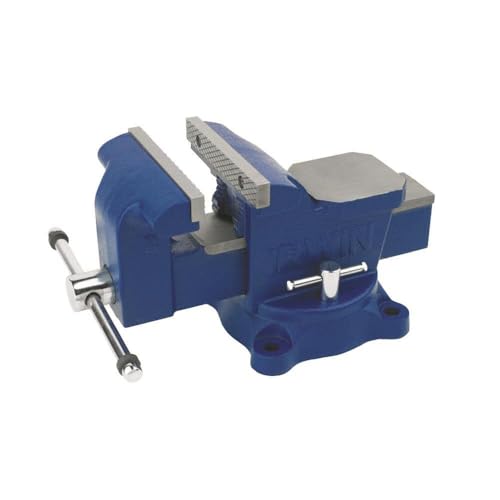
Reliable Heavy-Duty Option – IRWIN 6-Inch Bench Vise
The IRWIN 226306ZR is a practical choice among bench vises for automotive work, combining a 6-inch size with a swivel base, aggressive steel jaws, and integrated anvil and pipe jaws. Its 32.2-pound weight provides a solid foundation without the bulk of heavier models.
Best For: Garage users who want a substantial 6-inch vise with versatile gripping features and manageable weight.
Pros:
- Captured safety jaw helps prevent the slide from falling out during heavy-duty use.
- Swivel base allows quick positioning.
- Steel jaws, pipe jaws, and an anvil support varied bench tasks.
- 32.2-pound weight provides a reliable base.
Cons:
- The supplied notes do not specify the jaw opening or throat depth.
- Its cast iron construction has a lower listed tensile-strength figure than the Wilton models.
With useful built-in features and a limited lifetime warranty, this IRWIN vise fits everyday automotive repairs and general workshop holding tasks without being unusually difficult to position.
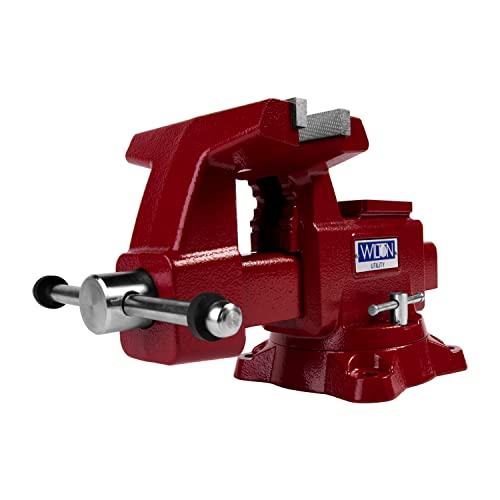
Versatile Garage Choice – Wilton Utility 676U Bench & Pipe Vise
The Wilton Utility 676U offers useful flexibility for bench vises for automotive work, with 6-1/2-inch jaws, a 6-inch maximum opening, a 4-inch throat, and a full 360-degree swivel base. Built-in pipe jaws also accommodate round stock from 1/4 to 2 inches.
Best For: Everyday garage tasks such as cutting, filing, drilling, assembly, pipe holding, and light forming.
Pros:
- 6-inch opening and 4-inch throat cover a broad range of workpieces.
- Built-in pipe jaws hold 1/4- to 2-inch round stock.
- 30,000 PSI cast iron body and 60,000 PSI ductile iron base.
- 360-degree swivel base has dual lockdowns and replaceable jaw inserts.
Cons:
- It is intended for everyday bench work, not use as a press.
- The 39.7-pound body may require a sturdy mounting surface.
- Proper four-hole mounting hardware is required and is not stated as included.
This is a well-rounded garage vise with clear capacity and mounting guidance. Its lifetime warranty and available replacement parts make it especially practical for ongoing shop maintenance.
Compact Stability Pick – BESSEY BV-HD60 Heavy-Duty Bench Vise
The BESSEY BV-HD60 is a straightforward option among bench vises for automotive work, pairing a 6-inch maximum opening with hardened serrated jaws, a built-in anvil, and a swiveling base. Its 29-pound weight makes it comparatively manageable for a heavy-duty bench vise.
Best For: Automotive and workshop users seeking a 6-inch vise with an anvil and three-point mounting stability.
Pros:
- 6-inch maximum opening handles sizable workpieces.
- Hardened steel serrated jaws provide a firm grip.
- Large built-in anvil supports bench work.
- Three mounting holes and a swiveling base support positioning and stability.
Cons:
- The supplied notes state a one-year manufacturing-defect warranty, shorter than the lifetime warranties listed for some alternatives.
- The notes do not specify the throat depth or jaw width beyond the 6-inch designation.
- The swivel rotation is described as “36 degree” in the supplied information, so the exact range is unclear.
The BV-HD60 keeps the feature set focused while offering useful jaw capacity, an anvil, and a relatively light 29-pound form. It is a sensible fit when those basics matter more than extensive specifications.
Heavy-Duty Swivel Pick – 6.5-Inch Multipurpose Bench Vise
For automotive work that calls for substantial clamping force and flexible positioning, this VEVOR model is a capable choice among bench vises for automotive work. Its ductile-iron body, 360-degree swivel base, replaceable serrated jaws, and pipe-gripping range make it well suited to garage tasks such as cutting, grinding, sharpening, and tapping.
Best For: Home garages and workshops handling larger automotive parts, pipe, tubing, and general metalwork.
Pros:
- 60,000 PSI ductile-iron construction with a powder-coated finish.
- 360-degree swivel base helps position work without repeatedly removing it.
- Creates up to 4,496 pounds of clamping force and includes a 2.8-by-3-inch anvil.
- Includes mounting hardware and magnetic nylon jaw pads.
Cons:
- At 27 pounds, it is better suited to a sturdy, dedicated bench than frequent relocation.
- Its 6.57-inch jaw width may be more vise than needed for smaller jobs.
This is a strong all-around option when your automotive workspace benefits from high clamping force, broad jaw capacity, and swivel positioning. The included hardware also simplifies installation.
Mobile Workshop Pick – 6-Inch Hitch-Mount Bench Vise
If your automotive work moves between the garage, driveway, and job site, the Stark USA 2-in-1 vise offers a practical alternative to a permanently mounted tool. It can attach to a standard 2-inch truck or trailer hitch receiver or secure to a workbench, making it one of the more portable bench vises for automotive work.
Best For: Mechanics, contractors, farmers, and DIY users who need a vise at roadside, outdoor, or mobile work locations.
Pros:
- Dual hitch-mount and bench-mount design supports mobile or stationary use.
- Fits standard 2-inch truck and trailer hitch receivers.
- 6-inch jaws hold pipes, metal bars, lumber, and other workpieces.
- Heavy-duty alloy-steel construction is designed for demanding repair tasks.
Cons:
- It weighs 29 pounds, so transporting and installing it still requires some effort.
- It does not provide the 360-degree swivel feature listed for the VEVOR models.
The standout feature is mobility: this vise turns a compatible vehicle into a temporary workstation without giving up the option of bench mounting. It is especially useful when automotive repairs cannot wait for access to a fixed shop vise.
Compact Garage Pick – 6-Inch Swivel Bench Vise
For a fixed garage setup, this 6-inch VEVOR model balances substantial capacity with a slightly lighter footprint than the larger version. Its 360-degree locking base, ductile-iron construction, pipe jaws, and integrated anvil make it a versatile candidate among bench vises for automotive work.
Best For: General automotive maintenance, fabrication, pipe work, sharpening, and other garage projects requiring a strong stationary vise.
Pros:
- 60,000 PSI ductile-iron body with a powder-coated finish.
- 360-degree swivel base supports flexible work positioning.
- Provides up to 4,496 pounds of clamping force and a 2.9-by-3-inch anvil.
- Replaceable serrated jaws grip flat stock and pipes from 0.6 to 2.9 inches.
Cons:
- Its 5.9-inch jaw opening is smaller than the 6.5-inch model’s forward opening.
- The 25-pound body still calls for a secure bench installation.
This model is a sensible middle ground for automotive garages: it offers heavy-duty clamping and swivel access while taking up a familiar 6-inch vise footprint. The included bolts, nuts, and jaw pads help get it mounted promptly.
Heavy-Duty Classic – Wilton Tradesman 5-1/2-Inch Bench Vise
Wilton Tradesman Bench Vise, 5-1/2" Jaw Width, 5" Max Jaw Opening, 3-3/4" Throat (Model 1755)
Check Price On AmazonFor demanding bench vises for automotive work, the Wilton Tradesman Model 1755 emphasizes strength, durability, and smooth operation. Its ductile iron body, enclosed design, serrated steel jaws, and large anvil make it well suited to repeated clamping, shaping, and repair tasks.
Best For: Automotive workshops that need a durable, permanently mounted vise for heavy-duty repair and forming work.
Pros:
- 60,000 PSI ductile iron body provides high strength.
- Enclosed construction helps protect lubrication from contaminants.
- Reversible jaw inserts offer serrated and smooth gripping surfaces.
- Large anvil supports forming and shaping tasks.
Cons:
- Its 46.8-pound weight may make installation more demanding.
- The 5-inch maximum jaw opening may limit very wide workpieces.
The precision slide bar and longer spindle nut are useful for controlled, smooth clamping. Choose this model when long-term durability and a substantial anvil matter more than portability.
Maximum Positioning Flexibility – VEVOR 6-Inch Rotating Bench Vise
This VEVOR model is a flexible option among bench vises for automotive work, combining a rotating head with a swivel base. Its grooved jaws, 30 kN clamping capacity, and ductile iron construction support gripping flat pieces, pipes, and other rounded components.
Best For: Automotive and general workshop users who frequently need to reposition parts or clamp pipe and rounded material.
Pros:
- Head and swivel base provide 360-degree rotation and flexible work placement.
- Grooved jaws improve grip on pipe and rounded materials.
- Ductile iron construction is designed for tough working environments.
- Polished lead screw and guide rail support smooth, precise adjustment.
Cons:
- At 19.1 kg, it is not a lightweight portable vise.
- The supplied specifications list 5-inch jaws despite the 6-inch product title.
The combination of rotating components and pipe-friendly jaws makes this a versatile choice for varied repair setups. Verify the stated jaw dimensions before purchase if a full 6-inch jaw width is essential.
Compact Forged-Steel Option – 6-Inch Swivel-Base Bench Vise
For DIY garages and smaller automotive workstations, this 6-inch bench vise combines forged-steel construction with a built-in pipe jaw and a 270-degree swivel base. It offers a 4.3-inch maximum jaw opening and can be either fixed to a workbench or removed when needed.
Best For: Home workshops and DIY users who want a versatile vise for flat stock, pipe, and general repair tasks.
Pros:
- Industrial-strength forged steel construction is designed for durability.
- Built-in multi-jaw design handles flat material, pipe, and tube work.
- 270-degree swivel base supports flexible positioning.
- Includes four bolts for secure workbench mounting.
Cons:
- Its 2-inch throat depth is shallower than some larger workshop vises.
- The listed clamping force is 2,200 pounds, below the 30 kN rating of the VEVOR model.
This vise offers useful versatility without the larger footprint and weight of the Wilton or VEVOR options. Its removable or fixed mounting design is particularly practical for a home garage or multipurpose bench.
How We Picked the Best Bench Vises for Automotive Work
We focused on the features that make a vise useful in real automotive environments: jaw width and opening, throat depth, base design, construction, pipe-jaw availability, and overall versatility. Six-inch models are a practical middle ground for most garages, while larger openings and deeper throats help with brackets, suspension components, and bulky parts.
We also included different mounting approaches. Traditional fixed or swivel-base vises suit permanent workbenches, while a hitch-mounted option can help mobile mechanics and truck owners. Multipurpose models with anvils or pipe jaws add useful capability without requiring a second dedicated tool.
Quick Comparison
- Best for general garage use: A 6-inch swivel-base vise with durable cast or forged construction.
- Best for heavy-duty work: A robust vise with high clamping force, reinforced body, and secure bench mounting.
- Best for pipe and tubing: A model with integrated pipe jaws and a broad opening.
- Best for mobile repairs: A hitch-mounted vise designed for a standard 2-inch receiver.
- Best for limited workspaces: A compact vise with a rotating base and multipurpose anvil.
Key Buying Factors for Bench Vises for Automotive Work
Jaw Width and Opening
Jaw width affects contact area and stability, while maximum opening determines whether the vise can hold larger components. A 6-inch jaw is a versatile choice for brake, suspension, exhaust, fabrication, and general repair tasks. Check the stated opening rather than assuming all similarly sized vises have the same capacity.
Construction and Clamping Strength
Forged steel generally offers strong impact resistance, while ductile iron can provide a durable, rigid body for demanding shop use. Look for a solid slide, protected screw, replaceable jaws where available, and a base that does not flex under load. Avoid treating maximum clamping force as a substitute for proper mounting.
Swivel Base and Mounting
A 360-degree swivel base makes it easier to position awkward parts, but it must lock securely before force is applied. For frequent heavy work, bolt the vise through a substantial workbench rather than relying on a thin top or temporary clamps. Confirm the mounting-hole pattern and available bench space before buying.
Special Features
Pipe jaws are valuable for exhaust, tubing, and round stock. An integrated anvil helps with light shaping and hammering, while a hitch-mounted design supports portable work. These features improve versatility, but they should not outweigh basic rigidity and dependable jaw alignment.
Who Should Buy Which Bench Vises for Automotive Work?
Home mechanics should prioritize a 5- to 6-inch swivel-base vise with a useful opening, replaceable jaws, and straightforward bench mounting. Professional garages and fabricators should favor the strongest construction and most rigid base they can accommodate, especially for seized fasteners and repeated impact work. DIY users working on exhaust or tubing should choose integrated pipe jaws. Mobile mechanics should consider the hitch-mounted option, provided the receiver and surrounding vehicle area can safely support the setup. For occasional repairs, a multipurpose vise with an anvil and rotating base offers the broadest utility for the money.