If you diagnose modern vehicles, an oscilloscope with CAN decoding can save serious time. It helps you see both signal shape and network communication, making faults easier to isolate.
Below, we focus on the best automotive oscilloscopes with CAN decoding for shop use, mobile diagnostics, and advanced technicians who want clearer data and faster answers.
Best 10 Automotive Oscilloscopes with Can Decoding Picks for 2026
Portable Multimeter Scope
AUTOOL DM302 for CAN Bus & Ignition Testing
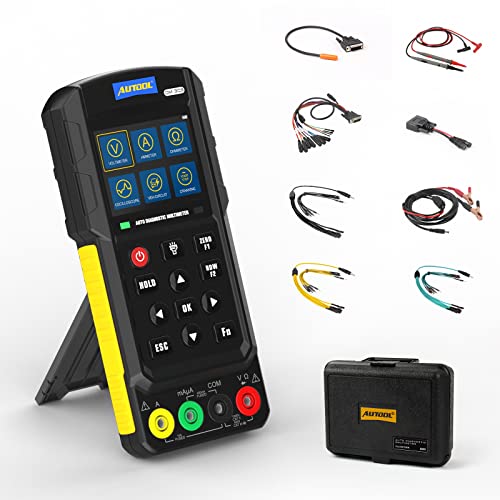
- Tests K line and CAN bus signals
- TRMS multimeter with auto-ranging
- 500 kHz oscilloscope waveform testing
Best For: Technicians needing a compact all-in-one diagnostic meter
Premium Tablet Scope Add-On
TOPDON Phoenix Scope 4-Channel Module

- 4-channel recording and replay
- 50M memory depth with zoom
- Works only with compatible Phoenix tools
Best For: Phoenix tablet users needing a fast scope module
All-in-One Car Scope Kit
Hantek 2D82Auto 2-Channel Diagnostic

- CAN bus observation and integrity checks
- 80+ guided car tests with video help
- 2-channel scope plus multimeter and signal generator
Best For: Mechanics wanting a handheld all-in-one diagnostic kit
Professional PC Scope
Autel MaxiScope MP608 4-Channel
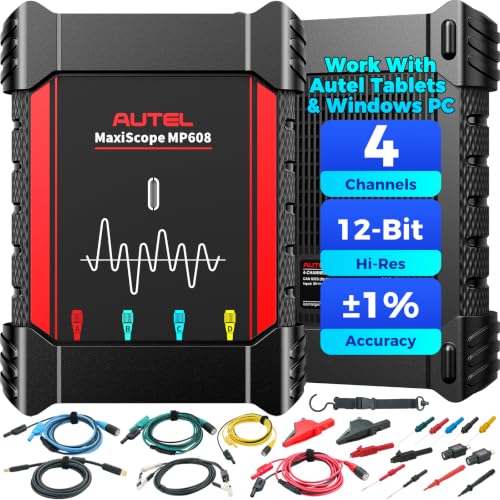
- 4-channel scope with 12-bit resolution
- Works with Autel tablets and Windows PCs
- Advanced capture, math, and multi-view tools
Best For: Professional technicians using Autel or PC-based diagnostics
USB Diagnostic Workhorse
Hantek 4CH Automotive USB Oscilloscope DSO3064 Kit

- 4-channel automotive USB oscilloscope
- 60MHz bandwidth, 200MS/s sampling
- Vehicle diagnosis functions and FFT analysis
Best For: USB-based vehicle diagnostics with four-channel signal capture
Touchscreen Decode Pick
Micsig SATO1004 4-Channel Tablet Oscilloscope
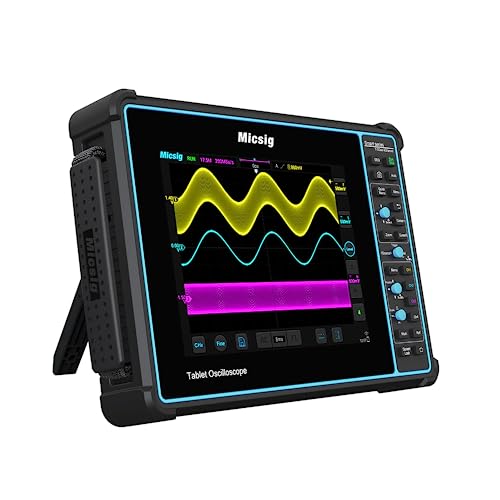
- UART, LIN, CAN, I²C, and SPI decoding
- 100MHz 4-channel scope with multimeter
- 8-inch touch screen and 70Mpts memory depth
Best For: Portable touchscreen diagnostics with built-in serial bus decoding
Compact CAN Test Tool
2-in-1 Automotive Diagnostic Multimeter with CAN Testing

- 2-in-1 multimeter and oscilloscope
- Dedicated K-line and CAN line data testing
- 12 automotive test functions for shop use
Best For: Quick electrical troubleshooting with CAN line checks
Portable Android Diagnostic Scope
Micsig SATO1004 4-Channel 100MHz

- Android-based interface with physical buttons
- Supports CAN, LIN, FlexRay, and K communication tests
- 32GB storage plus Wi-Fi, HDMI, LAN, and USB
Best For: Portable field diagnostics and everyday automotive communication testing
High-Capture Decode Scope
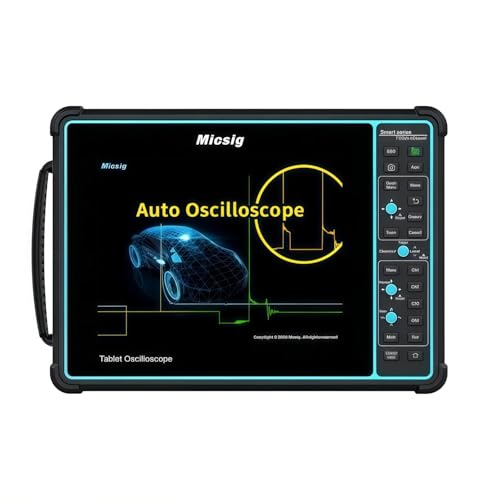
- Decodes CAN, CAN FD, LIN, SPI, I2C, and UART
- Captures up to 130,000 waveforms per second
- 70Mpts memory depth with zoom and accessories
Best For: Fast-capture diagnostics with broad serial bus decoding
Rugged High-Resolution Decode Scope
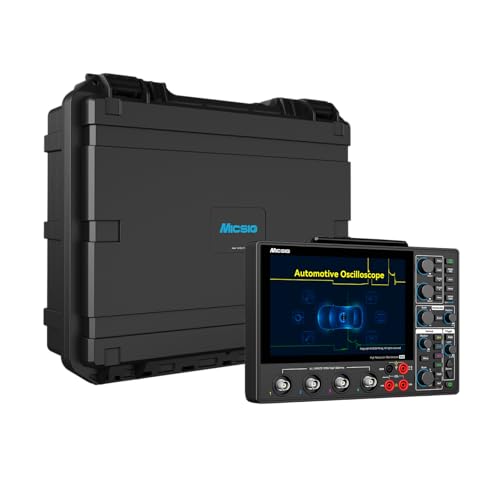
- 12-bit resolution with 110Mpt memory depth
- Supports CAN/CAN FD, LIN, SPI, I²C, and UART
- Rugged case and 16,000mAh battery
Best For: Field technicians who need high-resolution decoding and rugged portability
Portable Multimeter Scope – AUTOOL DM302 for CAN Bus & Ignition Testing
If you want automotive oscilloscopes with can decoding support in a compact all-in-one tool, this AUTOOL kit is built for everyday electrical diagnosis. It combines a TRMS multimeter with scope functions, plus dedicated leads for K line, CAN bus, ignition pulse, relay, injector, and starter checks.
Best For: Technicians who want a portable multimeter-oscilloscope combo for CAN, ignition, and sensor testing.
Pros:
- Tests K line and CAN bus signals with a dedicated multi-function test line
- Combines multimeter modes with oscilloscope waveform testing up to 500 kHz
- Includes auto-ranging and True RMS for easier everyday measurements
- Built-in color screen and flashlight help in darker work areas
Cons:
- Scope bandwidth is limited compared with full-size professional scopes
- Best suited to practical diagnostic work rather than advanced lab analysis
This is a useful pick if you want broad automotive test coverage without carrying separate tools. The included wiring functions and starter test features make it especially practical for general under-hood troubleshooting.
Premium Tablet Scope Add-On – TOPDON Phoenix Scope 4-Channel Module
For users already in the Phoenix ecosystem, this automotive oscilloscope with can decoding-focused diagnostic workflow is designed to speed up waveform capture and analysis. The 4-channel Phoenix Scope records, replays, and analyzes signals, with a large memory depth and advanced measurement tools for more efficient troubleshooting.
Best For: Phoenix tablet users who want a fast 4-channel scope add-on for automotive signal analysis.
Pros:
- 4-channel scope with waveform recording and replay for fault analysis
- 50M memory depth with zoom support for global and detailed views
- Advanced math functions and FFT for deeper signal diagnostics
- 23 automatic measurements shown on one screen for quicker checking
Cons:
- Works only with compatible Phoenix tools and does not operate independently
- Not compatible with Phoenix Nano or XLink
This is a strong choice if your shop already uses supported TOPDON Phoenix diagnostic tools. Its speed, replay, and measurement workflow are aimed at reducing time spent hunting intermittent signal issues.
All-in-One Car Scope Kit – Hantek 2D82Auto 2-Channel Diagnostic
The Hantek 2D82Auto kit is a practical automotive oscilloscope with can decoding-oriented bus checks built into a broader 4-in-1 diagnostic package. It combines scope, multimeter, signal source, and vehicle test coverage, making it a flexible option for technicians who want one handheld unit for many common automotive tests.
Best For: Mechanics who want a handheld diagnostic kit with CAN bus observation and lots of guided vehicle tests.
Pros:
- Supports CAN bus data observation, signal integrity checks, and long-term acquisition
- Includes 80+ car testing projects with QR-code video help files
- 2-channel oscilloscope with 80 MHz bandwidth and 250 MSa/s sampling rate
- Also works as a multimeter and waveform generator up to 25 MHz sine output
Cons:
- Only two scope channels, so it is less expansive than 4-channel models
- Feature-rich interface may be more than some casual users need
Overall, this is a versatile diagnostic kit for anyone who wants broad test coverage in a portable form factor. The built-in bus detection, sensor coverage, and guided test library make it especially useful for general automotive troubleshooting.
Professional PC Scope – Autel MaxiScope MP608 4-Channel
The Autel MaxiScope MP608 is a professional automotive oscilloscope designed for advanced diagnostics, with a workflow built around accuracy, analysis, and connected testing. It pairs with supported Autel tablets and Windows PCs, giving technicians a 4-channel scope platform with modern visualization and diagnostic organization tools.
Best For: Professional technicians who want a high-end scope for detailed automotive signal analysis on Autel or Windows platforms.
Pros:
- 4-channel design with ±1% measurement accuracy and 12-bit vertical resolution
- Trigger actions help capture intermittent faults more reliably
- Supports oscilloscope, spectrum, and XY modes with simultaneous multi-view display
- Includes accessory set for back-pinning, ignition pickup, and general scope testing
Cons:
- Requires compatible Autel scanners or a Windows 10/11 64-bit PC
- Not a standalone tool, so it depends on supported host devices
This model is aimed at users who already work inside the Autel diagnostic ecosystem and want more detailed waveform analysis. The combination of advanced capture, math tools, and PC-level workflow makes it a strong fit for serious shop diagnostics.
USB Diagnostic Workhorse – Hantek 4CH Automotive USB Oscilloscope DSO3064 Kit
If you want automotive oscilloscopes with can decoding support and prefer a USB-based bench-style setup, the Hantek DSO3064 kit is built around four channels, a 60MHz bandwidth, and a 200MS/s real-time sampling rate. It also includes vehicle diagnosis functions, FFT spectrum analysis, and optional LAN connectivity, making it a practical fit for users who want a straightforward diagnostic scope for car work.
Best For: Technicians who want a compact 4-channel USB oscilloscope for vehicle diagnosis and signal analysis.
Pros:
- 4 channels plus EXT trigger for broader diagnostic coverage
- 60MHz bandwidth with 200MS/s real-time sampling rate
- 10k to 16M memory depth per channel for waveform capture
- Includes vehicle diagnosis functions and FFT spectrum analysis
Cons:
- Uses a USB 2.0 interface rather than a standalone tablet design
- Windows-focused support may limit flexibility for some users
- CAN decoding is not explicitly listed in the supplied notes
Overall, this Hantek model is a solid option for buyers who want a capable four-channel automotive scope with diagnostic features and useful capture depth. It is especially appealing if you value a plug-and-play USB workflow over a fully handheld unit.
Touchscreen Decode Pick – Micsig SATO1004 4-Channel Tablet Oscilloscope
For shoppers comparing automotive oscilloscopes with can decoding, the Micsig SATO1004 stands out for its built-in serial bus decoding support and tablet-style workflow. It combines a 100MHz, 4-channel oscilloscope with multimeter features, an 8-inch capacitive touch screen, and high memory depth, making it a versatile choice for signal tracing and communication checks.
Best For: Technicians who want a touchscreen automotive scope with serial bus decoding and portable all-in-one convenience.
Pros:
- Supports UART, LIN, CAN, I²C, and SPI serial bus decodings
- 4 channels with 100MHz bandwidth for automotive signal work
- 8-inch TFT-LCD capacitive touch screen with remote app control support
- Up to 70Mpts memory depth and hardware-based zoom for waveform browsing
Cons:
- Heavier than a basic handheld meter-style tester
- Premium feature set may be more than needed for simple checks
- Full touch interface may take some adjustment if you prefer physical controls
This Micsig model is the strongest fit here for users who specifically want CAN decoding support alongside a modern touchscreen interface. Its combination of serial decoding, multimeter functions, and portable design makes it well suited to organized diagnostic workflows.
Compact CAN Test Tool – 2-in-1 Automotive Diagnostic Multimeter with CAN Testing
If you need automotive oscilloscopes with can decoding in a compact service-tool format, this 2-in-1 diagnostic multimeter is aimed at electrical troubleshooting rather than full bench scope use. It combines oscilloscope-style waveform viewing with multimeter readings and includes dedicated K-line and CAN line data testing, plus specialized automotive tests for ignition, injector, relay, and cranking checks.
Best For: Technicians who want a compact diagnostic multimeter with CAN line testing and car-specific test modes.
Pros:
- 2-in-1 multimeter and oscilloscope design
- Dedicated K-line and CAN line data testing
- 12 automotive test functions for common electrical faults
- 2.8-inch color display with adjustable brightness and data hold
Cons:
- Smaller screen than tablet-style oscilloscopes
- More focused on automotive test functions than deep scope analysis
- Single-unit service-tool format may be less flexible than a full multi-channel scope
This is a practical pick if your priority is quick car electrical troubleshooting with CAN line checks built in. It is less of a full-featured oscilloscope platform, but the bundled test modes and field-friendly design make it useful for everyday shop work.
Portable Android Diagnostic Scope – Micsig SATO1004 4-Channel 100MHz
If you want automotive oscilloscopes with CAN decoding in a portable format, the Micsig SATO1004 is built for fast field use. Its Android-based interface, physical button panel, and upgraded automotive software are aimed at smoother diagnostics, while the 4-channel, 100MHz setup covers common ignition, sensor, network, and communication tests.
Best For: Technicians who want a handheld, touch-screen automotive scope with broad communication test support and onboard storage.
Pros:
- Supports communication tests including CAN, LIN, FlexRay, and K
- 4 channels with 100MHz bandwidth and 1GSa/s sampling
- 32GB internal storage for waveforms, screenshots, and recorded videos
- Wi-Fi, HDMI, LAN, USB, and remote app connectivity
Cons:
- CAN decoding is included as part of a broader communication-test set, not highlighted with detailed decode features
- Lower bandwidth than the 200MHz models in this roundup
The SATO1004 is a practical pick if you value portability and a wide automotive test menu more than maximum bandwidth. It fits routine diagnostic work well, especially when you need to save and review captures on the device itself.
High-Capture Decode Scope – SATO2002 2-Channel 200MHz
For buyers comparing automotive oscilloscopes with CAN decoding, the SATO2002 stands out for its strong bus support and high capture rate. It supports decode for CAN, CAN FD, LIN, SPI, I2C, UART, and more, and its 70Mpts memory depth plus 130,000 waveforms per second help it hold onto fast, intermittent events.
Best For: Technicians who want a touch-screen oscilloscope with broad serial bus decoding and fast waveform capture.
Pros:
- Supports CAN and CAN FD decoding plus other serial buses
- High waveform capture rate up to 130,000 waveforms per second
- 70Mpts storage depth with zoom for global and detailed views
- Includes automotive repair accessories like probes and alligator clips
Cons:
- 2-channel design is less flexible than 4-channel alternatives
- Heavier and larger than the more portable handheld options
The SATO2002 is a strong fit if decode capability and capture speed matter more than channel count. It is especially useful when you need to review serial communication details and catch abnormal waveforms during diagnosis.
Rugged High-Resolution Decode Scope – Micsig AHO14-200 Master Kit
If you need automotive oscilloscopes with CAN decoding and a tougher field-ready build, the Micsig AHO14-200 Master Kit is a compelling option. It combines 12-bit high resolution, 200MHz bandwidth, and 110Mpt memory depth with support for CAN/CAN FD, LIN, SPI, I²C, and other standard decode formats.
Best For: Technicians working in demanding environments who want high-resolution capture, long battery life, and broad decoding support.
Pros:
- 12-bit ADC with 110Mpt memory depth for finer waveform detail
- Supports CAN/CAN FD, LIN, SPI, I²C, UART, and more
- 16,000mAh battery for 4+ hours of operation
- Rugged carry case and protective rubber design for field use
Cons:
- Only 2 channels are not as versatile as 4-channel models
- Master kit focus may add bulk compared with simpler handheld scopes
The AHO14-200 is best suited to users who want more signal detail than an 8-bit scope can provide. Its combination of ruggedness, decoding support, and deep memory makes it a strong choice for serious automotive troubleshooting.
How We Picked the Best Automotive Oscilloscopes with Can Decoding
We prioritized models that combine practical automotive measurement features with usable CAN decoding support, solid channel counts, reasonable sampling performance, and workflows that fit real diagnostic work. We also favored units with flexible power options, durable hardware, and interfaces that make it easier to capture, save, and review faults on the vehicle.
Quick Comparison
For most technicians, 4-channel units offer the best balance of flexibility and price. Tablet-style and handheld models are convenient for mobile work, while USB scopes can deliver strong performance if you already use a laptop or workshop PC. If you need broader system coverage, choose a model with stronger bandwidth, faster sampling, and better accessory support.
Key Buying Factors for Automotive Oscilloscopes with Can Decoding
Channels and Diagnostic Scope
Two-channel scopes can handle many basic checks, but 4-channel models are better for comparing sensors, injectors, ignition, and network lines at the same time. For more advanced work, extra channels reduce setup changes and help reveal timing relationships.
Bandwidth, Sampling Rate, and Resolution
Bandwidth determines how well the scope captures fast edges and high-frequency details. Sampling rate affects how accurately the waveform is reconstructed, while higher resolution can improve visibility on low-amplitude signals. For Automotive Oscilloscopes with Can Decoding, these specs matter when you are chasing intermittent faults, noisy signals, or communication issues that only appear under load.
CAN Decoding and Automotive Test Coverage
Look for CAN support that is easy to activate and read, not just listed on the spec sheet. Helpful extras include K-line support, current probes, multimeter functions, and guided test libraries. The best systems reduce the number of tools you need to carry and speed up first-pass diagnosis.
Software, Display, and Portability
A large touchscreen or well-designed PC software can make waveform review much faster. If you work in the field, weight, battery life, and probe storage matter as much as raw performance. If you mainly work in a bay, a USB or tablet-based setup can offer excellent value.
Who Should Buy Which Automotive Oscilloscopes with Can Decoding?
Buy a handheld or tablet-style scope if you need an all-in-one diagnostic tool for mobile use or quick under-hood testing. Choose a USB scope if you want strong value and already rely on a laptop. Step up to a higher-end 4-channel or 12-bit model if you regularly diagnose complex drivability, sensor timing, or network communication problems and want more detail from your Automotive Oscilloscopes with Can Decoding.