Choosing the right diagnostic meter can make electrical troubleshooting faster, safer, and far less frustrating. For everyday car work, automotive multimeters with duty cycle give you a practical way to check sensors, ignition signals, and pulse-based circuits.
In this roundup, we focus on models that balance useful automotive functions, readable displays, and solid value so you can pick a meter that fits your garage, shop, or roadside toolkit.
Best 10 Automotive Multimeters with Duty Cycle Picks for 2026
Premium Pick
Fluke 88V Deluxe Automotive Multimeter

- Pulse width, duty cycle, and Min/Max/Avg recording
- 10 meg ohm input impedance helps protect circuits
- Large backlit display for visibility
Best For: Advanced diagnostics on conventional and hybrid vehicles
Versatile Budget Tool
ANENG SZ26 Automotive Multimeter

- Supports duty cycle, dwell angle, and voltage/current testing
- Adds 500-10000 RPM tachometer readings
- Rugged case with clear LCD and storage bag
Best For: Users wanting a multi-function meter with tachometer support
Feature-Packed Choice
BTMETER BT-770K Automotive Multimeter
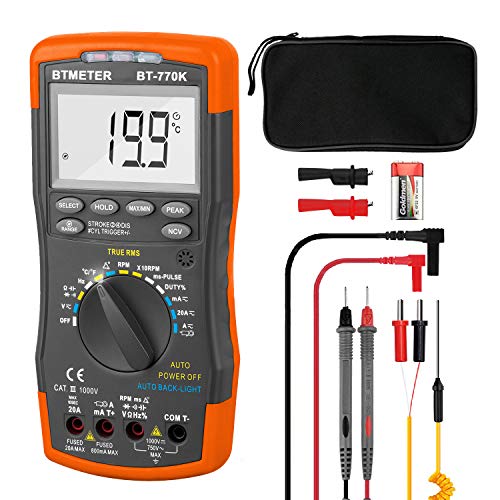
- Duty cycle, pulse width, tachometer, and dwell testing
- Large 3.0-inch LCD with auto backlight sensor
- Magnetic mount, hanger, and kickstand for hands-free use
Best For: Mechanics who want a feature-rich meter for dim workspaces
Workshop Classic
OTC 3980 750 Series Automotive Multimeter

- Frequency, duty cycle, diode, and continuity tests
- Adds RPM, dwell, pulse width, and temperature
- Includes PC cable software and canvas case
Best For: Workshop users who want core automotive diagnostic functions
Portable Smart Display Pick
BSIDE A10 Rechargeable Pocket Multimeter
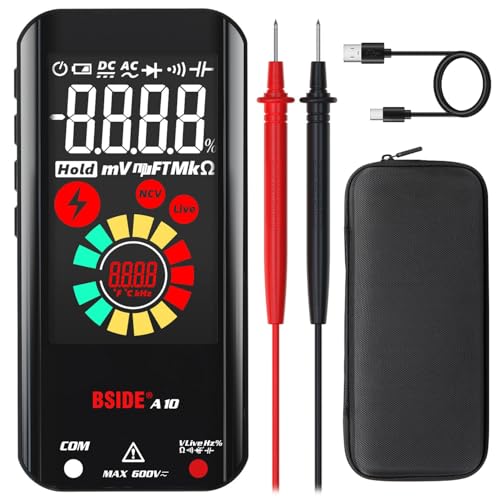
- Color LCD with easy-to-read display
- Smart auto-ranging and 3-results screen
- Rechargeable battery with carrying case
Best For: Compact everyday testing and quick vehicle electrical checks
Feature-Rich Engine Diagnostic Pick
Automotive Multimeter with RPM, Dwell, and Duty Cycle

- Tests duty cycle, pulse width, and temperature
- Built-in RPM and dwell for engine diagnostics
- 20A current ranges with NCV and peak hold
Best For: Mechanics needing ignition-focused automotive diagnostics
Balanced Everyday Tester
T21D Auto-Ranging TRMS Multimeter

- TRMS 6000-count display for accuracy
- Includes duty cycle, NCV, and battery test
- Handy backlight, flashlight, and data hold
Best For: General electrical and light automotive troubleshooting
Editor’s Pick
KAIWEETS HT118A Automotive TRMS Multimeter
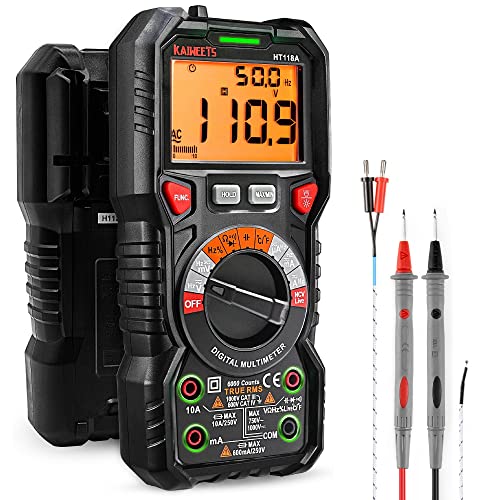
- Duty cycle, frequency, capacitance, and temperature testing
- 6000-count autoranging display with backlight
- CAT III 1000V / CAT IV 600V with fuse protection
Best For: DIYers who want a feature-rich auto and home troubleshooting meter
Value Choice
VEVOR 4000-Count TRMS Auto-Ranging Multimeter
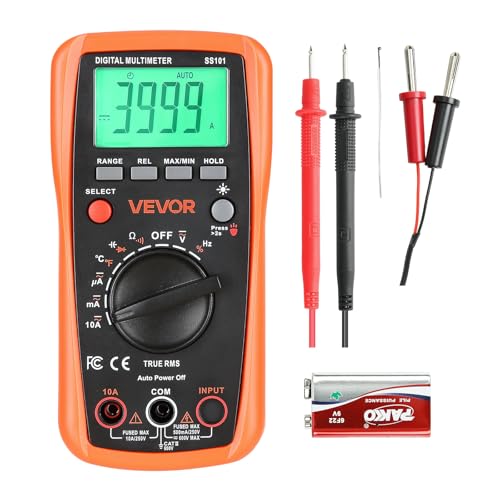
- Duty cycle, frequency, capacitance, and temperature support
- TRMS with autoranging for more accurate readings
- Compact, lightweight design with data hold and max/min
Best For: Users who want a simple, portable meter for car and home checks
Top All-Rounder
AstroAI DM6000AR True RMS Multimeter
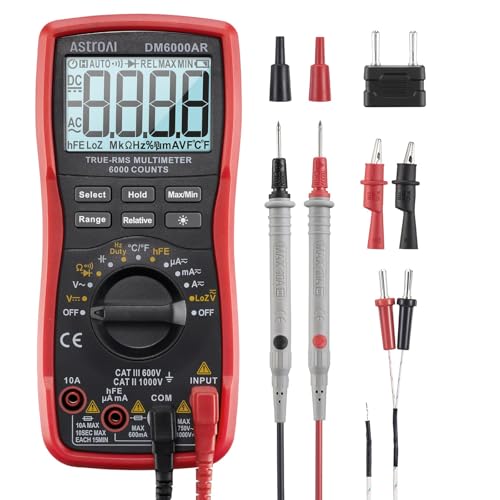
- Duty cycle, frequency, capacitance, and temperature testing
- True RMS with autoranging and 6000-count display
- Backlit screen, data hold, kickstand, and fuse protection
Best For: Balanced automotive and home diagnostics with easy everyday use
Premium Pick – Fluke 88V Deluxe Automotive Multimeter
For buyers comparing automotive multimeters with duty cycle, the Fluke 88V stands out as a serious diagnostic tool for conventional and hybrid vehicles. It combines pulse width, duty cycle, and Min/Max/Avg recording with a 10 meg ohm input impedance, which is designed not to damage computer circuits.
Best For: Mechanics and advanced DIY users who want a high-trust multimeter for conventional and hybrid vehicle troubleshooting.
Pros:
- Measures pulse width, duty cycle, and Min/Max/Avg values for deeper diagnosis.
- 10 meg ohm input impedance helps protect sensitive computer circuits.
- Large display with bright backlight improves visibility.
- Built for troubleshooting problems on conventional and hybrid vehicles.
Cons:
- More specialized than a basic general-purpose meter.
- Heavier than some compact handheld options at 3 pounds.
The Fluke 88V is the most focused premium option here if you need dependable automotive readings and hybrid-vehicle-friendly testing. It is best suited to users who value diagnostic depth and practical visibility over a bare-bones meter.
Versatile Budget Tool – ANENG SZ26 Automotive Multimeter
If you want automotive multimeters with duty cycle plus extra engine-checking features, the ANENG SZ26 offers a broad set of functions in one compact tester. It supports dwell angle, DC current, AC/DC voltage, resistance, and duty cycle, and it also adds a 500-10000 RPM tachometer for car diagnostics.
Best For: Mechanics, engineers, and DIY users who want a multi-function automotive meter with tachometer capability.
Pros:
- Measures dwell angle, duty cycle, DC current, AC/DC voltage, and resistance.
- Includes 500-10000 RPM tachometer readings for automotive use.
- Large clear LCD is designed for easy reading in low light.
- Rugged protective case and included storage bag improve portability.
Cons:
- Focused on broad function coverage rather than specialized premium troubleshooting features.
- Accessory kit is extensive, which may be more than some users need.
The SZ26 is a practical all-in-one choice when you want duty cycle testing plus engine-related measurements in a single tool. It makes sense for users who value versatility and a ready-to-carry kit.
Feature-Packed Choice – BTMETER BT-770K Automotive Multimeter
Among automotive multimeters with duty cycle, the BTMETER BT-770K is built for users who want a wide feature set for troubleshooting car electrical and engine issues. It covers duty cycle, pulse width, tachometer testing, dwell, temperature, and a long list of electrical measurements, while also adding True RMS and NCV.
Best For: Mechanics and DIYers who want a highly featured meter with strong display and hands-free convenience.
Pros:
- Measures duty cycle, pulse width, tachometer, dwell, and temperature.
- Large 3.0-inch LCD with auto backlight sensor helps in dim areas.
- Magnetic attachment, hanger, and kickstand make hands-free use easier.
- Includes True RMS, NCV, peak hold, and overload protection.
Cons:
- More feature-heavy than a simple everyday multimeter.
- BTMETER BT-705A inductive clamp is not included for RPM measurement.
The BT-770K is a strong pick if you want broad automotive coverage without giving up convenience features like auto backlight and hands-free mounting. It is especially appealing when you work in dim spaces under the vehicle or in the garage.
Workshop Classic – OTC 3980 750 Series Automotive Multimeter
The OTC 3980 is a straightforward option for shoppers comparing automotive multimeters with duty cycle and other workshop-ready functions. It includes frequency, duty cycle, diode and continuity tests, plus automotive-specific checks like RPM, dwell, pulse width, temperature, backlight, and min/max.
Best For: Shops and home mechanics who want a durable automotive meter with core diagnostic features and PC support.
Pros:
- Includes duty cycle, frequency, diode, and continuity testing.
- Adds RPM, dwell, pulse width, temperature, and backlight functions.
- True RMS and CATIII compatibility support broader vehicle-system use.
- Comes with PC cable software, auto power off, and a canvas case.
Cons:
- Less compact than some handheld alternatives.
- Feature set is practical, but not as broad as some newer automotive meters.
The OTC 3980 is a dependable workshop-style meter that covers the automotive basics without unnecessary complexity. It fits users who want proven diagnostic functions and included accessories for organized use.
Portable Smart Display Pick – BSIDE A10 Rechargeable Pocket Multimeter
If you want an easy-to-carry option among automotive multimeters with duty cycle, this BSIDE model keeps things simple and readable. It offers a color LCD, smart auto-ranging, and a 3-results display that can show voltage, frequency, and an analog bar at the same time, which is handy for quick checks on the go.
Best For: Drivers and DIY users who want a compact, rechargeable meter for basic vehicle and electrical testing.
Pros:
- Color LCD improves readability in bright sunlight or low light.
- 3-results display shows multiple test values at once for faster checks.
- Built-in rechargeable battery removes the need for disposable cells.
- Smart mode automatically identifies the tested parameter and range.
Cons:
- Product notes do not list dedicated RPM or dwell features.
- Not as specialized for vehicle diagnostics as dedicated automotive meters.
This is a practical pocket multimeter for users who value convenience, visibility, and rechargeability more than advanced automotive functions. It fits well for general vehicle electrical troubleshooting where a compact tool is easier to keep in the car or tool bag.
Feature-Rich Engine Diagnostic Pick – Automotive Multimeter with RPM, Dwell, and Duty Cycle
For buyers focused on automotive multimeters with duty cycle, this model stands out because it combines standard electrical testing with RPM, dwell, and pulse-width functions. It is built for vehicle diagnostics and adds auto-ranging, a 6000-count LCD, and support for AC/DC current measurements, making it a strong all-around shop tool.
Best For: Mechanics and car enthusiasts who want a meter with RPM, dwell, and broader ignition diagnostics.
Pros:
- Measures duty cycle, pulse width, frequency, capacitance, temperature, and more.
- Built-in RPM and dwell testing for 4/2-stroke and DIS ignition systems.
- Measures AC/DC current up to 20A with fuse protection.
- Includes NCV, data hold, peak hold, and MAX/MIN tracking.
Cons:
- Inductive clamp for RPM measurement is not included.
- More specialized than a basic multimeter, so it may be more tool than casual users need.
If you want a meter aimed at vehicle troubleshooting, this is the most feature-packed option here. Its duty cycle support and RPM/dwell functions make it especially useful for ignition and engine-related diagnostics.
Balanced Everyday Tester – T21D Auto-Ranging TRMS Multimeter
This T21D is a versatile choice if you need automotive multimeters with duty cycle support plus everyday electrical testing features. It combines TRMS accuracy, auto-ranging, NCV, and a wide set of measurements including capacitance, temperature, continuity, and battery testing for general car and household troubleshooting.
Best For: DIYers, homeowners, and electricians who want one reliable meter for cars and general electrical work.
Pros:
- TRMS and 6000-count display for more accurate readings.
- Measures duty cycle along with voltage, current, resistance, frequency, and capacitance.
- NCV with sound and light alarms adds convenient safety checking.
- Useful extras include data hold, backlight, flashlight, and support stand.
Cons:
- Maximum operating voltage is listed at 600V, so it is not the highest-rated option.
- No dedicated RPM or dwell functions for deeper engine tuning.
Overall, this meter hits a practical middle ground: broad function coverage, solid safety features, and user-friendly design. It is a good fit if you want duty cycle testing without stepping up to a more specialized automotive diagnostic tool.
Editor’s Pick – KAIWEETS HT118A Automotive TRMS Multimeter
If you want automotive multimeters with duty cycle support plus a broader set of diagnostic functions, the KAIWEETS HT118A is a practical all-rounder. It offers autoranging, 6000-count resolution, and TRMS-style measurement features for everyday car and electrical troubleshooting, along with useful extras like NCV, continuity, diode testing, and temperature.
Best For: DIYers and drivers who want a feature-rich multimeter for car and household troubleshooting.
Pros:
- Measures duty cycle, frequency, capacitance, temperature, continuity, and diodes.
- 6000-count display with autoranging and a large backlit LCD for easier reading.
- Includes NCV/live testing, data hold, Min/Max/Average, flashlight, and kickstand.
- Safety-focused build with CAT III 1000V / CAT IV 600V ratings and double ceramic fuse protection.
Cons:
- More feature-packed than a basic tester, so it may be more than some users need.
- At 0.55 kg, it is not the lightest option in this group.
Overall, this KAIWEETS model stands out if you want a well-equipped automotive multimeter with duty cycle testing and a long feature list. It is designed to handle a wide range of diagnostics without sacrificing readability or safety.
Value Choice – VEVOR 4000-Count TRMS Auto-Ranging Multimeter
The VEVOR multimeter is a solid pick if you’re comparing automotive multimeters with duty cycle capability and want a compact tester for general circuit checks. Its TRMS and autoranging setup is aimed at accurate readings on non-sinusoidal waveforms, while the 4000-count backlit display keeps the interface straightforward.
Best For: Budget-minded users who need a compact multimeter for automotive and electrical checks.
Pros:
- Supports duty cycle, frequency, capacitance, temperature, continuity, and diode testing.
- TRMS and autoranging help with more accurate readings on varied waveforms.
- Compact, lightweight design makes it easy to carry and store.
- Includes data hold, max/min recording, and auto shut-off for convenience.
Cons:
- 4000-count display is less detailed than 6000-count competitors.
- CAT II 600V rating is more limited than higher-rated alternatives.
For straightforward troubleshooting, this VEVOR unit covers the core functions most users need without adding bulk. It makes the most sense if you want a simple, portable meter for automotive circuit inspection and everyday electrical maintenance.
Top All-Rounder – AstroAI DM6000AR True RMS Multimeter
The AstroAI DM6000AR is a strong option if you want automotive multimeters with duty cycle support in a balanced, user-friendly package. It combines True RMS, autoranging, and a 6000-count display with the core measurement modes needed for automotive and household electrical troubleshooting.
Best For: Users who want a balanced multimeter for automotive and home electrical diagnostics.
Pros:
- Measures duty cycle, frequency, capacitance, resistance, continuity, diode, and temperature.
- True RMS and autoranging improve usefulness for AC current and voltage testing.
- Large backlit LCD, data hold, kickstand, and auto shut-off make it practical to use.
- Double ceramic fuse protection adds a safety-focused design.
Cons:
- Compared with the KAIWEETS model, it does not list as many extra features like NCV or flashlight.
- Power source is corded electric in the supplied details, which may matter for some buyers.
This AstroAI meter is a dependable middle-ground choice when you want useful diagnostic coverage without overcomplicating the tool. It is especially appealing for users who want a practical everyday meter for both vehicle and household work.
How We Picked the Best Automotive Multimeters with Duty Cycle
We focused on meters that make real-world vehicle diagnostics easier, not just meters with long spec sheets. Priority went to auto-ranging models, clear displays, dependable voltage and resistance testing, and automotive-friendly features such as RPM, dwell, temperature, NCV, and pulse-width or duty-cycle measurement.
We also considered build quality, ease of use, and whether the meter makes sense for beginners, DIY owners, or more experienced techs.
Quick Comparison
If you want the most complete professional option, choose a meter with strong automotive coverage and robust safety ratings. If you need a budget-friendly backup, a simpler auto-ranging meter with duty-cycle support may be enough. For frequent troubleshooting, a high-contrast display and stable true-RMS readings are worth paying for.
Key Buying Factors for Automotive Multimeters with Duty Cycle
Measurement Range and Accuracy
Look for a meter that covers the basics: DC and AC voltage, resistance, continuity, current, and frequency. For vehicle work, accurate low-voltage readings matter because many issues hide in small changes rather than obvious failures.
Duty Cycle and Pulse-Related Functions
Duty cycle helps you evaluate on/off timing in signals, which is useful for injectors, sensors, ignition components, and some control circuits. Pulse width, dwell, and RPM functions are especially valuable if you work on older vehicles or need broader engine-diagnostics capability.
Display and Usability
A large backlit screen, auto-ranging, and clear hold functions reduce mistakes when you are probing under the hood. If you work in dim garages, a high-contrast LCD can save time.
Safety and Durability
Choose a meter with proper input protection and a housing that can handle shop use. Good lead quality, fuse protection, and a sturdy case matter more than flashy extras.
Who Should Buy Which Automotive Multimeters with Duty Cycle?
DIY drivers should look for a straightforward auto-ranging meter with duty cycle and the core electrical tests. Weekend mechanics may prefer a model that adds RPM or dwell for broader automotive troubleshooting. Professional users and advanced hobbyists should prioritize a more feature-rich meter with better accuracy, stronger safety design, and a display that stays easy to read in busy diagnostic sessions.
In short, the best choice depends on how often you diagnose electrical problems and how many vehicle systems you expect to test. Matching the meter to your workflow is the smartest way to get value from Automotive Multimeters with Duty Cycle.