Cutting between studs, under sinks, inside cabinets, or around crowded plumbing calls for more than raw power. The best reciprocating saws for tight spaces combine a compact body, manageable vibration, variable speed, and a blade setup that keeps the tool controllable.
This roundup compares 10 options across cordless, corded, and pneumatic designs, from professional Milwaukee Hackzall models to compact kits with batteries and accessories. Use the guide below to match the saw’s size, power source, and runtime to your work.
Best 10 Reciprocating Saws for Tight Spaces Picks for 2026
Best Compact Cordless Pick
Milwaukee M18 Hackzall 2625-20

- One-handed compact design
- LED work light and quick-lock clamp
- Compatible with M18 batteries
Best For: M18 users cutting in confined or overhead areas
Best Pneumatic Option

- Inline 1.33-pound configuration
- Up to 10,000 strokes per minute
- Includes six blades and safety controls
Best For: Air-powered metal and bodywork cutting
Best Brushless Performance
Milwaukee M18 FUEL Hackzall 2719-20
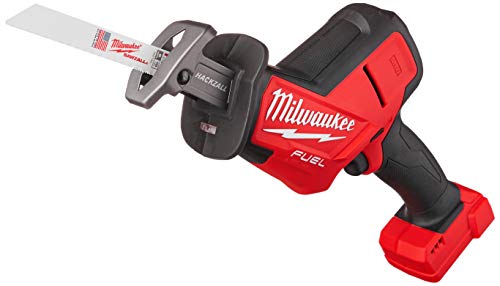
- POWERSTATE brushless motor
- 7/8-inch stroke and pivoting shoe
- REDLINK Plus overload protection
Best For: M18 users needing stronger one-handed cutting performance
Best Mini DIY Saw
Fanttik R11 Pro Cordless Mini Saw
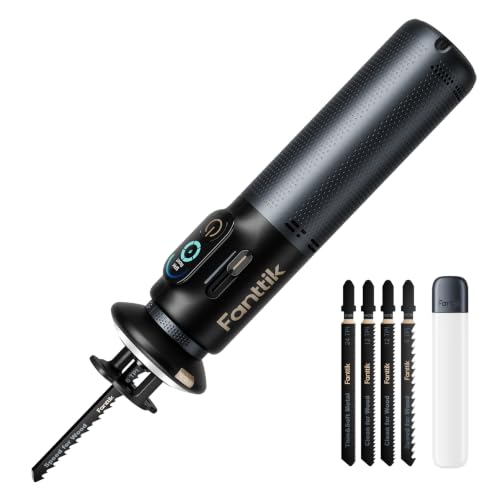
- Compact 8.92-inch body
- 0–2,200 SPM variable speed
- Built-in battery and five-blade kit
Best For: Light wood and PVC DIY cutting in very confined spaces
Best for Easy Setup

- 20V cordless design with battery and charger
- Tool-free blade change and pivoting shoe
- 4.5-pound body for easier handling
Best For: DIY wood cutting in tighter work areas
Best Lightweight Kit
SEESII Cordless Reciprocating Saw

- Includes two 4.0Ah batteries and six blades
- Brushless motor reaches up to 3,500 RPM
- LED light improves visibility in dark areas
Best For: Portable home projects in dim or confined spaces
Best Compact Cordless Pick – Milwaukee M18 Hackzall 2625-20
Milwaukee 2625-20 M18 18-Volt Lithium-Ion Cordless Hackzall Reciprocating Saw, Bare Tool
Check Price On AmazonIf you need reciprocating saws for tight spaces and already use Milwaukee M18 batteries, the 2625-20 is a practical one-handed option. Its compact body, built-in LED, and tool-free blade clamp make it easier to control in confined or overhead work areas.
Best For: M18 users who want a lightweight, one-handed saw for compact cutting tasks.
Pros:
- One-handed design improves control in restricted spaces.
- Compact, lightweight body is easier to use overhead.
- Quick-lock clamp enables tool-free blade changes.
- Built-in LED helps illuminate the cutting surface.
Cons:
- Bare-tool configuration requires a compatible M18 battery and charger.
- Its one-handed format may be less suitable for heavy-duty cutting than a full-size reciprocating saw.
The 2625-20 is a strong fit for users prioritizing maneuverability and cordless convenience. Its five-year tool warranty and M18 compatibility add value if you already have batteries in the platform.
Best Pneumatic Option – Ingersoll Rand 429 Air Saw
The Ingersoll Rand 429 is a lightweight pneumatic choice for reciprocating saws for tight spaces, particularly when you have access to an air compressor. Its inline configuration, adjustable blade guide, and high operating speed suit detailed cuts through sheet metal, aluminum, plastic, and fiberglass.
Best For: Garage and industrial users who need a compact air-powered saw for metal and bodywork.
Pros:
- Inline 1.33-pound design fits easily into tight areas.
- Up to 10,000 strokes per minute supports fast, precise cutting.
- Includes six high-speed steel blades and two hex wrenches.
- Lock-out lever and vibration reduction add control and safety.
Cons:
- Requires an air compressor supplying at least 8 CFM at 90 psi.
- Does not include an air compressor.
This saw makes sense when compressed air is already available and metal-cutting access matters more than cordless portability. The included accessories also make it ready for varied cutting work out of the box.
Best Brushless Performance – Milwaukee M18 FUEL Hackzall 2719-20
Milwaukee 2719-20 M18 FUEL Hackzall (Bare Tool), Red, Black, | Saw (Tool Only) Model 2719-20
Check Price On AmazonFor demanding reciprocating saws for tight spaces, the Milwaukee M18 FUEL Hackzall 2719-20 combines one-handed control with a POWERSTATE brushless motor and REDLINK Plus electronics. Its 7/8-inch stroke, pivoting shoe, and 4,500 RPM speed are designed for faster, smoother cuts in restricted areas.
Best For: Professionals and serious DIY users seeking a higher-performance one-handed M18 saw.
Pros:
- Brushless motor delivers increased cutting speed and power.
- One-handed design improves access and versatility.
- Pivoting shoe maintains contact for smoother cuts.
- REDLINK Plus provides overload protection and system communication.
Cons:
- Bare-tool configuration requires an M18 battery and charger.
- More substantial than ultra-mini saws, at 1.8 kg.
The 2719-20 is the performance-focused choice in this group. It is especially attractive for M18 owners who want brushless power and improved cutting control without moving to a full-size reciprocating saw.
Best Mini DIY Saw – Fanttik R11 Pro Cordless Mini Saw
The Fanttik R11 Pro is an especially portable option for reciprocating saws for tight spaces and light DIY work. Its small 8.92-inch body, built-in battery, variable speed control, and dual-counterweight design help with controlled cuts in wood and PVC.
Best For: DIY users who want a compact, self-contained saw for wood, PVC, and outdoor projects.
Pros:
- Mini 8.92-inch design is easy to store and carry.
- 0–2,200 SPM stepless speed supports controlled cutting.
- Brushless motor and dual counterweights help reduce vibration.
- Includes five 4-inch blades and USB-C fast charging.
Cons:
- Recommended maximum cutting thickness is 3/4 inch.
- Blade compatibility is limited to T-shank blades no thicker than 1.4 mm.
- Built-in battery cannot be swapped like a platform battery.
The R11 Pro prioritizes portability over heavy-duty capacity. Its integrated battery, status display, safety start, and included blade kit make it convenient for occasional cutting where a larger saw would be cumbersome.
Best for Easy Setup – BLACK+DECKER BDCR20C
For shoppers comparing reciprocating saws for tight spaces, the BLACK+DECKER BDCR20C offers cordless convenience in a relatively compact 15.62-inch body. Its tool-free blade change, pivoting shoe, and variable-speed trigger help make controlled cuts easier around wood projects and renovation work.
Best For: DIY users who want a cordless saw for wood cutting and improved maneuverability.
Pros:
- Cordless 20V design with one included lithium-ion battery and charger
- Tool-free blade change simplifies blade swaps
- Pivoting shoe and variable-speed trigger support cutting control
- Relatively light 4.5-pound tool body
Cons:
- Supplied details list wood as the surface recommendation
- Only one battery is included, so extended jobs may require recharge time
The BDCR20C is a practical choice when portability matters more than corded, all-day runtime. Its compact dimensions and control-focused features make it a sensible option for tighter work areas and general DIY cutting.
Best Corded Power Option – GALAX PRO 6.0 Amp Reciprocating Saw
If you need reciprocating saws for tight spaces but expect longer cutting sessions, the GALAX PRO provides steady corded power from a 6.0-amp motor. Its pivoting shoe, soft-grip handle, tool-less chuck, and 17.32-inch length make it suited to renovation, plumbing, and general cutting tasks where an outlet is available.
Best For: DIYers and contractors who need consistent power for wood, metal, PVC, and other materials.
Pros:
- 6.0-amp copper motor delivers up to 3,000 SPM
- Tool-less blade change supports quick blade swaps
- Pivoting shoe adjusts by ±15 degrees and can help extend blade life
- Includes two wood blades and three metal blades
Cons:
- Corded operation requires access to a 120V outlet
- At 17.32 inches long, it is less compact than some cordless options
- Includes a one-year warranty rather than the longer coverage listed for some alternatives
The GALAX PRO is the stronger fit for sustained work when portability is secondary to uninterrupted operation. Its included blade selection and multi-material capability add versatility, while the pivoting shoe helps when cuts meet irregular surfaces.
Best Lightweight Kit – SEESII Cordless Reciprocating Saw
Among reciprocating saws for tight spaces, the SEESII stands out for its cordless kit, built-in LED, and one-handed design. It includes two 4.0Ah batteries, six blades, and a 15mm stroke, giving homeowners a ready-to-use option for wood, plastic, and metal cuts in dim or confined areas.
Best For: Home projects that benefit from cordless mobility, low-light visibility, and included accessories.
Pros:
- Includes two 21V 4.0Ah batteries and a fast charger
- Brushless motor provides variable speed up to 3,500 RPM
- Built-in LED helps illuminate dark work areas
- Six included blades cover wood, plastic, and metal applications
Cons:
- Listed item weight is 3.48 kg, despite the product notes describing a 2.0-pound tool
- Its accessory-heavy kit may be more than needed for occasional users
- Battery platform compatibility outside the included batteries is not specified
The SEESII is appealing when you want a complete cordless package rather than a bare tool. The LED, safety lock, tool-free blade change, and two-battery setup are especially useful for cabinet, basement, under-furniture, and other hard-to-light work.
Best Overall Kit – FULLYEA 21V Variable-Speed Reciprocating Saw
For shoppers comparing reciprocating saws for tight spaces, the FULLYEA stands out as a compact, cordless kit with a lightweight design, LED light, and variable-speed trigger. Its 1.1-inch stroke and included wood and metal blades make it practical for home repairs, PVC work, branches, and light demolition.
Best For: DIY users who want a portable, ready-to-use saw kit for varied materials and routine home projects.
Pros:
- Stepless 0–3500 SPM speed control helps match cutting speed to the task.
- Tool-free lever blade change makes swaps faster and easier.
- Includes two 2.0Ah batteries, charger, four blades, LED light, and a portable tool box.
- Supports cutting depths up to 80 mm in plastic, 50 mm in wood, and 20 mm in metal.
Cons:
- The included batteries are 2.0Ah, so runtime may be limited on extended jobs.
- Its stated capabilities are geared toward DIY work and light demolition rather than heavy-duty construction.
With its compact dimensions, cordless operation, and complete accessory package, this FULLYEA model is a convenient choice when maneuverability and quick setup matter. It is especially appealing for users who need one saw for occasional wood, plastic, metal, and yard tasks.
Best Cord-Free Value – 20V Reciprocating Saw with Two Batteries
Among reciprocating saws for tight spaces, this 20V model offers cordless mobility for home projects, gardening, and general cutting. Its variable-speed operation and tool-free blade change support flexible use across wood, metal, PVC, tree branches, and other listed materials.
Best For: Homeowners and gift shoppers seeking a cordless saw for occasional DIY, garden, and workshop tasks.
Pros:
- Cordless design allows flexible movement without a power cord.
- Variable-speed control ranges from 0–3000 SPM.
- Includes two batteries, a charger, and four blades for different materials.
- Designed for wood, metal, PVC, tree cutting, and other household applications.
Cons:
- At 5.5 pounds, it may feel less convenient in prolonged overhead or confined-space work.
- The supplied details do not specify the battery capacity or cutting stroke length.
- Its listed 8 x 9 x 13-inch dimensions may be less compact than some alternatives.
This saw emphasizes convenience and broad household versatility rather than highly specific compact-saw measurements. The two-battery package is useful for keeping a spare charged, while the variable-speed trigger and included blades help cover common cutting jobs.
Best High-Speed Option – 20V Variable-Speed Saw with Two Batteries
This cordless model is worth considering among reciprocating saws for tight spaces when adjustable speed and a broad cutting range are priorities. It reaches up to 3500 SPM, includes tool-free blade changes, and comes with four blades for wood, PVC, metal pipe, and tree-cutting tasks.
Best For: DIY users who want a high-speed cordless saw for varied household, yard, and workshop cutting.
Pros:
- 0–3500 SPM variable-speed operation provides adjustable cutting control.
- Tool-free blade changes make switching between tasks more convenient.
- Includes two batteries, a charger, and four blades.
- Designed for cutting wood, PVC, metal, pipes, trees, bone, and other listed materials.
Cons:
- The supplied specifications are inconsistent about the battery count, so buyers should verify the package contents.
- At 13 x 8 x 9 inches, the listed dimensions may not suit every confined workspace.
- No cutting-depth rating or battery capacity is provided in the supplied details.
The main appeal here is the combination of a 3500 SPM top speed, cordless portability, and a multi-material blade set. Confirming the battery specifications before purchase is sensible, but the package is positioned as a flexible option for home and outdoor cutting.
How We Picked These Reciprocating Saws for Tight Spaces
We focused on features that matter when access is limited: overall tool size, one-handed handling, trigger control, blade-change convenience, vibration management, and the ability to cut common materials such as wood, PVC, and thin metal. We also included different power systems because the best choice depends on whether you value portability, continuous runtime, or shop-air compatibility.
Battery kits were considered for their included batteries, charger, blade assortment, and practical value. Corded and pneumatic models were included for users who prefer uninterrupted operation or already have the required power equipment.
Quick Comparison
| Best For | Recommended Type | Why It Makes Sense |
|---|---|---|
| Professional remodeling | Compact premium cordless | Better control, durability, and battery-platform options |
| Plumbing and HVAC work | Hackzall-style cordless | Shorter profile and easier one-handed positioning |
| Garage or shop use | Pneumatic reciprocating saw | Lightweight operation when an air compressor is available |
| Occasional home repairs | Budget cordless kit | Includes the essentials without a large upfront investment |
| Extended cutting sessions | Corded reciprocating saw | Consistent power without recharging batteries |
Key Buying Factors for Reciprocating Saws for Tight Spaces
Size, Grip, and Balance
A shorter nose and compact housing make it easier to position the blade between framing, pipes, and other obstacles. A balanced grip also reduces wrist strain during overhead or one-handed work. Remember that the battery can add significant length and weight to a cordless tool.
Speed and Cutting Control
Variable-speed triggers are especially useful in confined areas. Start slowly to avoid blade wandering, then increase speed once the cut is established. Higher strokes per minute can improve productivity, but control is usually more important than maximum speed for delicate or awkward cuts.
Blade Changes and Material Compatibility
Tool-free blade changes save time when switching between wood, metal, and demolition blades. Check that replacement blades are easy to find and that the saw accepts standard reciprocating-saw blades. For plumbing and remodeling, keep fine-tooth metal blades and coarse wood blades available.
Power Source, Runtime, and Vibration
Cordless models provide the most freedom around walls and fixtures, while corded saws avoid battery limitations. Pneumatic tools can be compact and light but require a compressor and suitable hose. For frequent use, prioritize vibration control, a secure shoe, and a battery platform you already own.
Who Should Buy Which Reciprocating Saws for Tight Spaces?
Choose a premium compact cordless model if you work professionally and need dependable control in framing, remodeling, plumbing, or electrical installations. Choose a budget cordless kit if you handle occasional repairs and want batteries, a charger, and blades included.
Choose a pneumatic saw for shop environments with an adequate compressor and a preference for lightweight tools. Choose a corded model when you mainly work near outlets and want uninterrupted cutting power. For the tightest access points, prioritize the shortest, lightest design that still offers enough stroke speed and battery capacity for your materials.