The best car GPS devices for daily driving can make commutes, errands, and unfamiliar routes easier while adding useful features such as driver alerts, live location updates, or trip reports.
This roundup compares 10 options across dedicated dashboard navigators and vehicle trackers, so you can focus on the features that fit your driving habits, vehicle, and budget.
Best 10 Car Gps Devices for Daily Driving Picks for 2026
Best All-Around Navigator
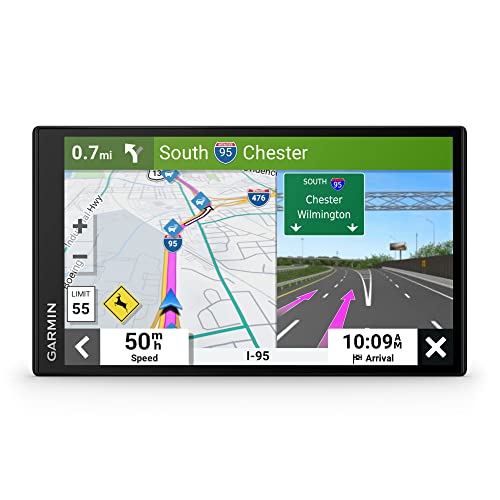
- 6-inch high-resolution North America navigation
- Voice assist and smartphone-connected features
- Wi-Fi updates and useful driver alerts
Best For: Daily drivers wanting a dedicated GPS with connected extras
Best for Fast Tracking
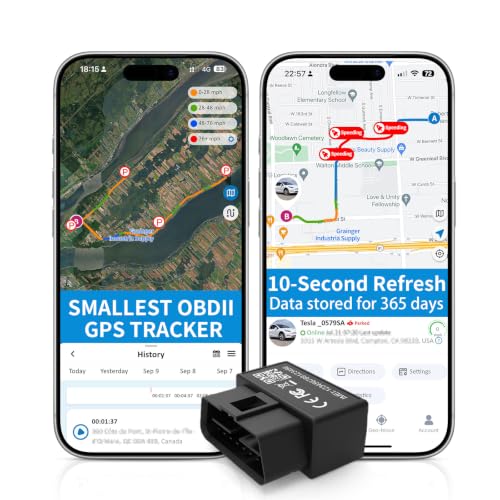
- 10-second location refreshes
- Speed, geofence, crash, and driving alerts
- 12-month trip history and mileage reports
Best For: Parents and fleet managers monitoring vehicles
Best Large-Screen GPS
- Nearly 7-inch high-resolution display
- Voice assist and hands-free calling
- Road-trip points of interest and Wi-Fi updates
Best For: Drivers who want a larger dedicated navigation screen
Best for Vehicle Insights
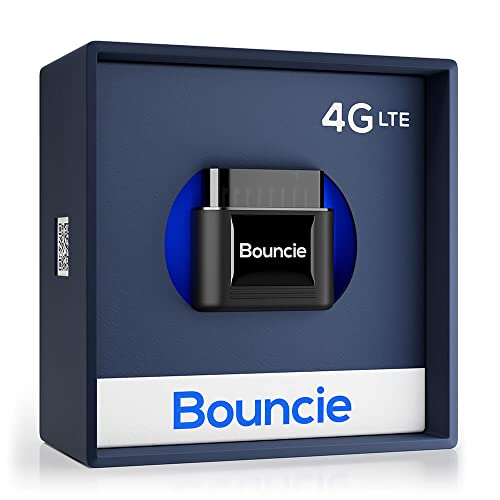
- OBD2 installation with no battery required
- Driving, route, geo-fence, and accident monitoring
- Diagnostic engine data and unlimited trip history
Best For: Families and fleets tracking driving and vehicle health
Flexible Route Navigator

- 2026 North America maps with lifetime free updates
- Voice guidance with speed and school-zone alerts
- Custom routing for cars, trucks, and RVs
Best For: Drivers wanting a large-screen dedicated navigator with flexible vehicle routing
Trusted Everyday Navigation

- Bright 5-inch glass touchscreen
- Alerts for speed changes, school zones, and sharp curves
- North America maps with landmark voice guidance
Best For: Drivers seeking simple Garmin navigation with useful route and travel alerts
Connected Vehicle Monitoring

- Simple OBD-port installation with extension cable
- Location, speed, trip, and driving-history reports
- Alerts for speeding, boundaries, harsh driving, and tampering
Best For: Owners and managers who need ongoing vehicle tracking rather than turn-by-turn navigation
Flexible Route Planning

- 2026 North America maps with free lifetime updates
- Custom routing for cars, trucks, and RVs
- Voice alerts, FM transmission, and day/night modes
Best For: Drivers wanting a large-screen standalone navigator with flexible routing
Subscription-Free Security

- No monthly fee, subscription, or SIM card contract
- Compatible with Apple Find My and Google Find Hub
- IP68-rated design with up to 12-month battery life
Best For: Drivers seeking discreet vehicle location tracking without recurring fees
Simple Everyday Navigation
- Bright 5-inch touchscreen with North America maps
- Spoken directions and landmark-based Real Directions
- Driver alerts plus food, fuel, and rest-area information
Best For: Drivers wanting simple dedicated navigation from a familiar GPS brand
Best All-Around Navigator – Garmin DriveSmart 66
For drivers comparing car gps devices for daily driving, the Garmin DriveSmart 66 combines a compact 6-inch high-resolution display with voice assistance, smartphone-connected services, and helpful driver alerts. Its North America map coverage and built-in Wi-Fi updates make it a practical dedicated navigator.
Best For: Daily drivers who want a dedicated GPS with connected navigation and road-trip extras.
Pros:
- 6-inch high-resolution display with North America map updates
- Voice assist, Alexa Built-in, and hands-free calling when paired with a compatible smartphone
- Includes driver alerts, parking, fuel, weather, and traffic features through the Garmin Drive app
- Wi-Fi enables map and software updates without a computer
Cons:
- Several live features require a compatible smartphone and Garmin Drive app
- It is a navigation unit rather than a vehicle-tracking device
The DriveSmart 66 is a balanced choice when you want a clear standalone screen without giving up smartphone-connected information. The included dual USB charger is also useful for keeping other devices powered during everyday trips.
Best for Fast Tracking – Benbengo OBD GPS Tracker
Unlike turn-by-turn navigators, this OBD GPS tracker is designed for monitoring a vehicle’s location, speed, trips, and mileage. It plugs into the OBDII port in seconds and provides 10-second refreshes through its app or web dashboard, making it one of the more focused car gps devices for daily driving oversight.
Best For: Parents, small businesses, and fleet managers who need location and driving-behavior reports.
Pros:
- Plug-and-play OBDII installation with a compact, discreet design
- 10-second real-time refresh rate with customizable speeding alerts
- Tracks geo-fence breaches, crashes, hard braking, and rapid acceleration
- Stores up to 12 months of trip data and supports mileage reports
Cons:
- Requires a subscription after the five-day free trial
- It monitors vehicles rather than providing standard turn-by-turn directions
- Coverage excludes Venezuela, Cuba, and Aruba
The Benbengo is a practical monitoring tool for people who need records and alerts more than on-screen navigation. The subscription includes SIM and data service, while app and web access make reviewing trips convenient.
Best Large-Screen GPS – Garmin DriveSmart 76
The Garmin DriveSmart 76 is a strong option among car gps devices for daily driving when screen size matters. Its nearly 7-inch high-resolution display, North America maps, voice control, and smartphone-connected traffic and weather features provide an easy-to-read dedicated navigation experience.
Best For: Drivers who prefer a larger display for navigation, alerts, and road-trip planning.
Pros:
- Nearly 7-inch high-resolution touchscreen is easy to read
- Voice assist, hands-free calling, and Alexa Built-in support hands-free interaction
- Includes Tripadvisor, national parks, HISTORY, and Foursquare points of interest
- Wi-Fi supports map and software updates without a computer
Cons:
- Live traffic, fuel, parking, weather, and notifications require smartphone pairing
- The larger screen takes up more dashboard space than the DriveSmart 66
The DriveSmart 76 makes the most sense for drivers who value glanceable directions and a roomy interface. It offers the same connected and trip-planning style features as the smaller model while prioritizing display size.
Best for Vehicle Insights – Bouncie GPS Tracker
The Bouncie GPS Tracker focuses on vehicle monitoring rather than route guidance, making it useful for drivers evaluating car gps devices for daily driving oversight. Its OBD2 installation provides route history, speed and driving insights, geo-fence notifications, accident detection, and vehicle diagnostic information.
Best For: Families and fleet operators who want ongoing driving, location, and vehicle-health monitoring.
Pros:
- Simple OBD2 installation for most vehicles from 1996 onward
- Tracks routes, speed, acceleration, hard braking, idle time, and driving patterns
- Provides geo-fence and accident notifications
- Monitors diagnostic engine data for potential maintenance issues
Cons:
- Requires a $9.65 monthly subscription
- It is a monitoring tracker, not a dedicated turn-by-turn GPS navigator
- Cellular coverage is listed for North America rather than worldwide use
The Bouncie stands out when the goal is understanding how a vehicle is being used and maintained. Unlimited trip history, color-coded driving information, and desktop or mobile access make it suited to recurring family or fleet oversight.
Flexible Route Navigator – 7-inch GPS Navigator
For drivers comparing car gps devices for daily driving, this 7-inch navigator offers a large touchscreen, built-in 2026 North America maps, and voice guidance without requiring a phone connection. Its route settings also accommodate cars, trucks, and RVs.
Best For: Drivers who want a dedicated navigator with a large display, lifetime map updates, and vehicle-specific routing.
Pros:
- Includes 2026 North America maps with lifetime free updates.
- Provides voice guidance for turns, lane changes, speed zones, and school zones.
- Supports fastest, shortest, eco-friendly, and easiest route options.
- Includes a windshield mount, car power adapter, and FM transmitter.
Cons:
- Map coverage is listed for North America, so international travelers may need another option.
- The supplied details do not specify a software update date.
This is a practical choice for daily commuters and larger-vehicle owners who value a generous screen and customizable routing. The plug-and-play setup keeps installation simple, while the FM transmitter can help make spoken directions easier to hear.
Trusted Everyday Navigation – Garmin Drive 53
The Garmin Drive 53 is a straightforward option among car gps devices for daily driving, combining a bright 5-inch glass touchscreen with spoken turn-by-turn directions. It also adds driver alerts and useful points-of-interest information for routine trips and road travel.
Best For: Drivers who prefer a compact Garmin navigator with clear maps, simple menus, and added travel information.
Pros:
- Uses a bright, high-resolution capacitive touchscreen.
- Provides alerts for school zones, speed changes, sharp curves, and more.
- Shows food, fuel, rest areas, cities, and route milestones.
- Includes North America map updates and Garmin Real Directions landmark guidance.
Cons:
- The approximately 5-inch display is smaller than some 7-inch alternatives.
- Its listed battery life is about one hour, so vehicle power is important for extended use.
- The supplied specifications do not identify a map-update date.
With its glass display and uncluttered menus, the Drive 53 suits drivers who want familiar, dedicated navigation rather than a feature-heavy device. Tripadvisor ratings and national-park directories are useful extras when daily driving extends into weekend trips.
Connected Vehicle Monitoring – Optimus OBD GPS Tracker
Unlike turn-by-turn navigators, the Optimus OBD tracker is designed for vehicle monitoring. For shoppers considering car gps devices for daily driving, it provides location, speed, trip history, and alerts through a cellular connection and mobile or web access.
Best For: Families, employers, and vehicle owners who need ongoing location tracking and driving-behavior reports.
Pros:
- Plugs into the vehicle’s OBD port for easy installation.
- Supports location, address, speed, driving history, and trip reports.
- Offers movement, speeding, boundary, harsh-driving, and tamper alerts.
- Includes SIM service for coverage in the USA and Canada, with no contract.
Cons:
- Requires a $12.95-per-month service plan.
- It tracks and reports vehicle activity rather than providing a dedicated navigation screen.
- Standard tracking is every 30 seconds; 10-second reporting requires an upgrade.
This tracker is a better fit for oversight than navigation. Its app, browser access, historical reports, and configurable alerts can help monitor shared vehicles, young drivers, or work fleets, provided you are comfortable with the recurring subscription.
Flexible Route Planning – 7-Inch Car GPS Navigator
For drivers comparing car gps devices for daily driving, this 7-inch navigator combines a large touchscreen with current North America maps, voice guidance, and route options designed for different vehicle types. It can also suit occasional RV or truck use when vehicle dimensions matter.
Best For: Daily drivers who want a dedicated navigator with a large display and vehicle-specific routing.
Pros:
- Includes 2026 North America maps with free lifetime updates and no subscription requirement.
- Offers truck and RV routing based on vehicle height, weight, and width.
- Provides voice guidance, lane guidance, speed-limit alerts, and day/night display modes.
- Supports FM audio transmission, ZIP-code lookup, POI search, and four route preferences.
Cons:
- Its 7-inch size may take more dashboard space than a smaller navigator.
- The supplied details do not specify a software-update date beyond the included map-update promise.
This is a feature-rich choice for drivers who prefer a standalone GPS and need more than basic point-to-point routing. Its strongest advantage is the combination of a large screen, lifetime map updates, and customizable vehicle routing.
Subscription-Free Security – Hidden Vehicle Tracker
For car gps devices for daily driving, this compact tracker serves a different purpose from a navigation unit: it helps locate a vehicle through Apple Find My or Google Find Hub. Its small, waterproof design can be placed discreetly in a car, motorcycle, truck, or another valuable item.
Best For: Drivers who want location tracking and anti-theft visibility without monthly fees.
Pros:
- Uses Apple Find My and Google Find Hub with no subscription or SIM card contract.
- Works with both iPhone and Android smartphones.
- Compact 1.14-inch design, IP68 water resistance, and up to 12 months of battery life.
- Supports real-time tracking features, alert notifications, and a battery-life indicator.
Cons:
- It is a tracker rather than a turn-by-turn navigation device.
- Location features depend on a compatible phone and the applicable Find My or Find Hub network.
- The supplied notes identify Bluetooth connectivity rather than cellular GPS connectivity.
This is best viewed as a low-maintenance vehicle-locating accessory, not a dashboard navigation replacement. Its no-fee operation, cross-platform support, and long claimed battery life make it practical for ownership and theft-awareness use.
Simple Everyday Navigation – Garmin Drive 53 GPS Navigator
For car gps devices for daily driving, the renewed Garmin Drive 53 focuses on straightforward navigation through a bright 5-inch glass touchscreen, simple menus, and spoken directions. It also adds route alerts and travel information for everyday trips and road travel.
Best For: Drivers who prefer a familiar dedicated GPS with clear maps and uncomplicated controls.
Pros:
- Uses a high-resolution capacitive touchscreen with easy-to-see North America maps.
- Provides spoken turn-by-turn directions and Garmin Real Directions landmark guidance.
- Offers alerts for school zones, speed changes, and sharp curves.
- Displays nearby food, fuel, and rest areas, plus Tripadvisor ratings and national park information.
Cons:
- This renewed unit includes a 90-day limited warranty.
- The approximately 5-inch screen is smaller than the 7-inch navigator in this roundup.
- Its listed battery average is about one hour, so regular vehicle-power use is important.
The Drive 53 is a sensible option for drivers who value a recognizable navigation system and uncluttered operation. Its alerts and travel points of interest add useful context, while the renewed condition and shorter warranty deserve consideration.
How We Picked These Car Gps Devices for Daily Driving
We selected products that address common daily-driving needs: dependable route guidance, readable screens, straightforward installation, useful alerts, and practical tracking features. The list includes dedicated Garmin navigators with preloaded maps and voice assistance, plug-in OBD trackers that can report location and vehicle activity, and compact tracking devices designed for locating a car.
We also considered the differences between navigation and tracking. A GPS navigator helps you follow a route without relying entirely on a phone, while a tracker is primarily for monitoring a vehicle’s location, speed, mileage, or movement. Subscription requirements, cellular connectivity, map updates, and installation method can significantly affect long-term value.
Quick Comparison
| Type | Best for | Main advantage | Watch for |
|---|---|---|---|
| Dedicated GPS navigator | Routine and long-distance driving | Large maps and turn-by-turn guidance | Map-update and traffic-feature limitations |
| OBD plug-in tracker | Vehicle monitoring | Easy installation and trip data | Potential subscription or cellular fees |
| Standalone vehicle tracker | Location and theft awareness | Remote tracking or compact placement | Network, battery, and service requirements |
Key Buying Factors for Daily Driving
Navigation Screen and Usability
Choose a screen size that remains easy to read without blocking your view. A 6-inch model is a useful balance for many dashboards, while a 7-inch display can be easier to view at a glance in larger vehicles. Look for simple menus, clear map graphics, audible directions, and voice control if you want to minimize touch interactions.
Map Coverage, Updates, and Traffic
Check whether maps are preloaded, how updates are delivered, and whether live traffic requires a phone connection or separate service. Updated maps matter if you regularly encounter new roads, construction, or changing city layouts.
Tracker Installation and Operating Costs
OBD trackers generally install quickly through the vehicle’s diagnostic port, but they may remain visible and use a paid cellular plan. Hidden or compact trackers may offer more flexible placement, yet battery life, network coverage, SIM requirements, and subscription terms deserve close attention.
Alerts and Reporting
Speed alerts, mileage reports, geofencing, movement notifications, and driver-assistance warnings can be valuable for families, business vehicles, or older drivers. Prioritize only the alerts you will actually use, since excessive notifications can become distracting.
Who Should Buy Which Car Gps Devices for Daily Driving?
Choose a Garmin Drive navigator if you want a dedicated screen, built-in route guidance, and a familiar dashboard device for commuting or road trips. A 6-inch model suits compact dashboards, while a 7-inch unit is better when maximum readability matters.
Choose an OBD GPS tracker if you want quick installation and vehicle activity reports, especially for mileage, speed, or fleet-style monitoring. Select a standalone tracker if location awareness and theft recovery are more important than turn-by-turn navigation. Before buying, confirm compatibility, coverage, update policies, and all recurring costs.