Art studios produce more than visible dust. Fine wood particles, sanding debris, clay residue, solder smoke, and chemical odors can affect both your workspace and your health. The right extractor helps capture those contaminants at the source while keeping cleanup manageable.
This roundup compares 10 options for different studio tasks, from portable HEPA dust extractors and wet/dry vacuums to dedicated fume and smoke filtration units. Use the buying guide below to match suction, filtration, capacity, and convenience features to your materials and workflow.
Best 10 Dust Extractors for Art Studios Picks for 2026
Best Overall
Festool CLEANTEC CT 36 EI HEPA

- HEPA filtration with a generous 9.5-gallon capacity
- Five suction levels and automatic tool-triggered operation
- Bluetooth connectivity and four-wheel mobility
Best For: Busy art studios using corded power tools
Best Benchtop Option
DISJEST 500W Industrial Dust Collector

- Compact design for jewelry and precision workstations
- Handles dry gypsum, resin, and metallic dust
- Below-60-decibel operation with three intake configurations
Best For: Small benchtop studios handling dry micro-particles
Best for Fumes and Odors
JJ-1001S Professional Fume Extractor

- Three-stage pre-filter, H13 HEPA, and carbon filtration
- Ten suction levels with LED display control
- Includes hoods, flexible tube, and 12 pre-filters
Best For: Studios handling soldering, laser, welding, or 3D-printing fumes
Best Compact Mobile Pick
Festool CT 15 HEPA Dust Extractor

- Compact HEPA extractor with a 15-liter container
- Includes crevice and upholstery cleaning tools
- Mobile chassis with flat-top storage and touch operation
Best For: Artists needing portable routine studio cleanup
Quiet Source Capture

- Three-stage carbon, HEPA, and pre-filter system
- 180–200 m³/h airflow with operation below 50 dB
- Includes suction hood, arm, and replacement pre-filters
Best For: Desktop soldering, laser, 3D-printing, and detailed studio work
Connected HEPA Mobility
Festool CT MIDI I Dust Extractor

- HEPA filter with manual filter-cleaning feature
- Bluetooth control and automatic tool start
- Compact four-wheel chassis with tool-free filter changes
Best For: Mobile woodworking and tool-connected studio extraction
Wet/Dry Workshop Power
Fein Turbo I Wet/Dry Dust Extractor
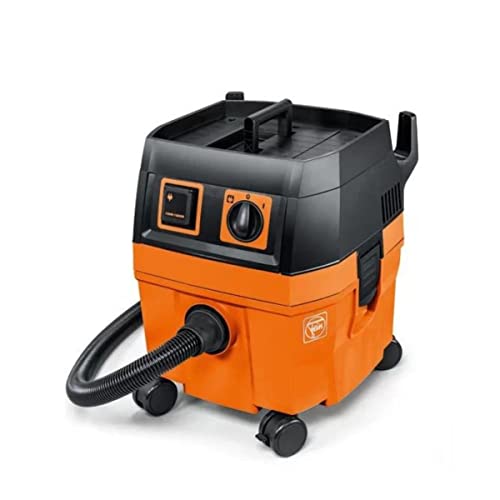
- 151 CFM suction with 5.8-gallon capacity
- Wet/dry operation and HEPA filtration
- Auto-start outlet plus long hose and power cord
Best For: Larger woodworking studios and demanding wet/dry cleanup
Best Desktop Fume Capture

- H13 HEPA plus activated-carbon filtration
- Adjustable gooseneck for source capture
- Compact design with filter reminder
Best For: Small art and craft workstations needing localized extraction
Best Heavy-Duty Studio Cleanup
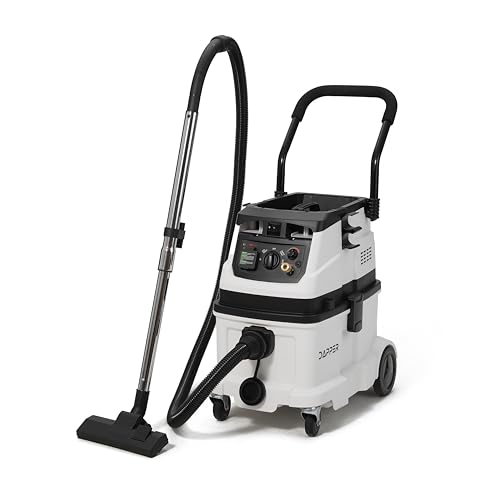
- 23 kPa suction and 151 CFM airflow
- Automatic filter cleaning and tool auto-start
- Large 10-gallon capacity with 2-year warranty
Best For: Larger studios using sanders, grinders, saws, and similar tools
Best High-Airflow Bench Extractor

- 150 CFM airflow for localized extraction
- H13 HEPA and activated-carbon filtration
- 360-degree flexible tube and below-50 dB operation
Best For: Bench-based artists working with resin, 3D printing, soldering, or pyrography
Best Overall – Festool CLEANTEC CT 36 EI HEPA
For art studios that need a capable all-purpose option, the Festool CT 36 EI HEPA combines HEPA filtration, a large 9.5-gallon capacity, and automatic tool-triggered operation. Its adjustable suction and Bluetooth connectivity make it especially practical for frequent work with corded tools.
Best For: Busy art studios using corded power tools and needing high capacity.
Pros:
- HEPA filter and 9.5-gallon capacity support extended studio sessions.
- Five suction levels allow adjustment for different materials and tasks.
- Automatic tool start, Bluetooth connectivity, and T-LOC Systainer attachment add convenience.
- Four wheels and a portable canister design improve mobility.
Cons:
- At 39.3 pounds, it is heavier than a compact benchtop extractor.
- Its corded design requires access to a 120-volt outlet.
The CT 36 EI HEPA is a strong choice when studio versatility, capacity, and integrated tool control matter more than minimizing footprint or weight.
Best Benchtop Option – DISJEST 500W Industrial Dust Collector
This compact benchtop unit is designed for art studios handling dry micro-particles such as gypsum, resin, and metallic dust. Its 500W motor, adjustable suction control, and below-60-decibel operation suit focused workstations where space and noise are important considerations.
Best For: Jewelry, resin, electronics, and other precision benchtop work.
Pros:
- Compact 14-by-11-by-11-inch benchtop form fits smaller work areas.
- Engineered for fine dry debris, including gypsum, resin, and metallic dust.
- Below-60-decibel operation helps reduce noise fatigue during detailed work.
- Supports hose, universal-port, and direct-intake configurations.
Cons:
- Not compatible with liquids or large-scale woodworking chips.
- Regular dust-drawer maintenance is needed to help maintain airflow.
- Its stated applications are more specialized than general workshop cleanup.
The DISJEST is a practical choice for localized particle capture at a studio bench, but it is less suitable as a general-purpose extractor for wet messes or bulky chips.
Best for Fumes and Odors – JJ-1001S Professional Fume Extractor
Among dust extractors for art studios, the JJ-1001S stands out for projects that produce smoke, odors, or fine airborne particles. Its three-stage system combines a pre-filter, H13 HEPA filter, and high-iodine activated carbon layer, while the included hoods and flexible tube support targeted extraction.
Best For: Studios combining dust control with soldering, laser, welding, or 3D-printing fumes.
Pros:
- Three-stage filtration includes H13 HEPA and activated carbon odor adsorption.
- Ten suction levels and an LED display provide detailed control.
- Includes two fume hoods, a flexible tube, one HEPA filter, and 12 pre-filters.
- Four bottom wheels make the 37.7-pound unit easier to reposition.
Cons:
- It is a fume extractor rather than a dedicated large-chip workshop vacuum.
- The remote control requires a battery that is not included.
- Its extra-large form may be more equipment than a simple dust-only workstation needs.
The JJ-1001S is the better fit when studio air quality involves fumes and odors as well as dust, particularly for process-specific extraction through its supplied hoods.
Best Compact Mobile Pick – Festool CT 15 HEPA Dust Extractor
The Festool CT 15 is a compact mobile option for art studios that need HEPA filtration without the footprint of a larger extractor. Its 15-liter container, robust chassis, touch controls, and included cleaning accessories make it convenient for moving between benches and general studio areas.
Best For: Mobile studio cleanup and artists who value compact storage.
Pros:
- HEPA filtration and a 15-liter container provide useful everyday capacity.
- Compact dimensions, low weight, and a robust chassis support portability.
- Included crevice nozzle and upholstery brush are stored within the extractor.
- Flat top provides a convenient place for work materials or tools.
Cons:
- Its single power level offers less adjustment than the CT 36.
- The 15-liter capacity is smaller than the 9.5-gallon CT 36.
- The supplied notes do not identify Bluetooth connectivity.
The CT 15 is a sensible choice for artists who need a portable HEPA extractor for routine studio work and value a small, organized footprint over maximum capacity.
Quiet Source Capture – JJ-M131 Fume Extractor
For compact dust extractors for art studios, the JJ-M131 is designed to capture airborne particles and fumes at the source. Its 70W brushless motor provides 180–200 m³/h of airflow while operating below 50 dB, making it suitable for detailed, noise-sensitive work.
Best For: Artists and makers working with soldering, laser equipment, 3D printers, or other small-scale processes that produce fumes or fine dust.
Pros:
- Three-stage filtration combines activated carbon, HEPA filtration, and 10 pre-filter cottons.
- Claims 99.97% capture of particles as small as 0.3 μm.
- Includes a suction hood, arm, replacement pre-filters, and power cord.
- Compact, relatively quiet operation for desktop workspaces.
Cons:
- Its 180–200 m³/h airflow is better suited to source capture than whole-room dust collection.
- Filter elements require regular replacement for continued performance.
- Designed for 110V AC power.
The JJ-M131 is a focused option when your studio needs localized fume and fine-particle control rather than a large workshop vacuum. The included arm and hood make positioning straightforward for bench work.
Connected HEPA Mobility – Festool CT MIDI I Dust Extractor
The Festool CT MIDI I is a practical choice among dust extractors for art studios where mobility, tool integration, and HEPA filtration matter. Its compact chassis and four wheels help with repositioning, while Bluetooth control and automatic tool start support a cleaner, more convenient workflow.
Best For: Woodworking and studio projects using compatible power tools, especially when portable HEPA-filtered extraction and hose organization are priorities.
Pros:
- HEPA filtration supports fine-dust collection.
- Automatic tool start and integrated Bluetooth allow convenient operation.
- Manual filter cleaning helps maintain suction performance.
- Compact, lightweight chassis with four wheels is easy to move.
Cons:
- The supplied configuration is a corded electric canister system.
- Listed with one power level, offering less adjustment than some alternatives.
- Its included SELFCLEAN filter bag is a consumable that will need replacement.
This Festool is well suited to artists who want a refined, mobile extraction setup for woodworking and tool-assisted projects. Bluetooth control, automatic start, and tool-free filter changes add useful workflow conveniences.
Wet/Dry Workshop Power – Fein Turbo I Wet/Dry Dust Extractor
For art studios that handle substantial workshop debris or occasional liquid cleanup, the Fein Turbo I offers wet/dry versatility and strong suction. Its 5.8-gallon capacity, 151 CFM turbine, and long hose and power cord make it better suited to larger cleanup tasks than compact desktop extractors.
Best For: Woodworking studios, renovation-style art spaces, and makers who need high-capacity wet/dry cleanup with power-tool activation.
Pros:
- 1100W turbine delivers 151 CFM and 98 inches of water lift.
- 5.8-gallon capacity supports longer cleanup sessions.
- Auto-start outlet synchronizes suction with compatible power tools.
- Includes a 13-foot hose, nearly 20-foot power cord, and 360-degree swivel wheels.
Cons:
- At 25 pounds, it is less lightweight than a desktop extractor.
- Its 66 dB noise level may be noticeable in quiet studio environments.
- Anti-static functionality requires optional accessories.
The Fein Turbo I is a strong all-around workshop candidate when capacity and wet/dry capability outweigh compactness. Its tool-activated outlet and extended reach can reduce interruptions during sanding, cutting, and cleanup.
Best Desktop Fume Capture – Compact HEPA Carbon Extractor
For artists comparing dust extractors for art studios, this compact desktop unit is geared toward capturing localized smoke, fine dust, odors, and vapors from resin work, jewelry making, stained glass, and other small-scale projects. Its adjustable gooseneck helps position suction close to the source.
Best For: Small art and craft workstations needing targeted extraction for resin, jewelry, stained glass, nail dust, or soldering fumes.
Pros:
- H13 HEPA and activated-carbon filtration addresses fine dust, odors, VOCs, and smoke.
- 0–100 stepless speed control with a digital display allows airflow adjustment.
- Flexible gooseneck nozzle supports precise source capture.
- Includes a pre-installed filter and five extra pre-filter cotton pads.
Cons:
- Its compact desktop format is intended for localized capture rather than whole-room or heavy jobsite cleanup.
- The listed 80 m³/h airflow is more limited than that of a full-size shop vacuum.
This is a practical choice when studio space is tight and the main concern is capturing fumes and fine particles directly at a small workbench. The filter reminder and tool-free access also simplify routine maintenance.
Best Heavy-Duty Studio Cleanup – 10-Gallon Wet/Dry Extractor
For larger studios and tool-based projects, this 10-gallon wet/dry unit is a more substantial option among dust extractors for art studios. It is designed to collect concrete, drywall, wood, and fine dust while connecting directly to compatible power tools.
Best For: Larger art studios using sanders, grinders, saws, or other dust-producing tools and needing high-capacity cleanup.
Pros:
- 15A motor provides 23 kPa suction and 151 CFM airflow.
- Automatic filter cleaning every 20 seconds helps reduce clogging during extended use.
- Tool auto-start activates the vacuum when a connected power tool runs.
- Includes a 7.5-foot hose, 13-foot cord, accessory kit, and 2-year warranty.
Cons:
- At 39 pounds, it is considerably less portable than a desktop extractor.
- The power-tool outlet supports a maximum permissible amperage of 5.5A.
- Its 10-gallon canister and 23.42-by-15.35-by-24.8-inch footprint may require dedicated floor space.
This model makes the most sense when dust is generated by power tools and uninterrupted extraction matters. Its automatic cleaning and tool-triggered operation add convenience, while the large canister reduces how often the studio needs emptying.
Best High-Airflow Bench Extractor – NT-P1 HEPA Carbon Filtration
This high-airflow bench extractor is worth considering for artists who need focused control of smoke, odors, and fine particles. Among dust extractors for art studios, it combines 150 CFM airflow with H13 HEPA and activated-carbon filtration for resin, ABS 3D printing, stained glass, pyrography, and similar work.
Best For: Bench-based artists and makers who want stronger localized airflow with odor filtration in a relatively compact unit.
Pros:
- 150 CFM airflow supports strong source capture at the workbench.
- Multi-layer filtration combines a pre-filter, H13 HEPA filter, and high-iodine activated carbon.
- 360-degree flexible tube helps position the intake near the work area.
- Listed noise level is below 50 dB, supporting quieter studio use.
Cons:
- It is designed for localized fumes and dust rather than collecting large quantities of workshop debris.
- Replacement intervals vary with usage conditions, so filter upkeep depends on the studio workload.
With its 150 CFM rating and odor-focused carbon stage, the NT-P1 is a strong fit for compact workstations handling resin, 3D-printing, soldering, or pyrography. The flexible tube and low-noise design make it easier to keep extraction close without dominating the bench.
How We Picked These Dust Extractors for Art Studios
We selected models that address the most common studio extraction needs: sanding, routing, carving, sawing, drilling, soldering, and other processes that release fine particles or fumes. We considered filtration claims, suction and airflow information, container capacity, portability, tool compatibility, noise-related convenience features, and maintenance requirements.
The list includes professional-style HEPA extractors, compact benchtop collectors, wet/dry units, and purpose-built fume extractors. Because these categories perform different jobs, airflow figures and filtration stages should be compared within the same use case rather than treated as directly interchangeable.
Quick Comparison
- Best for demanding power-tool work: A full-size HEPA dust extractor with automatic tool start and a large container.
- Best for portable studio cleanup: A compact extractor with a smaller footprint and easy hose storage.
- Best for soldering and smoke: A dedicated fume extractor with HEPA and activated-carbon filtration.
- Best for mixed messes: A wet/dry vacuum rated for both dry debris and liquid pickup.
- Best for benchtop use: A compact collector designed to sit close to the source of dust or fumes.
Key Buying Factors for Dust Extractors for Art Studios
Filtration
HEPA filtration is important when your work creates fine airborne particles. For soldering, resin, adhesives, or other odor-producing processes, activated carbon can complement particle filtration by helping reduce gases and odors. Check whether filters are replaceable and whether the manufacturer specifies a recognized efficiency rating such as H13 or HEPA.
Airflow, Suction, and Source Capture
High airflow helps move debris through a hose, while strong suction is especially useful for tool extraction and heavier particles. A properly positioned hood, nozzle, or tool connection often matters as much as the headline specification. Use extraction at the source rather than relying on a room purifier alone.
Capacity and Maintenance
Choose a larger container for frequent woodworking or messy cleanup, but remember that capacity adds bulk. Automatic filter cleaning, filter-full alerts, sealed bags, and accessible replacement filters can reduce interruptions. Never allow a filter or collection system to become overloaded.
Compatibility and Workspace Fit
Confirm hose diameter, adapters, electrical requirements, and automatic tool-start compatibility before buying. Measure storage space and consider caster quality, hose reach, cord length, and noise if the extractor will run beside a workbench or in a shared studio.
Who Should Buy Which Dust Extractors for Art Studios?
Woodworkers, sculptors, and makers using sanders or saws should prioritize a HEPA-rated extractor with dependable tool control and enough capacity for repeated sessions. Artists who mainly solder or work with smoke should choose a dedicated fume extractor with activated carbon rather than a general-purpose shop vacuum. A compact benchtop unit suits small workstations and occasional cleanup, while a wet/dry extractor is the most flexible choice for studios that handle both dry debris and spills.
Regardless of model, wear suitable respiratory and eye protection, maintain ventilation, and follow the manufacturer’s guidance for hazardous materials. An extractor is one part of a safe studio setup, not a substitute for source control and appropriate personal protective equipment.