Finding the right scanner for an older vehicle can be tricky. OBD1 and early OBD2 systems don’t all speak the same language, and not every budget code reader is built for classic cars or high-mileage daily drivers.
That’s why this roundup focuses on practical, easy-to-use options that help you read codes, clear faults, and narrow down problems without paying for shop-level tools you may never use.
Best 10 Car Diagnostic Scanners for Older Cars Picks for 2026
Best Simple OBD2 Pick
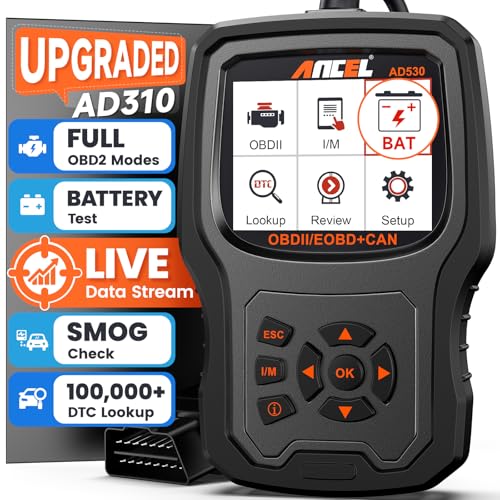
- Plug-and-play OBD2 scanner for 1996+ gasoline cars
- Shows codes in plain text and supports I/M readiness
- Includes live data, freeze frame, and battery voltage checks
Best For: Home users who want a simple engine-code scanner for older 1996+ gas cars
Classic Ford OBD1 Specialist
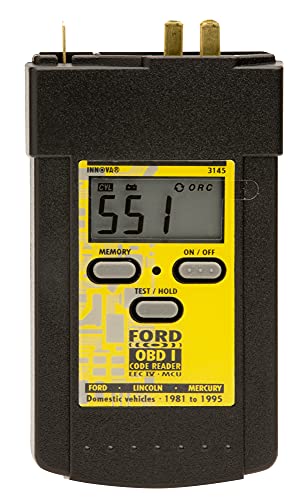
- Reads numeric codes on older Ford, Lincoln, and Mercury vehicles
- Works with MCU and EEC-IV systems
- Stores codes in memory after unplugging
Best For: Classic Ford-family owners needing a dedicated OBD1 reader
Affordable Universal Reader
Performance Tool W2976 Multilingual OBD2

- Works on most 1996+ American, European, and Asian cars
- Reads, erases, and clears check-engine codes
- Shows readiness status and supports multiple languages
Best For: Drivers wanting a basic multilingual OBD2 reader for older 1996+ cars
Easy OBD1 Self-Test Tool
JOPLAY for 1981-1995 Ford, Lincoln, Mercury
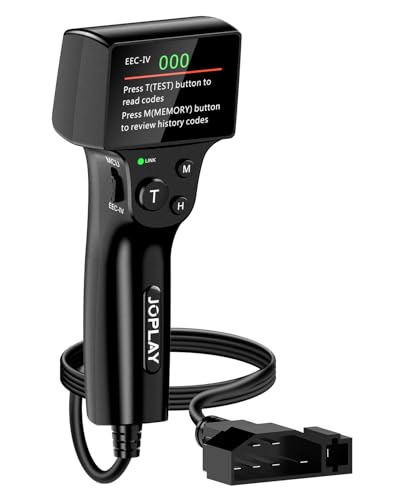
- Shows code numbers and definitions on a 2.4-inch LCD
- Supports KOEO, CM, and KOER self-tests
- Includes a 9-foot cable and reinforced pins
Best For: DIY owners of older Ford-family vehicles who want simple OBD1 diagnostics
Budget Basic Reader
ANCEL AD310 OBD2 Code Reader for 1996+ Cars

- Reads and clears basic emission codes
- Supports major OBDII protocols
- Compact, no-battery design
Best For: Simple check-engine-light diagnostics on older OBD2 cars
DIY Live-Data Pick
FOXWELL NT301 OBD2 Scanner with Graphing

- Reads/clears codes with one click
- Live data graphs for real-time checks
- I/M readiness plus EVAP and O2 tests
Best For: DIY users who want live data and readiness checks on older OBD2 cars
Feature-Rich Value Choice
LAUNCH CR529 OBD2 Scanner with Report Tools
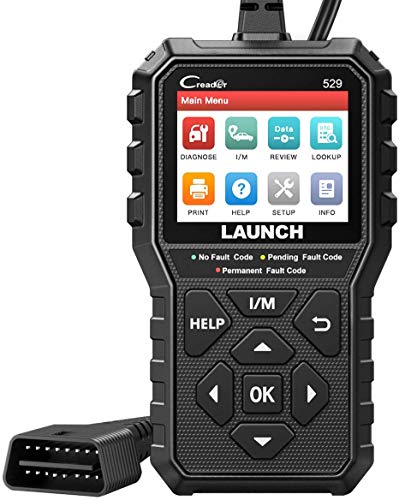
- Reads, clears, and graphs OBD2 data
- Records and prints diagnostic reports
- Adds Mode 6, EVAP, and O2 tests
Best For: DIY users wanting extra tests and report tools on older OBD2 cars
Simple Check-Engine Helper

- Reads and clears engine codes
- Shows live data and readiness status
- No app or battery required
Best For: Drivers who need a simple plug-in check-engine scanner
Feature-Rich Emissions Checker

- 98,963 code definitions included
- Supports Mode 6, EVAP, and readiness checks
- Exports and prints reports via USB-C
Best For: DIY owners wanting a fuller engine and emissions scanner
Budget-Friendly Code Reader

- Reads and clears basic engine codes
- Built-in DTC lookup and live data
- Compact, no-battery design
Best For: Drivers wanting a simple entry-level OBD2 reader
Best Simple OBD2 Pick – ANCEL AD530 for 1996+ Cars
If you want car diagnostic scanners for older cars that still feel straightforward to use, the ANCEL AD530 is a practical at-home option for most 1996+ gasoline vehicles. It focuses on engine-system diagnostics, with quick code reading and clearing, one-tap I/M readiness checks, and live data to help you understand what is happening before you head to a shop.
Best For: Drivers who want a simple plug-and-play scanner for basic OBD2 troubleshooting, readiness checks, and battery voltage monitoring on older 1996+ gas cars.
Pros:
- Plug-and-play operation with a dedicated hotkey that translates fault codes into plain text.
- One-tap I/M readiness shortcut plus a 2.8-inch color screen for inspection prep.
- Reads live data, freeze frame, O2 sensors, EVAP, and other standard OBDII modes.
- Tracks battery cranking and charging voltage in real time.
Cons:
- Engine-system only; it does not support ABS, SRS, transmission, diesel cars, or motorcycles.
- Compatibility is limited to supported 12V gasoline models, so older vehicles should be checked carefully.
The AD530 is a good fit if you want a no-fuss diagnostic tool that covers the most common check-engine tasks without subscriptions or setup headaches. Its strength is simplicity paired with enough live-data detail to make home diagnosis more useful than a basic code reader.
Classic Ford OBD1 Specialist – INNOVA 3145 for 1982-1995
For car diagnostic scanners for older cars, the INNOVA 3145 stands out because it is built specifically for Ford, Lincoln, and Mercury OBD1 systems from 1982 to 1995. Instead of flash-counting, it gives you a numeric display for trouble codes and includes memory storage, which makes it easier to work through older self-test procedures at home.
Best For: Ford-family owners working on 1982-1995 vehicles with EEC-IV or MCU systems who want a dedicated OBD1 code reader.
Pros:
- Designed for most Ford, Lincoln, and Mercury cars and trucks from 1982 to 1995.
- Digital display shows numeric trouble codes, avoiding the need to count flashes.
- Supports MCU and EEC-IV computer control systems.
- Memory feature stores codes even after unplugging.
Cons:
- Vehicle-specific to Ford, Lincoln, and Mercury OBD1 platforms.
- Not a universal OBD2 scanner for later-model cars.
If you are maintaining an older Ford-based vehicle, this reader is purpose-built and refreshingly direct. It is less about broad compatibility and more about making legacy self-tests and code reading easier on classic domestic models.
Affordable Universal Reader – Performance Tool W2976 Multilingual OBD2
If you need car diagnostic scanners for older cars that are still OBD2-ready, the Performance Tool W2976 is a straightforward stand-alone reader for most 1996 and later vehicles. It handles the basics well: reading and erasing trouble codes, checking emission readiness, and turning off the check-engine light without requiring a laptop.
Best For: Drivers who want an affordable, simple OBD2 scanner for basic code reading and emissions checks on older 1996+ cars.
Pros:
- Works with most 1996 and later American, European, and Asian cars.
- Supports all OBD2 protocols, including CAN.
- Reads and displays DTCs plus emission readiness status.
- Stand-alone design with multilingual support and no laptop required.
Cons:
- More basic than advanced scanners with live-data or battery testing features.
- Limited to standard OBD2 functions.
The W2976 is a solid pick when you want a simple, universal reader for older OBD2 cars and do not need deeper diagnostics. Its strength is convenience: clear code reading, easy resets, and broad compatibility in a compact tool.
Easy OBD1 Self-Test Tool – JOPLAY for 1981-1995 Ford, Lincoln, Mercury
Among car diagnostic scanners for older cars, the JOPLAY OBD1 Code Reader is aimed squarely at Ford, Lincoln, and Mercury vehicles from 1981 to 1995. It is built for quick self-tests and clear code definitions on a small LCD, so you can diagnose older EEC-IV or MCU-based vehicles without relying on blinking-light countouts.
Best For: Beginners and DIY owners of 1981-1995 Ford, Lincoln, and Mercury vehicles who want an easy OBD1 code reader.
Pros:
- Compatible with Ford, Lincoln, and Mercury cars and trucks from 1981 to 1995.
- Shows code numbers and definitions instantly on a 2.4-inch LCD.
- Supports KOEO, CM, and KOER self-tests.
- Includes a long 9-foot cable and drop-proof build for in-seat use.
Cons:
- Does not support ABS codes.
- Limited to Ford-family OBD1 systems rather than universal vehicles.
This is a practical legacy-code reader if you work on older Ford-family vehicles and want something easier to use than manual flash-code methods. The long cable and clear on-screen definitions make it especially friendly for home diagnostics.
Budget Basic Reader – ANCEL AD310 OBD2 Code Reader for 1996+ Cars
If you want car diagnostic scanners for older cars without paying for extra features you may never use, the ANCEL AD310 is a straightforward place to start. It focuses on OBD2 emission-related fault codes, so it’s a good fit for drivers who mainly want to check a check engine light, view basic live data, and confirm readiness on compatible 1996+ vehicles.
Best For: Drivers who want a simple, compact code reader for basic engine-light diagnostics on OBD2-compliant older cars.
Pros:
- Reads and clears engine fault codes quickly after repairs.
- Supports all major OBDII protocols, including CAN and older protocol sets.
- No battery or charger needed; it draws power from the vehicle.
- Compact, lightweight design with a clearly labeled screen and buttons.
Cons:
- Only supports emission-related diagnostics, not broader engine fault scanning.
- Not for vehicles that only have an OBDI interface.
- Compatibility should still be confirmed before buying.
For older cars that are OBD2-compliant, the AD310 keeps things simple and practical. It’s best viewed as a reliable basic scanner rather than a full-featured mechanic tool.
DIY Live-Data Pick – FOXWELL NT301 OBD2 Scanner with Graphing
Among car diagnostic scanners for older cars, the FOXWELL NT301 stands out if you want more than a simple code reader. It reads and clears engine fault codes, shows live sensor data in graphs, and adds helpful checks like I/M readiness, O2 sensor testing, and EVAP testing for compatible 1996+ OBD2 vehicles.
Best For: DIY owners who want a plug-and-play scanner with live data and inspection readiness tools for older OBD2 cars.
Pros:
- Reads and clears check engine codes with one click.
- Live data graphing helps spot sensor issues in real time.
- Includes I/M readiness, O2 sensor, and EVAP testing features.
- Supports common OBDII protocols and many 1996+ vehicles.
Cons:
- Mainly focused on engine and emissions diagnostics.
- Vehicle compatibility can vary by year, make, model, and VIN.
- Not a substitute for full manufacturer-level diagnostics.
The NT301 is a strong middle-ground option: simple enough for home use, but detailed enough to be genuinely useful on older OBD2 cars. If you want live data without jumping into pro-level complexity, it makes a lot of sense.
Feature-Rich Value Choice – LAUNCH CR529 OBD2 Scanner with Report Tools
If you’re comparing car diagnostic scanners for older cars and want a little more capability, the LAUNCH CR529 adds useful extras over a basic reader. It covers standard OBD2 functions like reading and clearing codes, I/M readiness, freeze frame, live data, O2 sensor testing, EVAP testing, and Mode 6 monitoring on 1996+ OBD2-compliant vehicles.
Best For: DIYers who want an affordable scanner with data recording, reporting, and extra OBD2 tests for older vehicles.
Pros:
- Offers read/erase codes, freeze frame, and live data in text or graph form.
- Includes data record, playback, report, and print support via PC.
- Supports Mode 6, O2 sensor, and EVAP testing.
- Plug-and-play design with lifetime free updates.
Cons:
- Works only on OBD2-compliant vehicles.
- PC sharing/printing features add extra steps compared with simpler readers.
- Compatibility still depends on the specific vehicle.
The CR529 is a practical step up if you want more diagnostic depth without moving into a much pricier tool. Its report features and extra OBD2 tests make it a smart pick for owners who like to document what they find.
Simple Check-Engine Helper – ANCEL AD410 OBD2 Scanner
If you want car diagnostic scanners for older cars without overcomplicating things, the ANCEL AD410 is a straightforward choice for 1996+ OBDII vehicles. It focuses on engine and emissions-related diagnostics, giving you code definitions, live data, freeze-frame info, and readiness checks so you can understand a check engine light before heading to a shop.
Best For: Drivers who want a simple plug-in scanner for basic engine-code checks and emissions readiness.
Pros:
- Reads and clears engine-related OBD2 codes with 42,000+ built-in DTC lookups
- Shows live data, freeze frame, I/M readiness, O2 sensor, EVAP, and vehicle info
- No app, battery, or charger needed; powered directly from the OBD2 port
- Compatible with most 1996+ U.S. vehicles and many 2000+ EU/Asian OBD2 models
Cons:
- Does not support ABS, SRS, transmission, bidirectional control, or service reset functions
- Only covers engine and emission-related codes, not broader system diagnostics
- Compatibility still needs to be checked against the specific vehicle
For older cars that still use OBD2, this scanner keeps the workflow simple and useful for everyday troubleshooting. It is a practical pick if you mainly need to confirm what the check engine light means and verify whether repairs have cleared emissions readiness issues.
Feature-Rich Emissions Checker – V860 OBD2 Scanner
Among car diagnostic scanners for older cars, the V860 stands out if you want more than a basic code reader. It supports engine fault-code lookup, live data, freeze-frame data, battery voltage testing, EVAP leak checks, and Mode 6 and I/M readiness monitoring, which makes it especially handy before an annual emissions inspection.
Best For: DIY owners who want a fuller OBD2 feature set for engine and emissions troubleshooting.
Pros:
- Built-in library of 98,963 code definitions for easier fault identification
- Supports live data streaming, freeze frame, I/M readiness, Mode 6, and EVAP testing
- Can export and print reports over USB-C for recordkeeping
- Works with most 1996+ U.S. vehicles and 2003+ EU/Asian models
Cons:
- Still limited to OBD-II/EOBD engine-system diagnostics
- Live data shows up to 4 parameters at once, which may feel basic for advanced users
- Vehicle compatibility should be confirmed before buying
This is a strong middle-ground option if you want a capable scanner for old OBD2 cars without jumping into professional-grade tools. Its readiness checks, report export, and wide protocol support make it useful for routine maintenance and pre-inspection checks.
Budget-Friendly Code Reader – MOTOPOWER MP69033 Scanner
If you are shopping for car diagnostic scanners for older cars and want something compact and easy to use, the MOTOPOWER MP69033 is a practical bare-bones option. It reads and clears check-engine codes, shows freeze frame and live data, and includes a built-in DTC lookup library to help you pinpoint common OBD2 issues on 1996+ vehicles.
Best For: Drivers who need a simple, low-cost scanner for basic OBD2 engine-code checks.
Pros:
- Reads and clears codes, plus freeze frame, I/M readiness, VIN, and live data
- Built-in DTC lookup helps identify check-engine causes quickly
- Compact design with a 2.8-inch LCD and direct OBD2 power
- Supports most 1996+ U.S. vehicles and 2000+ EU/Asian OBD II models
Cons:
- Does not support ABS, airbag, or oil service light systems
- Live data and controls are limited compared with more advanced scanners
- Requires the car’s OBDII port and ignition-on connection for use
This model makes sense if you mainly want quick answers for engine-light problems on an older OBD2 car. It keeps the feature set focused on core diagnostics, which is often all most drivers need for routine troubleshooting.
How We Picked These Car Diagnostic Scanners for Older Cars
We prioritized compatibility first, since Car Diagnostic Scanners for Older Cars must match the vehicle’s era and protocol before anything else. We also looked for clear fault-code reading, simple menus, useful live-data features where available, and strong value for home mechanics.
Because older vehicles often have limited electronics compared with newer models, we favored tools that are straightforward rather than overloaded with advanced functions you may not need.
Quick Comparison
If you’re working on a pre-1996 vehicle, an OBD1-specific reader is usually the right choice. For most 1996-and-newer cars and light trucks, an OBD2 scanner is the better fit. Basic readers are ideal for check-engine light troubleshooting, while mid-range tools are better if you want battery checks, live data, or emissions-related diagnostics.
Key Buying Factors for Car Diagnostic Scanners for Older Cars
Protocol Compatibility
Make sure the scanner supports your vehicle’s diagnostic standard. Ford, GM, and Chrysler OBD1 systems often require brand-specific tools or adapters, while 1996-and-up vehicles generally use OBD2. A mismatch here makes the scanner useless, no matter how good the features look.
Functionality You’ll Actually Use
For many owners, the essentials are reading and clearing codes, viewing readiness monitors, and checking live data. If you plan to handle basic maintenance yourself, those functions cover most common jobs. Extra features like battery testing or oxygen sensor checks can be helpful, but only if they match your repair needs.
Ease of Use
Older-car owners often want a tool that powers up quickly, uses a readable screen, and explains trouble codes without a steep learning curve. A simple interface can save time when you’re diagnosing intermittent issues or working in a garage with limited lighting.
Vehicle Age and Use Case
If you own a collector car, choose a scanner built for the correct legacy protocol. If you drive an older commuter from the late 1990s or early 2000s, a dependable OBD2 reader is usually enough. For mixed garages, a general-purpose OBD2 scanner plus a dedicated OBD1 tool may be the smartest setup.
Who Should Buy Which Car Diagnostic Scanners for Older Cars?
Choose an OBD1 scanner if you own a Ford, Lincoln, or Mercury from the 1980s or early 1990s and need protocol-specific compatibility. Choose a basic OBD2 code reader if you mainly want check-engine light diagnosis on a 1996-or-newer vehicle. Choose a scanner with live data or extra tests if you’re comfortable doing your own troubleshooting and want more detail before replacing parts.
In short, the best choice depends less on brand hype and more on your vehicle’s diagnostic system, how often you’ll use the tool, and how much information you really need.