If you need a straightforward 12V Oil Extractor Pump review, this unit is aimed at people who want cleaner fluid transfers without fighting a drain plug or cramped engine bay.
It is built more like a practical shop tool than a specialty gadget.
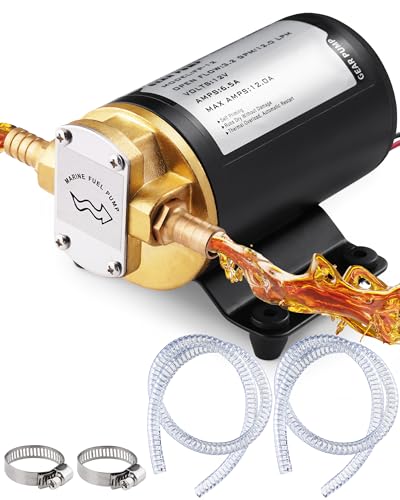
Oil Extractor Pump Review Summary
The case for the 12V Oil Extractor Pump is simple: it is designed to move oil and related fluids from tanks or drain pans with less mess and less crawling around under equipment.
That makes it a strong fit for owners of cars, motorcycles, lawn mowers, boats, and outboard engines who want a general-purpose transfer pump rather than a dipstick-style extractor.
What stands out most is the combination of broad fluid support, self-priming operation, and thermal protection.
The listing says it can handle motor oil, gear oil, transmission fluid, waste oil, lubricants, diesel fuel, and kerosene, and it is rated for thick oils such as 80W-90.
For buyers who regularly service mixed equipment, that versatility matters more than flashy extras.
Review Scorecard
| Category | Score | Rationale |
|---|---|---|
| Fluid versatility | 9/10 | The listing covers motor oil, gear oil, transmission fluid, waste oil, diesel fuel, and kerosene. |
| Service convenience | 8/10 | It is meant to simplify oil changes and reduce mess in tight engine spaces. |
| Pumping capacity | 8/10 | The 3.2 GPM flow and 43.5 PSI max pressure suggest solid utility for routine transfer work. |
| Heavy-oil handling | 8/10 | The product explicitly says it handles thick oils like 80W-90. |
| Safety and reliability | 8/10 | Built-in thermal protection is a meaningful safeguard for longer use. |
| Build approach | 7/10 | All-copper motor, impeller, and pump head are a practical quality signal, though this is still a utility tool. |
| Buyer fit | 8/10 | Best for people who want one pump for several machines, not a narrow specialty extractor. |
In plain terms, this is a useful, task-driven pump for routine maintenance.
It is not positioned as a premium diagnostic tool or a universal solution for every extraction method, but it does cover the most obvious DIY and light-shop use cases well.
Key Features and Specifications of Oil Extractor Pump
The 12V Oil Extractor Pump is a self-priming gear pump powered by 12V DC.
The listing gives it 78W standard power, 120W max load, 3.2 GPM flow, and a 0.3 MPa / 43.5 PSI maximum pressure rating.
It is also described as having a work cycle up to 120 minutes, which is useful context for buyers who plan to use it as part of longer maintenance sessions.
The construction details are more important than they first look.
The pump uses all-copper construction for the motor, impeller, and pump head, which the manufacturer links to lower power consumption and stronger output.
The listing also calls out thermal protection to help prevent overheating during use.
Useful evidence-backed details:
- 12V DC powered
- 78W standard power
- 120W max load
- 3.2 GPM flow
- 0.3 MPa / 43.5 PSI max pressure
- Work cycle up to 120 minutes
- Self-priming gear pump design
- All-copper motor, impeller, and pump head
- Built-in thermal protection
- Intended for tanks or drain pans, not dipstick-tube extraction
The fluid scope is one of the biggest practical advantages.
The listing says it transfers motor oil, gear oil, transmission fluid, waste oil, lubricants, diesel fuel, and kerosene.
That broad support makes the pump more appealing to owners of mixed equipment than a single-purpose oil-only device.
One important limitation is also clearly stated: it is not for extracting oil through the dipstick tube.
That matters because some buyers may assume “oil extractor” means a vacuum-style extractor for top-side engine service.
This model is instead meant to pump from a tank or drain pan.
Pros and Cons of Oil Extractor Pump
Pros
- Handles a wide range of fluids, including thick gear oils.
- Designed for cleaner transfers in tight spaces.
- 12V operation makes it easy to pair with vehicles and equipment.
- Thermal protection is a meaningful safety feature.
- All-copper construction suggests a more serious build than a toy-grade pump.
Cons
- It is not a dipstick-tube extractor, so it will not fit every oil-change workflow.
- The listing focuses on transfer use, so buyers looking for a multi-function service machine may want more capability.
- The product is utility-first, so it will appeal more to practical users than to those wanting a polished premium tool.
The biggest strength is that the pros line up with real maintenance chores.
The biggest drawback is not performance so much as scope: if your workflow depends on vacuum extraction through the dipstick tube, this is the wrong style of pump.
Who Should Buy Oil Extractor Pump?
The 12V Oil Extractor Pump makes the most sense for people who service cars, motorcycles, lawn mowers, boats, and outboard engines and want one pump that can move several fluid types.
It also suits owners who deal with gear oil or transmission fluid often enough that a cleaner transfer setup is worth having.
It is a good fit if you want:
- A 12V pump for garage, driveway, or marine maintenance
- A tool that can move more than just engine oil
- A pump with thermal protection for safer operation
- A practical way to reduce spills and mess around drain points
You should probably skip it if:
- You need a dipstick-tube oil extractor
- You want a highly specialized machine for one narrow fluid type
- You expect a plug-and-play solution for every service scenario
That buyer split is important.
This is a versatile transfer pump, not a universal extraction system.
If you match the design to the job, it becomes much more attractive.
Performance and Use Case Fit of Oil Extractor Pump
Transfer Work in Garage and Shop Settings
For garage use, the appeal is convenience.
The listing’s emphasis on moving fluids from tanks or drain pans suggests a workflow where you already have access to the fluid source, but you want a cleaner, faster transfer than pouring by hand or improvising with siphons.
Handling Thicker Fluids
The mention of 80W-90 is the most important clue for people dealing with heavy gear oil.
Not every small 12V pump is happy with thick fluids, so this is a useful signal that the product is meant to do more than basic oil duty.
Safety and Runtime Considerations
The built-in thermal protection and 120-minute work cycle matter for buyers planning repeat maintenance.
They do not turn this into industrial equipment, but they do make the pump feel better matched to real service sessions than a bare-bones bargain model.
Where the Design Makes Sense
Because it is designed for tanks or drain pans rather than dipstick extraction, the pump fits maintenance setups where access is already reasonably direct.
That is a limitation only if you need a vacuum extractor; otherwise, it is a sensible design choice for straightforward transfer jobs.
Alternatives to Oil Extractor Pump
If you want a different style of solution, start by comparing this unit with a Mityvac fluid extractor if your priority is top-side oil removal through a dipstick tube.
Search Amazon for Mityvac oil extractor.
For buyers who want a familiar shop-name transfer option, a Lincoln gear oil pump or similar gear pump line may be worth checking.
Search Amazon for Lincoln gear oil pump.
If you want a broader hand-pump or transfer-pump setup rather than an electric 12V unit, look at FloTool fluid transfer products or related pump kits.
Search Amazon for FloTool fluid transfer pump.
Those alternatives are worth comparing because they solve adjacent problems in different ways.
The right choice depends on whether you want electric 12V transfer, vacuum extraction, or a manual transfer setup.
Is Oil Extractor Pump Worth It?
Yes, if your maintenance work matches the design. The 12V Oil Extractor Pump looks worth it for buyers who need a practical, multi-fluid transfer pump for cars, mowers, boats, and outboard engines, especially when thick oil and tight access are part of the job.
It is less compelling if you expected a dipstick-tube extractor or a more specialized service tool.
But if you want a clean, 12V, gear-pump style solution with thermal protection and support for heavier fluids, this one is easy to justify.