If you want one tool that handles both check-engine diagnostics and basic 12V battery testing, the 2-in-1 OBD2 Scanner & Battery Tester is built for that job.
It is aimed at everyday drivers, DIY owners, and pre-trip checkers who want fast answers without a lot of menu friction.
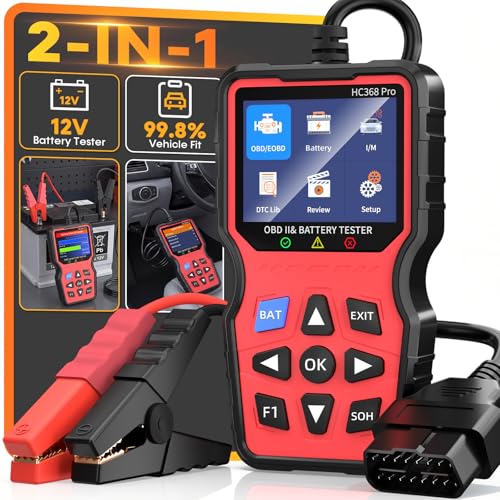
2-in-1 OBD2 Scanner & Battery Tester Review Summary
The case for this 2-in-1 OBD2 Scanner & Battery Tester is simple: it combines two routine garage problems into one compact device.
That makes it a sensible pick for drivers who want to read and clear engine codes, check battery condition before cold weather or a road trip, and get understandable results without needing a separate scanner and battery tester.
It is especially appealing if you keep one tool in the car for emergencies, buy used cars, or prefer to troubleshoot before paying for a shop visit.
The listing also points to broader coverage than a bare-bones code reader, including color display support, built-in code definitions, live data graphs, and battery checks that go beyond a simple voltage readout.
Review Scorecard
| Category | Score | Why it rates this way |
|---|---|---|
| Code-reading utility | 9/10 | Reads and clears check-engine codes quickly and includes built-in definitions for easier interpretation. |
| Battery testing value | 9/10 | Adds 12V battery health, CCA, SOC, SOH, cranking, and charging checks in the same unit. |
| Ease of use | 8/10 | The color screen, clear menu flow, and guided output are positioned for non-experts. |
| Diagnostic breadth | 8/10 | Covers multiple vehicle systems and all 10 OBD2 protocols, which is strong for a consumer tool. |
| Road-trip usefulness | 9/10 | The pre-trip and winter-check use cases are well matched to what the listing emphasizes. |
| Clarity of output | 8/10 | DTC definitions and live graphing should help users understand issues faster than a basic reader. |
| Value for DIY owners | 9/10 | Combining two tools into one can reduce clutter and avoid buying separate testers. |
Key Features and Specifications of 2-in-1 OBD2 Scanner & Battery Tester
This 2-in-1 OBD2 Scanner & Battery Tester is designed for 1996+ OBD2 vehicles, with support for cars, trucks, SUVs, and EU models from 2003 and up.
The listing also says it works across all 10 OBD2 protocols, which matters if you want a tool that is meant to be broadly compatible rather than limited to a narrow slice of vehicles.
On the scan-tool side, the device reads and clears check-engine codes, shows live data, and presents curve graphs for intermittent issues.
The built-in code definitions are one of its most practical features because they reduce the amount of cross-checking you have to do on your phone while standing at the car.
On the battery side, it tests 12V battery health and related indicators, including CCA, SOC, SOH, internal resistance, cranking test results, and charging system status.
The listing mentions support for AGM, regular, and deep-cycle batteries, which gives it a wider fit than battery tools that only handle one battery type.
Other listed features include a 2.8-inch HD color screen, support for 13 languages, and the ability to scan major vehicle systems beyond the basic engine-focused reader experience.
The manufacturer also positions it as useful for emissions readiness checks, pre-road-trip safety scans, and used-car inspection.
Key practical details from the listing:
- 2-in-1 OBD2 scanner and 12V battery tester
- Reads and clears codes
- Built-in DTC code definitions
- Live data with curve graphs
- Battery tests for CCA, SOC, SOH, internal resistance, cranking, and charging status
- Supports AGM, regular, and deep-cycle batteries
- 2.8-inch HD color screen
- 13-language support
- Compatible with 1996+ OBD2 vehicles and EU 2003+ models
- Warranty coverage listed at 18 months
Pros and Cons of 2-in-1 OBD2 Scanner & Battery Tester
Pros
- Combines two useful tools in one unit, which is the biggest practical advantage here.
- Good fit for pre-trip checks if you want to catch faults before a highway drive.
- Battery testing is more complete than a simple voltage-only reader.
- Built-in definitions make it more approachable for first-time users.
- Color screen and graphs should make live data easier to interpret.
- Broad vehicle support makes it more useful as a household tool.
Cons
- It is still a consumer diagnostic tool, so it will not replace shop-grade equipment for advanced troubleshooting.
- The feature list is broad, which can matter less if you only need a plain code reader.
- System coverage is advertised in general terms, so buyers looking for exact OEM-level module depth should be cautious.
- Battery test usefulness depends on use case, since not every driver will need both scanner and tester functions often enough to justify the extra complexity.
Who Should Buy 2-in-1 OBD2 Scanner & Battery Tester?
Buy this if you want a practical tool for routine ownership tasks rather than a specialist diagnostic platform.
It makes the most sense for drivers who want to verify a used car, check battery health before winter, inspect readiness before emissions testing, or keep a compact scanner in the glove box or garage.
It also fits people who dislike vague warning lights.
If you want to know whether a fault is battery-related or engine-related before you decide what to do next, this kind of combined tool is more efficient than juggling separate devices.
You should probably skip it if you already own a dedicated professional scan tool, if you only need occasional basic code reading, or if you have no interest in battery diagnostics.
In those cases, the extra battery features may not add enough value.
Diagnostic Use Cases for 2-in-1 OBD2 Scanner & Battery Tester
Pre-Trip Safety Checks
The strongest use case in the listing is the pre-road-trip scan.
That is sensible because a quick code read and battery check can reveal problems before you leave home, when fixing them is still cheap and manageable.
For drivers who like to inspect the car before a long trip, that alone can justify a place in the trunk.
Battery Health Before Cold Weather
Battery failures often show up when temperatures drop, and this tool is clearly aimed at that scenario.
The combination of CCA, SOC, SOH, cranking, and charging-system tests is more informative than a single pass/fail result, so it should help you decide whether the battery is healthy, marginal, or worth replacing.
Used-Car Inspection
If you shop used cars, the scanner side is likely the main draw.
Reading codes on the spot and checking readiness or live data can help you spot hidden issues before you commit.
The battery test adds another layer of context, especially on older vehicles where starting problems may be part of the story.
Quick Home Garage Troubleshooting
For home maintenance, the main advantage is speed.
The listing emphasizes fast code reading, easy setup, and built-in definitions, which suggests a tool designed to give immediate direction rather than require a long learning curve.
That makes it useful for deciding whether a problem is worth deeper diagnosis.
Alternatives to 2-in-1 OBD2 Scanner & Battery Tester
If you want a more established scanner-only option, look at an Ancel OBD2 scanner.
These are common Amazon alternatives when you want a simpler code reader without the battery-test layer.
If battery testing matters more than scan-tool extras, a Foxwell battery tester is a credible category to compare against.
That route makes sense when your main goal is battery condition and charging-system checks.
For buyers who want a higher-end all-around diagnostic brand, BlueDriver OBD2 scanner is worth a look.
It is a familiar name in consumer diagnostics and may appeal if you care more about scan experience than bundled battery testing.
If you want a budget-first code reader, search for an Autel OBD2 code reader.
That category often fits drivers who want dependable basics without paying for extra features they may rarely use.
Is 2-in-1 OBD2 Scanner & Battery Tester Worth It?
Yes, if you will actually use both halves of the product.
The 2-in-1 OBD2 Scanner & Battery Tester is worth it for DIY owners, road-trip planners, used-car shoppers, and anyone who wants a single tool for engine codes plus battery health checks.
It is less compelling if you only need a plain code reader or if you already have a separate battery tester.
For the right buyer, though, the combined feature set is the point: fewer tools, faster diagnosis, and better context when a car starts acting up.